
In one line
The mind-muscle connection is deliberately focusing your attention on a specific muscle during exercise to feel it working and make it do more of the work.
What is the mind-muscle connection?
The 'feel the muscle working' advice
At the gym you hear things like 'feel the squeeze' or 'the mind-muscle connection matters.' This post explains what the phrase means and what studies have found.

In a nutshell
Focusing attention on the muscle you are using
The mind-muscle connection is deliberately focusing your attention on a specific muscle during exercise to feel that muscle working. In plain words, it is 'linking your thoughts to your muscle.' The goal is to make that muscle do more of the work.

Two directions of attention
Inside the body, or outside it?
There are two main places to put your attention during exercise. Focusing on a muscle or your body's movement is called an 'internal focus'; focusing on an object outside the body, like the barbell, or on the result is called an 'external focus.' The mind-muscle connection is a type of internal focus.

How it is checked
The electrical signal a muscle gives off: EMG
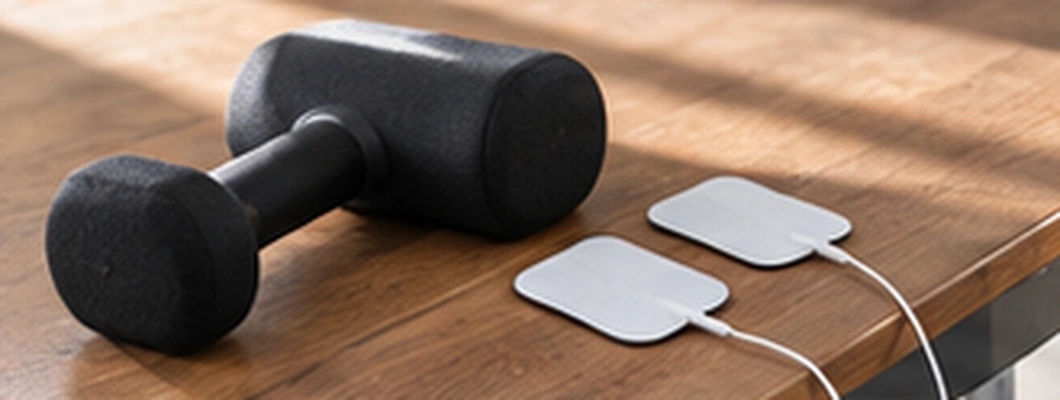
Muscles give off a very weak electrical signal when they contract. A recording of this signal, taken with sensors stuck on the skin, is called electromyography (EMG). Studies compare the size of this signal to see how much each muscle worked.

Does muscle activity really increase?
The triceps and shoulder signals got bigger
During the bench press, focusing on the triceps on the back of the arm made the triceps work more. On a machine shoulder press, focusing on the shoulder muscle made the shoulder work more, and focusing on the triceps made the triceps work more. Only the thought changed, yet the muscle signal changed.

Does it always work?
When training to exhaustion, the difference faded by the end
In sets taken until no more reps were possible, the cue to focus on the back muscles raised the signal only in the first few reps. By the end of the set, there was no difference between focusing and not focusing. The focus effect showed up only early in the set.

Does muscle size change too?
Arm muscle grew nearly twice as much
In a study where people who had not been exercising trained for several weeks, the internal-focus group gained nearly twice as much thickness as the external-focus group in the front upper-arm muscles. For the front thigh muscles, there was no difference between the two methods. The benefit showed up in the arms.

A common misconception
Does focusing on the muscle let you lift heavier?
No. The force people could produce on the spot was greater with an external focus, such as focusing on the moving bar, than with a focus on the muscle. In an arm-bending experiment, focusing on the muscle made the muscle signal bigger but the force smaller. Feeling the muscle and producing a lot of force are different things.

Summary
Muscle signal was bigger with internal focus, force with external focus
The mind-muscle connection is focusing your attention on a specific muscle during exercise to feel that muscle working. Focusing on the triceps or shoulder made their signal bigger, but the force produced on the spot was greater with an external focus. Related terms: EMG, muscle failure, tempo.
The more you know, the more you grow.PHYSIQUE NEWS