Short answer
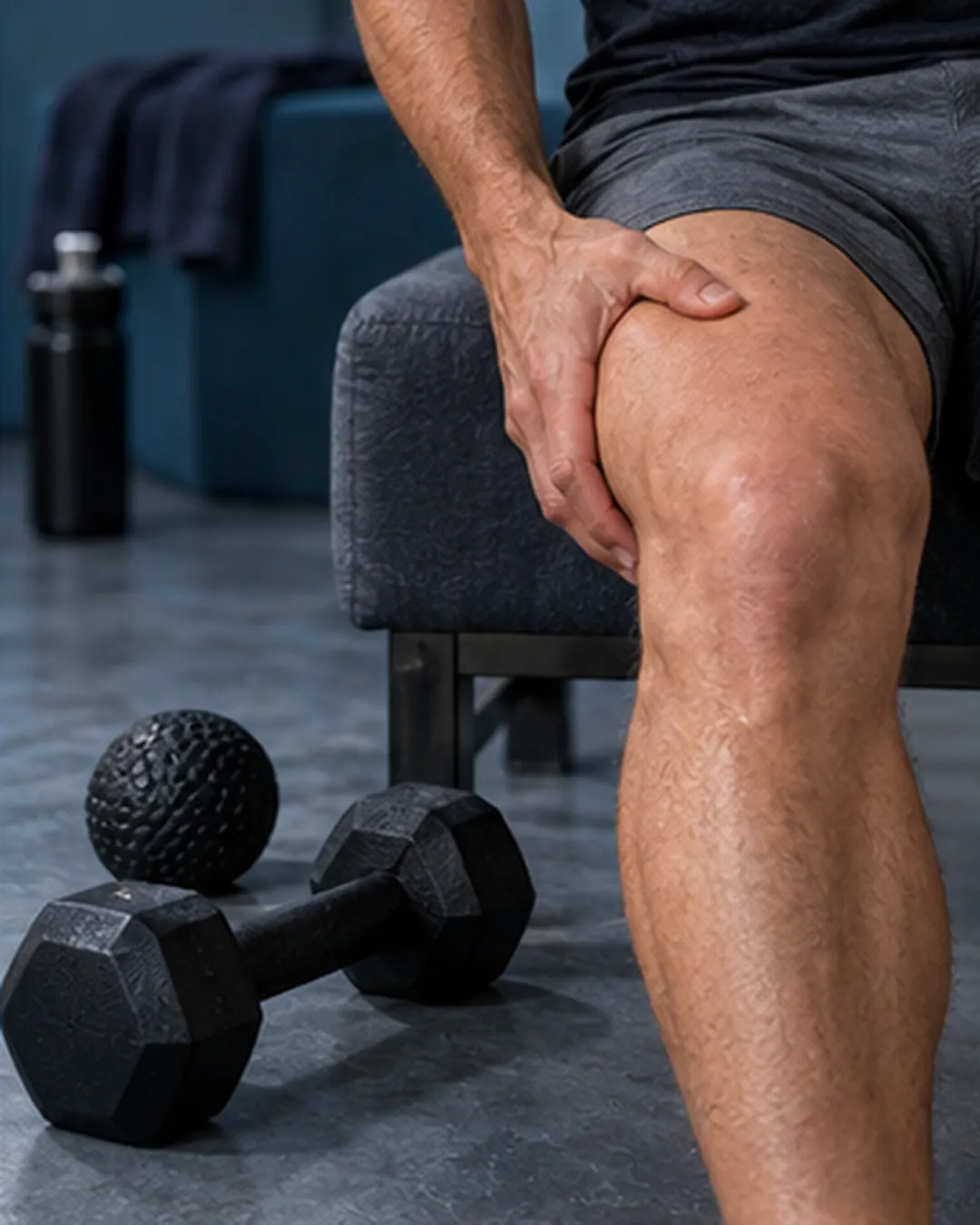
No. People who deliberately avoided soreness grew just as much muscle, and people who felt almost no soreness for 12 weeks still gained 9–18% in muscle thickness. Soreness isn't a growth signal. It's a reaction to unfamiliar exercise.
Do you need to be sore to grow muscle?
'Soreness → muscle damage → muscle growth' — does this formula hold?
People often say you only trained hard enough if you're sore the next day, and no soreness means no results. We checked, step by step, whether soreness and muscle damage actually lead to muscle growth.
Damage peaks after your first session
The repair response then didn't predict growth
In a study where 10 people did strength training for 10 weeks with muscle samples taken, damage was highest after the first week's session. The muscle-building response was also highest then, but neither it nor the damage was linked to later muscle growth.
Growth lined up only after damage faded
Only the week 3 and week 10 responses predicted growth
In the same study, damage dropped by week 3 and dropped further by week 10. The muscle-building response at those points closely tracked muscle growth. Muscle fibers actually got bigger only at week 10. The early response went mostly to repairing damage, not to growth.

Avoiding soreness on purpose, same growth
Strength rose 25% and 26%
Two groups did the same amount of training for 8 weeks. One ramped up slowly over 3 weeks to avoid damage. The other went hard from the start, with damage markers more than 5 times higher and more soreness. Muscle size gains were the same, and strength rose 25% and 26%.
Barely sore, still growing
12 weeks at 2 out of 10 soreness or less, 9–18% thicker
In a 2024 study, 36 people were split into groups, and the training groups built intensity slowly over 12 weeks. Their soreness stayed at 2 out of 10 or less. Their thigh muscle still got 9–18% thicker. In another study of 15 people, a leg workout that caused no soreness at all still grew muscle within 3 weeks.
On the flip side, less soreness means adaptation
Same workout 6 months later, less soreness
35 people did the same hard arm workout twice, 6 to 12 months apart. When the second session came 6 months later, soreness and damage markers were smaller than the first time. Getting less sore as you get used to a workout is normal, and it doesn't mean your muscles stopped growing.
Bottom line: soreness isn't a growth report card
The formula breaks at 'damage → growth'
The group that avoided soreness grew just as much, and training that barely hurt still added 9–18% in muscle thickness. Instead of soreness, checking whether your weights or reps are slowly going up works as a sign of growth.
A better body starts with a better question.PHYSIQUE NEWS