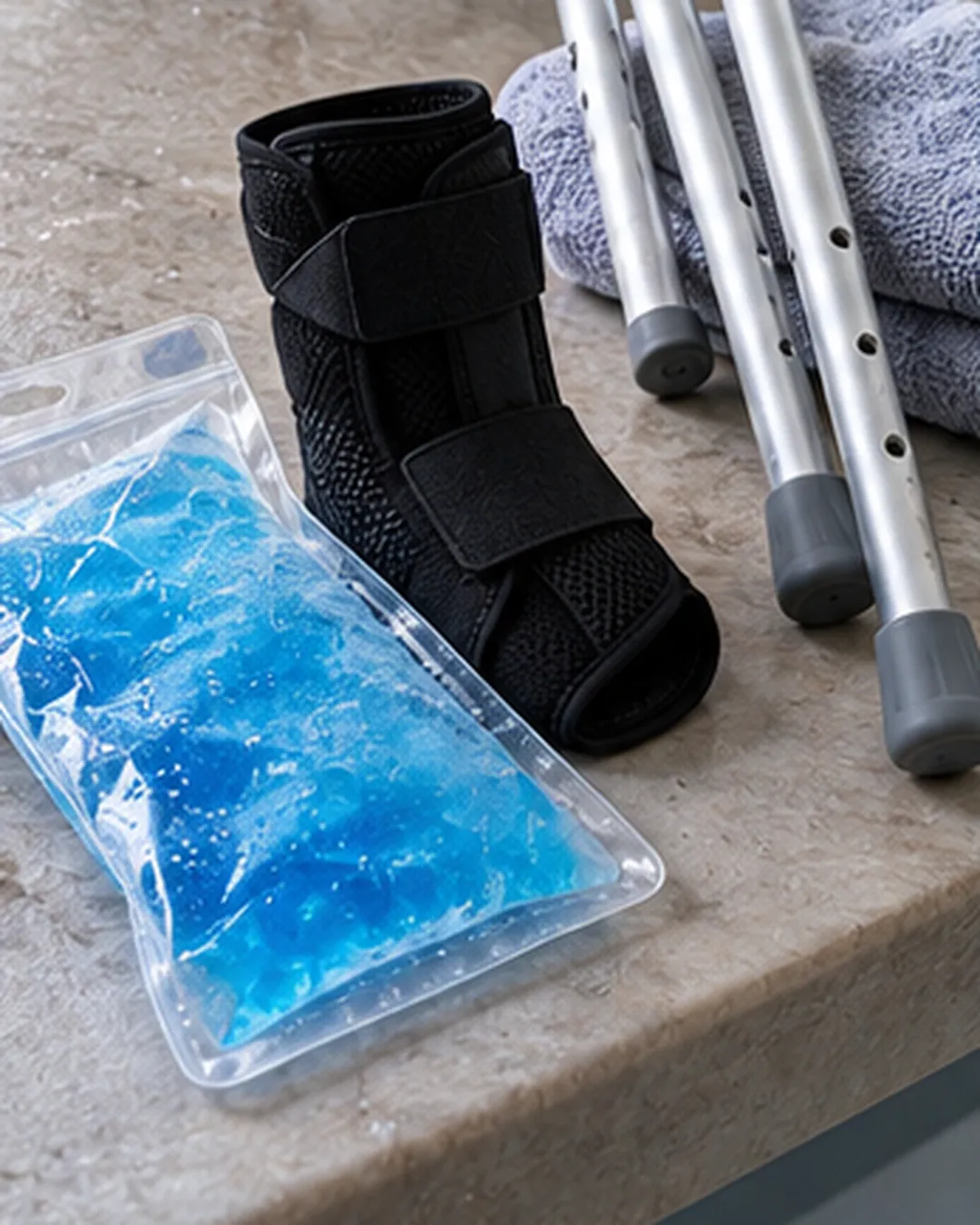
Short answer
It is useful for brief pain relief, but it does not make you heal faster. Human studies have not shown ice speeding up recovery. What sped recovery was moving and exercising early.
Should you ice an injury?
'Ice → less swelling and inflammation → faster healing' — is that right?
When you sprain an ankle or hurt a muscle, reaching for ice first feels like common sense. The idea is that cold cuts swelling and inflammation, so you heal faster. We checked this formula step by step.
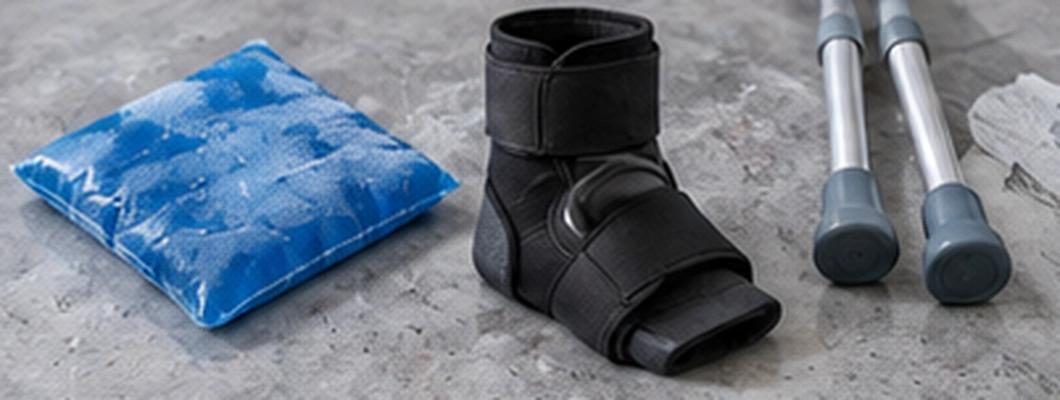
Pain dropped right away
But the relief faded fast
Ice cools the skin quickly and numbs pain on the spot. But it did not last. In trials comparing ice with doing nothing after an injury (19 and 30 people), the pain difference on day 6 was 0.2 points out of 10, about 2%.
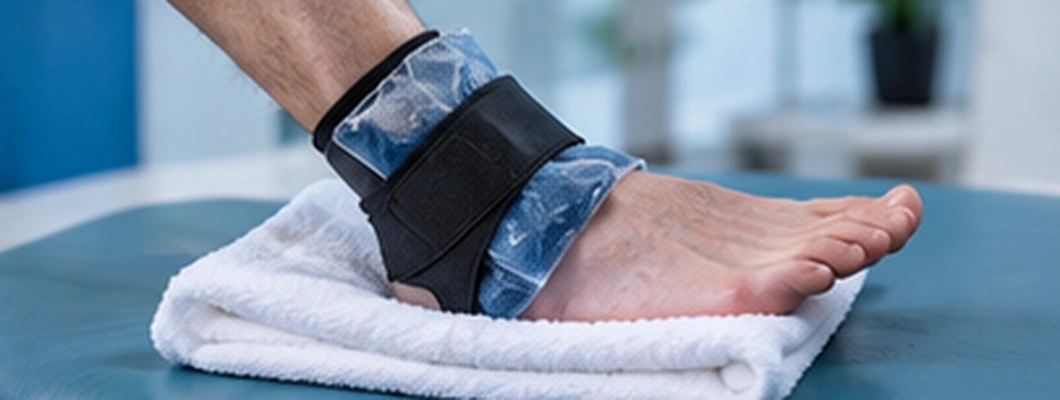
No study showed faster healing
In 50 years, only 682 people were tested
Since 1976 there have been just 15 randomized trials of ice in injured people, 682 people in total, and only 3 compared ice with doing nothing. Only 19 had muscle injuries. A 2024 review also concluded there are no human studies showing ice prevents further damage or helps healing.

Human muscle does not cool as much as you think
Animals: 13 degrees, humans: 29.5 degrees
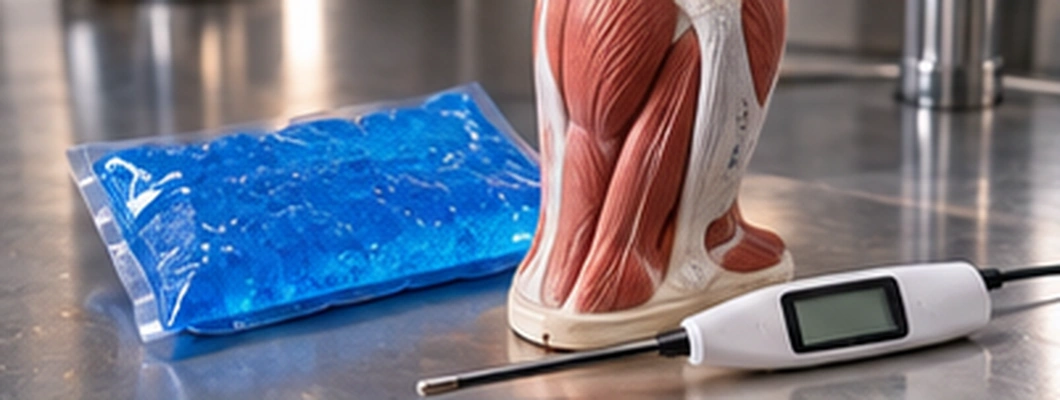
In icing experiments, animal muscle dropped as low as 13 degrees, but human muscle reached a median of 29.5 degrees. 54 of 72 human experiments failed to cool muscle below 27 degrees. Muscle injuries sit about 1.6 cm deep on average, and at that depth most studies did not get below 30 degrees.
Flip side: does ice slow recovery?
In exercise-damaged muscle, damage markers were higher
11 people did a workout that damages the arm muscles, then iced 5 times for 15 minutes each. At 48-72 hours, blood markers of muscle damage were actually higher, and fatigue was greater at 72 hours. Strength recovery was the same. In animal studies, ice also slowed healing.
What sped recovery was movement
Early exercise gave better ankle function in weeks 1-2
101 people with sprained ankles were split: one group got standard care (protection, rest, ice, compression, elevation), the other got faster rehab with exercise from week 1. The exercise group had better ankle function at weeks 1 and 2, and reinjury was 4% in both. An analysis that pooled 46 reviews also found strong support for moving early.

So when does ice make sense?
Within 6 hours of the injury, when it hurts
A 2024 review advised using ice within 6 hours of injury to reduce pain, and using it with caution after 12 hours. In a study of 89 people with sprained ankles, short repeated icing gave less pain on movement than one 20-minute session, but function and swelling were the same after 1 week.
Bottom line: ice is for pain, movement is for recovery
It is not a tool for healing faster
Ice eased pain briefly, but no study showed faster healing, and it does not cool deep human muscle well. A short icing when it hurts right after an injury is fine, and recovery comes from moving and exercising little by little, early on.
A better body starts with a better question.PHYSIQUE NEWS