Short answer
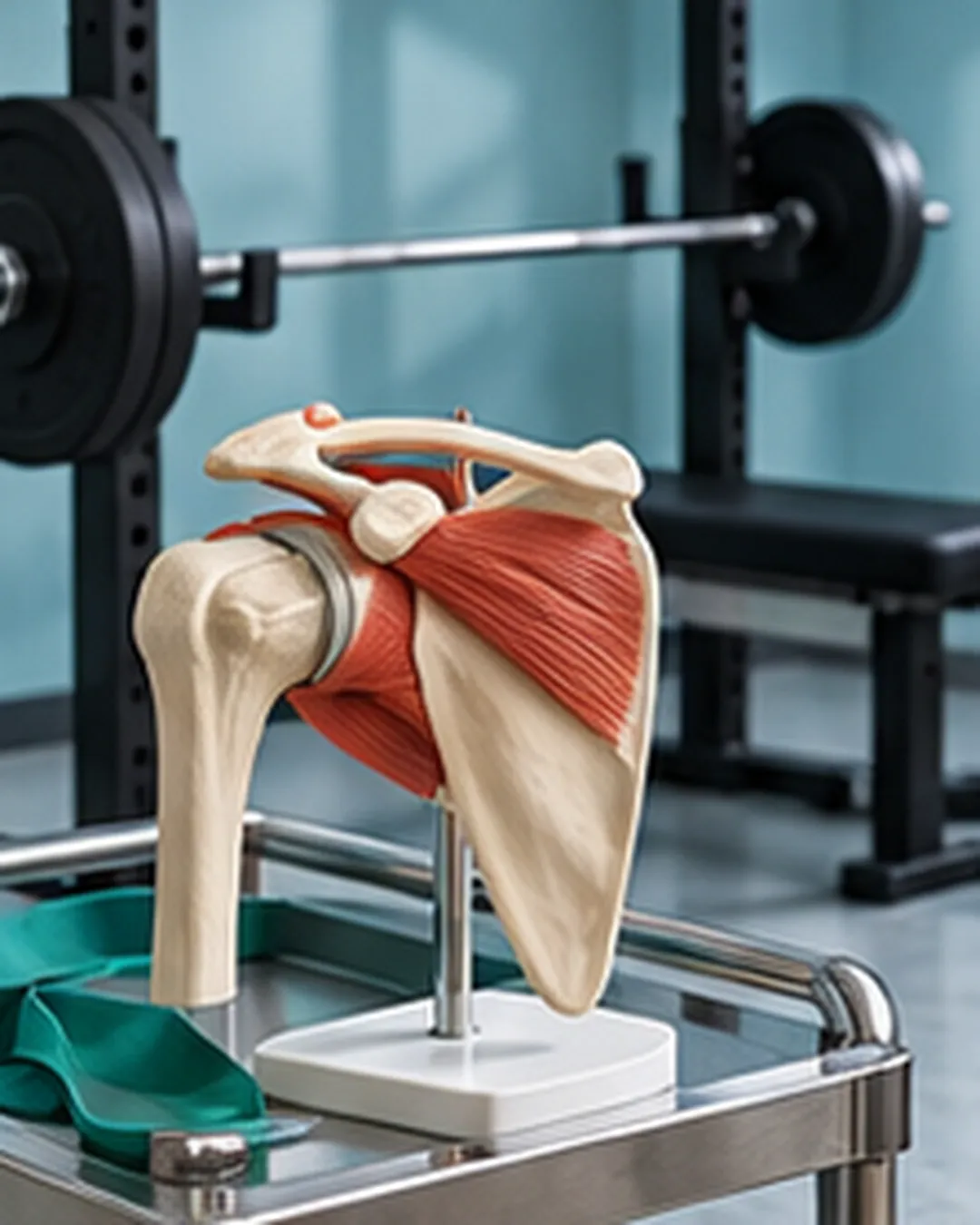
Yes. For shoulder pain, exercise did no worse than surgery even after 10 years, and exercise that hurt a little did not slow recovery. Heavier weights were not better, and a narrower grip and pulled-back shoulder blades lowered the load on the shoulder.
Can you bench press when your shoulder hurts?
'Shoulder pain → stop training → recovery' — does this formula hold?
A common rule says that if your shoulder hurts on the bench, you should rest until it heals. We checked, step by step, whether rest is the answer or whether exercise actually helps.

How common is shoulder pain?
70% of 104 lifters were training through pain
A survey of 104 people who squat, bench press and deadlift found that 70% currently had pain or discomfort. After the lower back and pelvis, the shoulder was the most common spot. Of those in pain, only 16% had stopped training completely.
So does it need surgery?
Shaving bone was no better than fake surgery
210 people with shoulder impingement pain were split into real surgery that shaves bone to make space, fake surgery where the surgeon only looked inside, and exercise therapy. When 168 were checked again after 10 years, real surgery reduced pain no more than fake surgery, and no more than exercise.

Can you train while it hurts?
Exercise that hurt a little did not slow recovery
An analysis that pooled 385 people with long-lasting muscle or joint pain found that exercise allowed to hurt reduced pain slightly more in the short term than pain-free exercise, with no difference later on. A 2025 analysis that pooled 16 trials also found no difference between the two.

Do you need heavy weights to heal?
Heavy loads were no better than light loads
100 people with rotator cuff (shoulder tendon) pain did 12 weeks of shoulder strength work with either heavy or light weights. Arm function, pain, range of motion and strength showed no difference between the two. Going heavier did not make it heal faster.
What about bench press form?
A narrower grip and pulled-back shoulder blades cut the load
10 people benched in 21 different ways while researchers calculated the forces on the shoulder. A grip narrower than 1.5 times the distance between the tips of your shoulders reduced compression at the top of the shoulder. Pulling the shoulder blades together reduced the force pushing the joint backward and the strain on the tendons.
Summary: shoulder pain was no reason to quit training
Change your form rather than rest
For shoulder pain, exercise did no worse than surgery even after 10 years, and exercise that hurt a little did not slow recovery. Heavier weights were not better. On the bench, a grip within 1.5 times your shoulder-tip width and shoulder blades pulled together is enough.

A better body starts with a better question.PHYSIQUE NEWS