Short answer
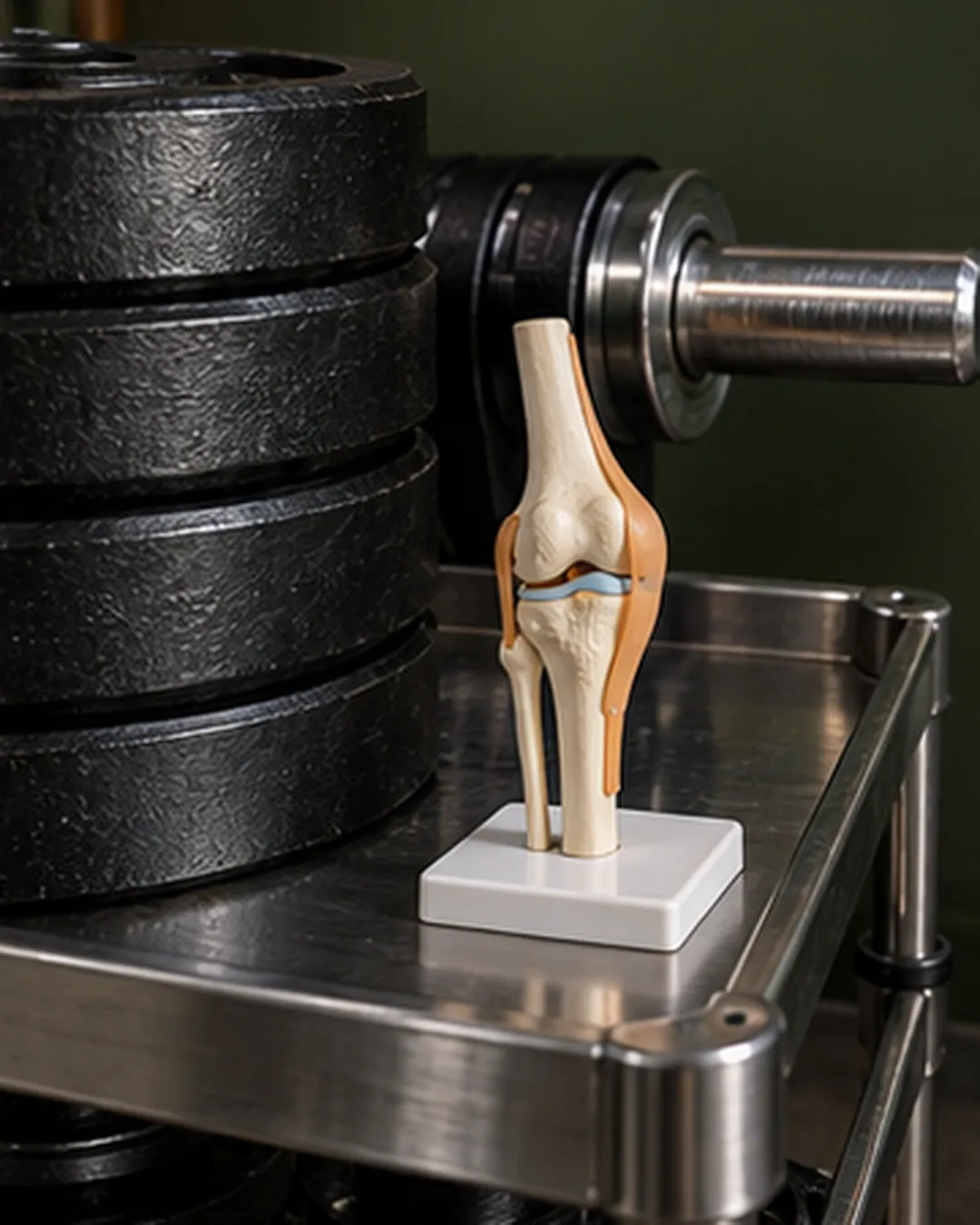
No. There was no sign that heavy lifting in the gym wears out joints, and even people who already had knee arthritis did not get more pain from lifting heavy. What raised arthritis risk was injury, high body weight and weak thigh muscles.
Does lifting heavy weights wear out your joints faster?
'Heavy weights → joint wear → arthritis' — does this formula hold?
A common belief is that joints are like car parts that wear down with use, so lifting heavy brings arthritis later. Some people lift light on purpose because of it. We checked this formula step by step: amount of exercise, weight, cartilage and injury.
Does more exercise mean more arthritis?
5,065 people followed for 5-12 years: no difference
This analysis followed 5,065 people with healthy knees in 6 study groups for 5-12 years. People who did a lot of exercise and sport developed new knee arthritis at the same rate as those who did little. The rate of new knee pain was the same too.

What about lifting heavy on knees that already hurt?
Over 18 months, pain did not get worse
377 people with knee arthritis were split into heavy strength training, light strength training, or an education group with no exercise, and followed for 18 months. The heavy group's pain score (out of 20, higher means more pain) was 5.1, no different from 4.9 in the education group. The force on the knee while walking was the same too.
Scans of the cartilage agreed
Loading exercise did not wear cartilage down
In 9 trials of knee-loading exercise, cartilage was compared on MRI scans; all 6 comparisons of cartilage thickness, volume or damage showed no difference. A 2026 analysis that pooled 120 trials and 10,253 people found the strength training groups had no higher risk of side effects than non-exercisers, and less pain.

Then why do weightlifters get more arthritis?
31% in elite lifters, partly due to high body weight
Knee X-rays of 117 former elite athletes showed arthritis in 31% of weightlifters and 3% of shooters. The researchers said the lifters' high body weight explained part of the risk, and a past knee injury made arthritis 4.7 times as likely. Jobs with daily heavy lifting, like farming and construction, came with 1.5 times the odds.
Flip side: weak thighs were the risk
Weak muscles meant 1.4-1.9 times the odds of arthritis
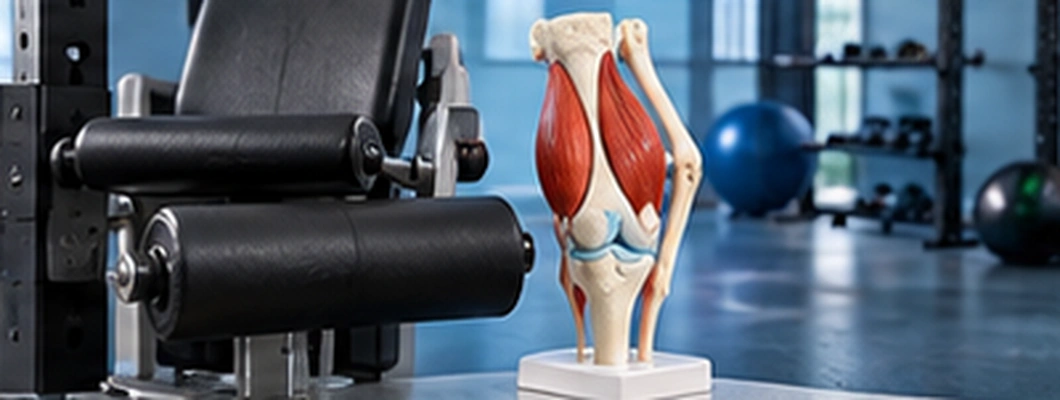
An analysis of 11 studies that followed 46,819 people for 2 years or more found that people with weak front thigh muscles were more likely to develop painful knee arthritis: 1.85 times in women and 1.43 times in men. Muscle is what absorbs the shock that reaches the joint.
What to watch is injury, not the weight
Powerlifting: 1 to 4.4 injuries per 1,000 hours
An analysis of 17 reports on weightlifting and powerlifting found 1.0-4.4 injuries per 1,000 hours of training in powerlifting and 2.4-3.3 in weightlifting. Training 4 hours a week, that is roughly 1-4 injuries in about 5 years. As shown earlier, it was injuries like these that sharply raised arthritis risk.
Bottom line: no sign that gym weights wear out joints
Injury, body weight and weak muscles did the damage
Neither lots of exercise nor heavy lifting on already painful knees made joints worse. What raised arthritis risk was injury, high body weight and weak thighs. Rather than avoiding weight, you can keep good form and add weight gradually so you lift without getting hurt.
A better body starts with a better question.PHYSIQUE NEWS