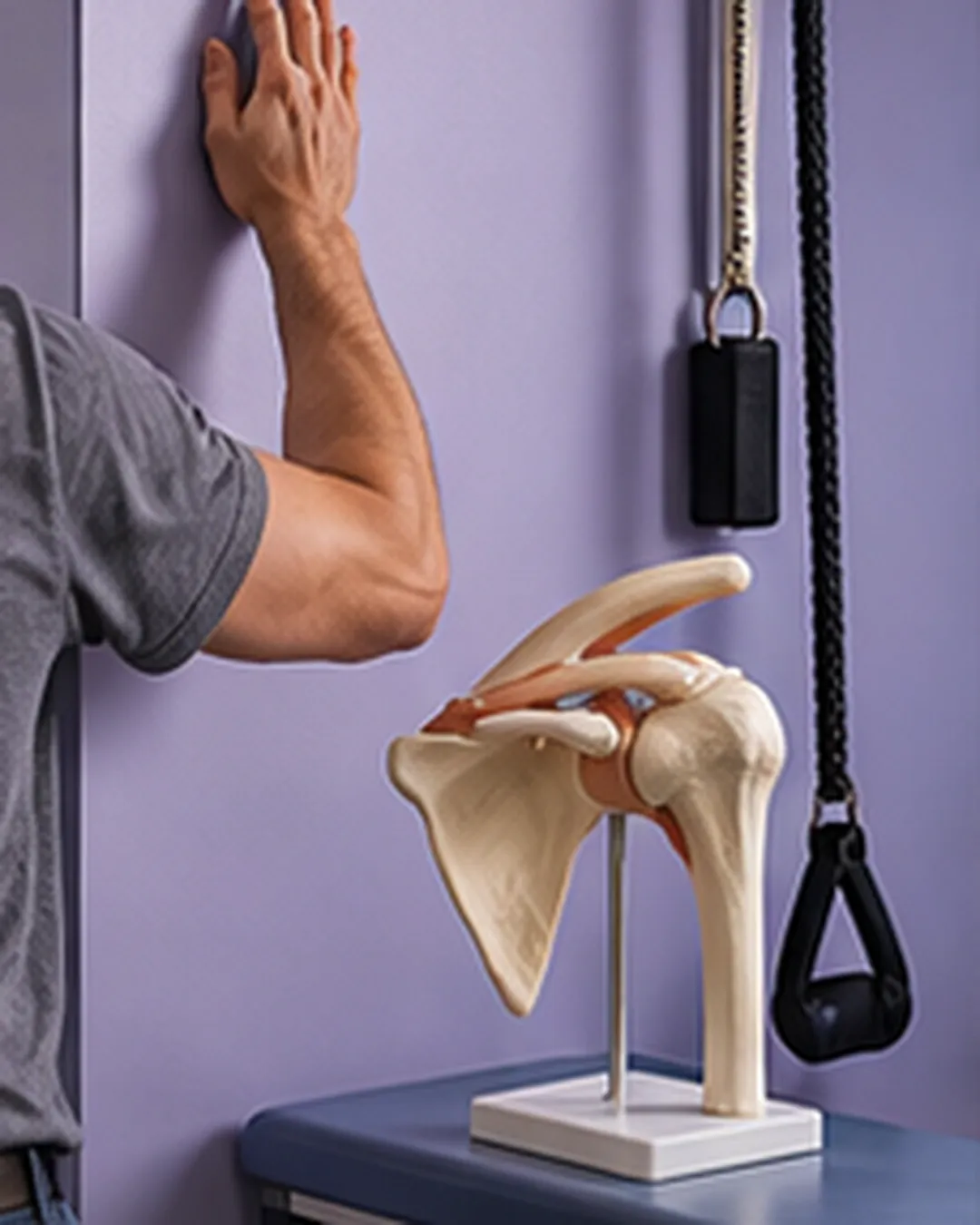
Short answer
Exercise helps it recover. Exercise improved shoulder movement, function and pain, and in a 77-person study, 89% of those exercising within a pain-free range regained near-normal function within 2 years. Of those who stretched hard, 63% did.
Can exercise heal a frozen shoulder?
'Leave it and it heals' vs 'stretch it hard to free it' — which is right?
Two claims go around about frozen shoulder, a stiff and painful shoulder: it heals on its own with time, or you have to push through pain and stretch hard. We checked whether exercise changes recovery.
Does it heal on its own?
Movement returns slowly, and pain fully goes away in only half
In 51 people who were only watched, symptoms lasted 15 months on average (4-36 months). About 9 years later, 94% had movement equal to the other shoulder, but only 51% were fully pain-free. A review of 7 studies also found people improved over 1-4 years without treatment, but did not fully recover.

Does exercise make a difference?
Adding exercise let people lift their arm higher
A review of 33 studies found exercise improved shoulder movement, daily function and pain. Adding exercise to care without it widened the range people could lift on their own, while adding heat packs or electrical therapy did nothing extra. A 2026 analysis of 12 studies also favored exercise.

So should you stretch hard through pain?
The pain-free range group recovered more
In a study following 77 people for 2 years, 89% of those who exercised within a pain-free range regained near-normal shoulder function, and 64% got there within 1 year. Of those who had intensive stretching through pain and hands-on joint forcing, 63% did after 2 years.
How does it compare with injections?
Injections cut pain more in the first 12 weeks, and adding exercise made it last
An analysis of 65 studies with 4,097 people found a steroid injection into the shoulder joint lowered pain by 1 point out of 10 more than no treatment in the first 12 weeks. With simple home exercises and stretches added to the injection, pain was 1.4 points lower from 3 months to 1 year.

How does it compare with surgery?
12 weeks of exercise therapy held up against surgery
503 people were split into 12 weeks of exercise therapy (with an injection), shoulder release under anesthesia, or keyhole surgery. After 1 year, the surgery group scored 3 points higher on a 48-point shoulder score than exercise therapy, short of the 5 points the researchers set as meaningful. Serious side effects: 8 with surgery, 2 with release under anesthesia.
Summary: exercise helped frozen shoulder recover
The key was staying in a pain-free range
Left alone, movement mostly returns, but it took 15 months on average and only 51% became fully pain-free. Exercise improved movement, function and pain, and exercise within a pain-free range did better than hard stretching. 12 weeks of exercise therapy held up against surgery at 1 year.

A better body starts with a better question.PHYSIQUE NEWS