Short answer
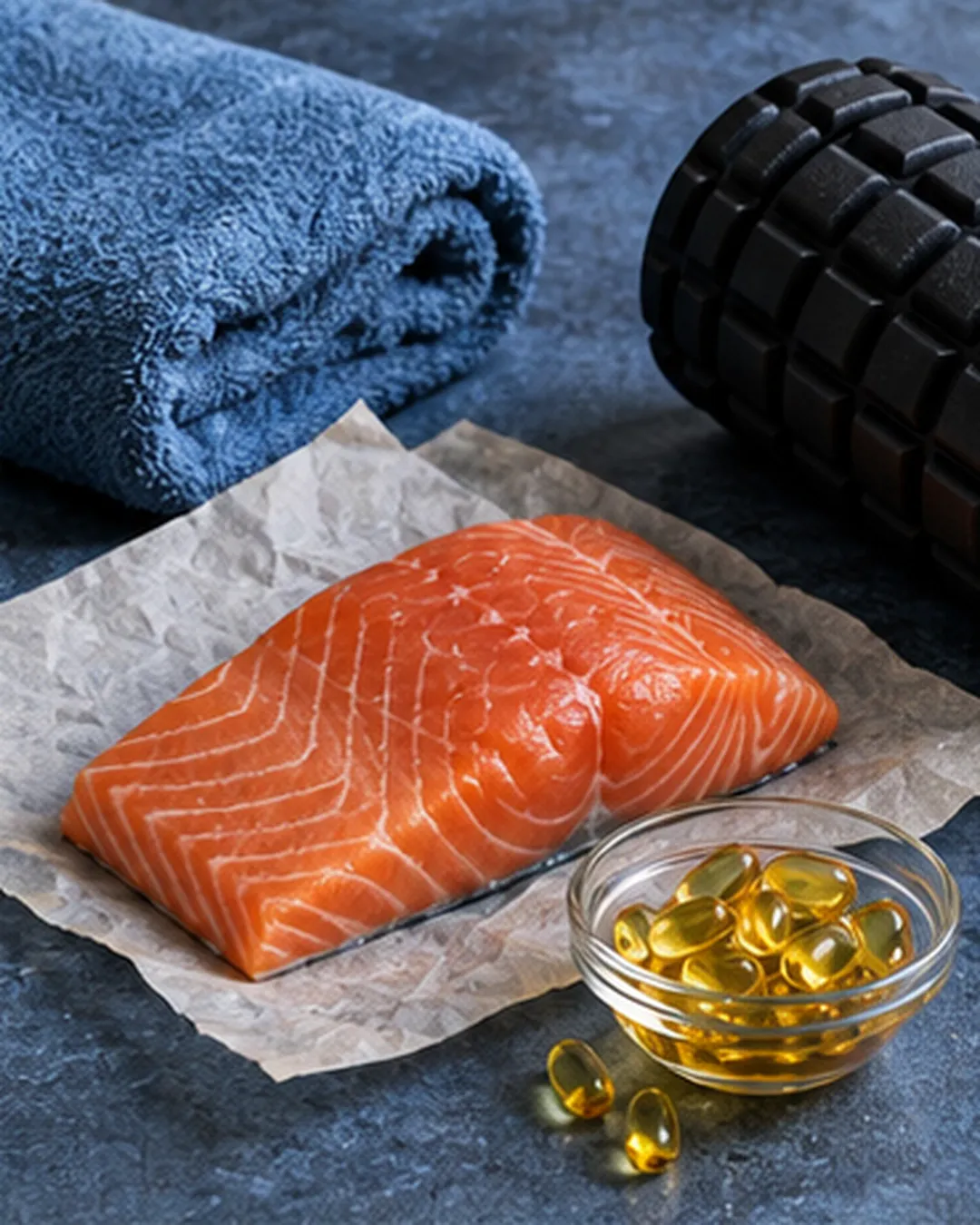
It eases soreness, but only slightly. Taken steadily for several weeks, it reduced soreness, but on average by less than 1 point out of 10. The difference showed up with moderate-to-severe soreness, not with mild soreness.
Does omega-3 help with muscle soreness and recovery?
'Omega-3 → less inflammation → less soreness, faster recovery' — does this formula hold?
A common belief is that omega-3 calms inflammation, so it eases soreness after a workout and speeds recovery. We checked step by step how much soreness actually dropped and how people took it when it made a difference.
Did soreness go down?
It did, by 0.93 points out of 10
An analysis that pooled 12 trials and 301 people found that those taking omega-3 were 0.93 points less sore on a 10-point scale 2 days after exercise. That is smaller than 1.4 points, the smallest change people can feel, and strength and joint movement were no different.

Newer analyses found better recovery too
Less soreness and swelling, less strength lost
A 2026 analysis of 9 placebo-controlled trials found that omega-3 lowered soreness, muscle damage markers and swelling, and strength and joint movement were better at their worst point. Another analysis of 41 trials found moderate drops in inflammation markers and soreness.
How much, and for how long?
The effect was biggest after several weeks of steady use
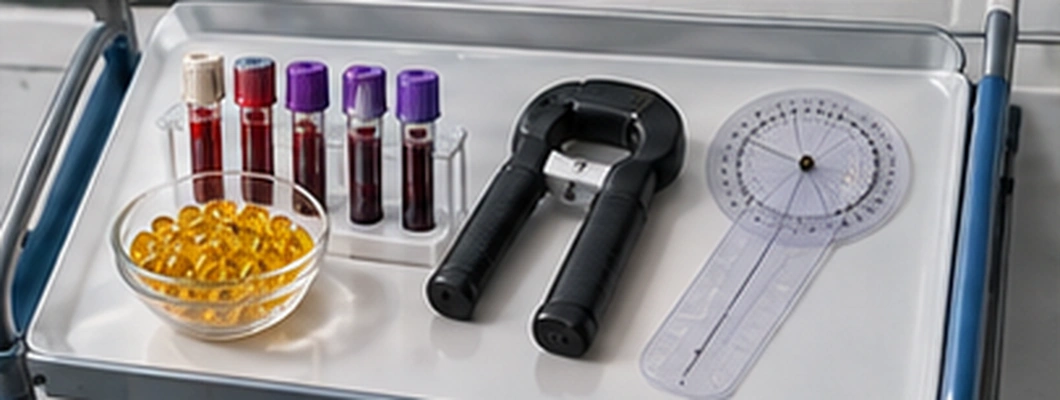
In the 41-trial analysis, the strongest effects came with 2 g or more a day for 6 weeks or longer. In a trial of 32 people taking it for about 7.5 weeks, the 6 g fish oil group (about 4.2 g of omega-3) was less sore than placebo at 24, 48 and 72 hours after exercise, and at 48 hours less sore than the 2 g and 4 g groups too.

But many trials found no effect
With mild soreness, there was no difference
In a trial where 26 people took 6 g or 8 g for 33 days, soreness, jumping and muscle damage markers all matched placebo. An analysis that reviewed 43 studies found that 12 of the 19 positive studies involved moderate-to-severe soreness, while 11 of the 12 null studies involved mild-to-moderate soreness.

Does it block the benefits of training?
The verdict: it does not
Some worry that anti-inflammatory supplements also block training adaptations. In a 2026 position stand, the International Society of Sports Nutrition concluded that 1,000-6,000 mg of omega-3 a day for 6-12 weeks supports recovery without interfering with training adaptations.
Bottom line: it trims soreness a little
Steady use for weeks, and it shows when you are very sore
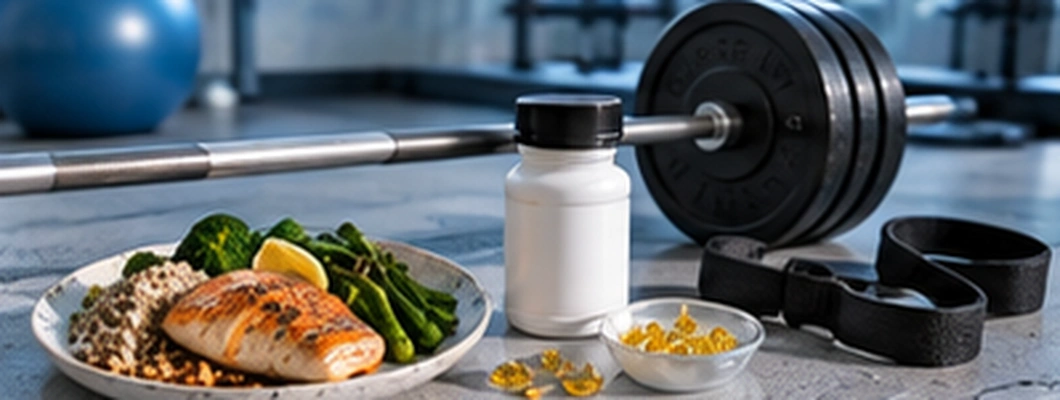
Omega-3 reduced soreness, but on average by less than 1 point out of 10. The difference appeared with 2 g or more a day for 6 weeks or longer, and with moderate-to-severe soreness. With mild soreness, it was no different from placebo.

A better body starts with a better question.PHYSIQUE NEWS