
Short answer
The diagnosis alone didn't stop people. Protruding discs were found in 3-4 in 10 pain-free people, about 2 in 3 shrank on their own, and pain dropped more with exercise. But no study has tested deadlifts directly in disc herniation.
Can you deadlift if you have a herniated disc?
'Herniated disc → lift heavy → it ruptures more' — does this formula hold?
A common belief: once you are diagnosed with a herniated disc, heavy lifts like the deadlift are over. We checked step by step what a disc herniation really is and what happened when people exercised.
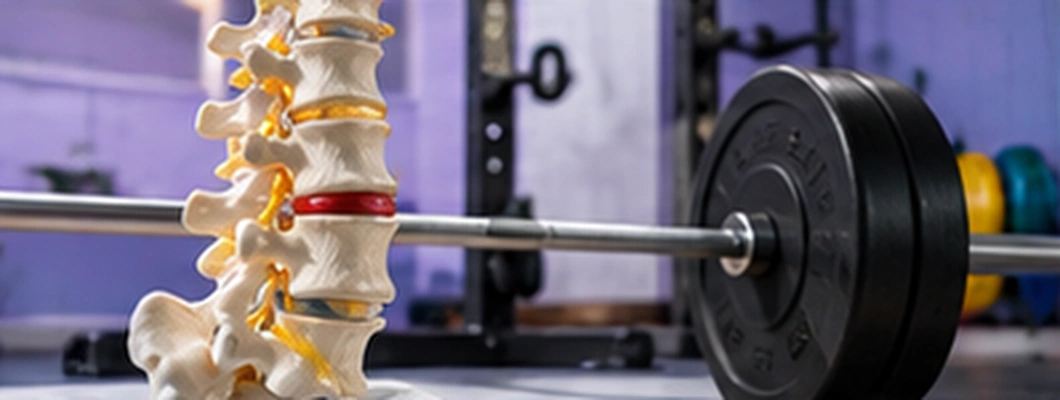
Disc bulges are common in people without pain
3-4 in 10 already had one
Pooling MRI scans of 3,110 people with no back pain, 29-43% had a protruding disc, depending on age. Bulging discs were seen in 30-84%. A disc on the scan was a common sight even in people without pain.

Herniated discs shrank on their own
About 2 in 3 were reabsorbed
Pooling 11 studies that followed people without surgery, 66.66% of herniated discs were reabsorbed on their own. That is about 2 in 3. Herniated discs shrank more often than they stayed the same.

So did exercise make the disc worse?
Pain dropped more in those who exercised
In 8 trials pooling 611 people with disc herniation, those who did exercise such as trunk stabilization had more relief in back and leg pain and daily-life limits than those who did not. A 2026 analysis that pooled 13 trials also found more pain relief with exercise.

People who use their bodies hard went back
8 in 10 returned to play
An analysis of 1,107 pro and elite-level players with disc herniation found 83.0% returned to play after surgery and 81.5% without surgery. Those without surgery took 4.11 months on average. Most played American football, basketball, baseball or hockey.

Deadlift studies only covered back pain
Lifting heavy made no difference in pain
70 people with recurring back pain did either deadlifts or light movement-control exercises for 8 weeks. Pain dropped in both groups with no difference, and daily-activity scores rose more in the light-exercise group. Their pain came mainly from back tissue itself, not from a pinched nerve.

A case of 1 with nerve symptoms
Taken for muscle pain, it ended in emergency surgery
1 person took symptoms after repeated deadlifts for a muscle problem, and diagnosis was delayed. MRI showed a large disc herniation pressing on the bundle of nerves in the lower back. After emergency surgery, nerve function came back only partly.

Bottom line: the diagnosis alone didn't stop people
The formula breaks at 'disc → rupture'
Protruding discs were found in 3-4 in 10 pain-free people, and about 2 in 3 shrank on their own. Pain dropped more with exercise, and 8 in 10 players returned to play. No study has tested deadlifts directly in disc herniation, so periods with nerve symptoms like leg numbness are outside what the research covered.

A better body starts with a better question.PHYSIQUE NEWS