In one line
Zinc is a mineral that many enzymes in the body need to work, so people must get a small amount from food steadily.
What is zinc?
A mineral you see on multivitamin labels
You see the name 'zinc' on multivitamin labels and on candy-like tablets for colds. This post explains what kind of mineral zinc is, what it does in the body, how much people get from food, and what happens when people take too much.

In one line
A mineral needed only in small amounts, but needed
Zinc is a mineral the body cannot make, so people must get it from food. The amount needed each day is tiny, only a few mg. Even so, cells all over the body use zinc.

Trace minerals
Needed in small amounts, second only to iron
Minerals are elements the body needs, such as calcium, iron and zinc. They split into those needed in larger amounts (calcium, magnesium and others) and those needed only in small amounts (iron, zinc and others), called 'trace minerals'. Among trace minerals, zinc is the second most plentiful in the body after iron.
Where it is in the body
2-3 g in an adult, mostly in muscle and bone
An adult body holds 2-3 g of zinc in total. A bit over half of it is in muscle, and about 1/3 is in bone. Besides muscle and bone, zinc is found inside almost every cell in the body.

Job 1: helping enzymes
More than 300 enzymes use zinc
Proteins that help chemical reactions happen in the body are called 'enzymes'. More than 300 enzymes need zinc to work. Zinc is also needed to break down carbohydrates from food and for cells to divide and make new cells.

Job 2: protection and repair
Immunity, wound healing, taste and smell
The body's power to protect itself from germs is called 'immunity'. Zinc is needed for the immune system to work properly, and it is used in wound healing. Zinc is also needed to taste and smell, and for children to grow.

No storage room
So it must be refilled steadily
Zinc is spread through muscle and bone, but the body has no special store for it, the way bone stores calcium. So zinc must be refilled steadily from food. When zinc runs short, infections become more frequent, taste and smell get dull, and wounds heal slowly.

Where it is found
Especially in oysters and red meat
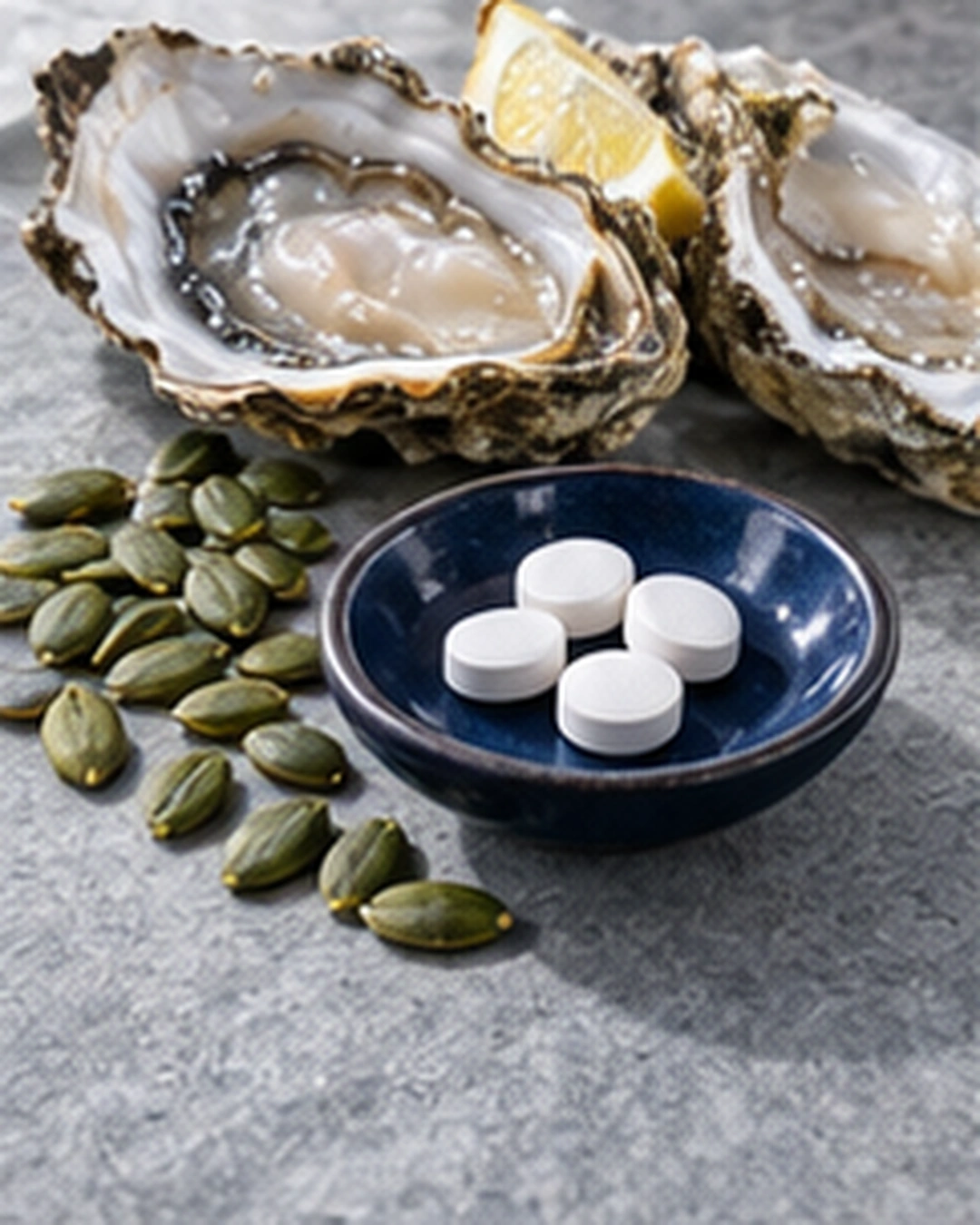
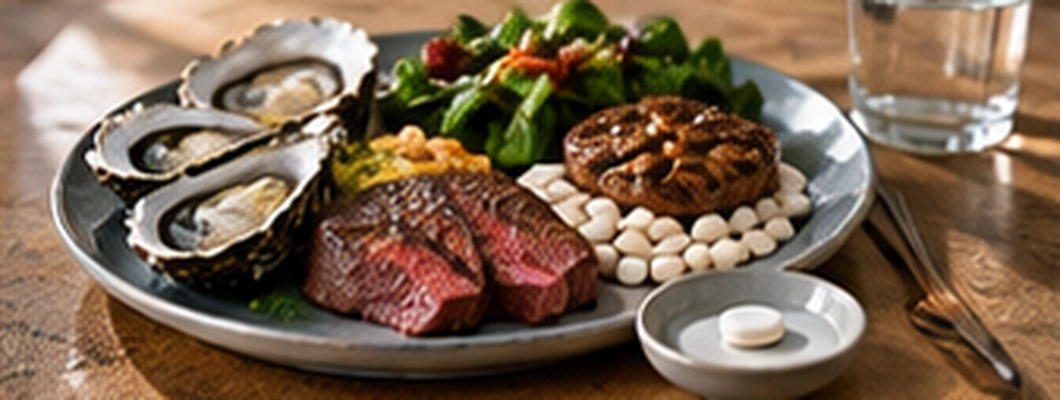
Oysters are the food richest in zinc, and beef and pork have more than fish. Beans, nuts and whole grains also have zinc. But moving nutrients from the gut into the blood is called 'absorption', and 'phytate' in these plant foods sticks to zinc and lowers its absorption.

How much a day
Adult recommended intake: 8 mg for women, 11 mg for men
The US recommended intake for adults is 8 mg a day for women and 11 mg for men. That is an amount people reach by eating a variety of foods, and most multivitamins also contain zinc. Zinc in supplements is attached to other substances, such as zinc gluconate or zinc sulfate.

Taking a lot at once
Nausea, vomiting and diarrhea
Taking a large amount of zinc at once from supplements causes nausea, vomiting, diarrhea and stomach cramps. These symptoms usually appear within 3-10 hours of taking it. They go away soon after stopping the supplement.

A common misunderstanding
Is more zinc always better?
No. Taking a lot of zinc for a long time stops the gut from absorbing copper, so the body runs short of copper. Cases of anemia and nerve damage from this have been reported. The US upper limit for adults is 40 mg a day; above it, the risk of running short of copper appears.

Summary
A mineral that helps enzymes and must be eaten steadily
Zinc is a mineral that helps many enzymes and is used for immunity, wound healing, and taste and smell; the body cannot store it, so it must come from food steadily. More is not better: taking a lot for a long time leaves the body short of copper. Related terms: minerals, enzymes, copper.
The more you know, the more you grow.PHYSIQUE NEWS