In one line
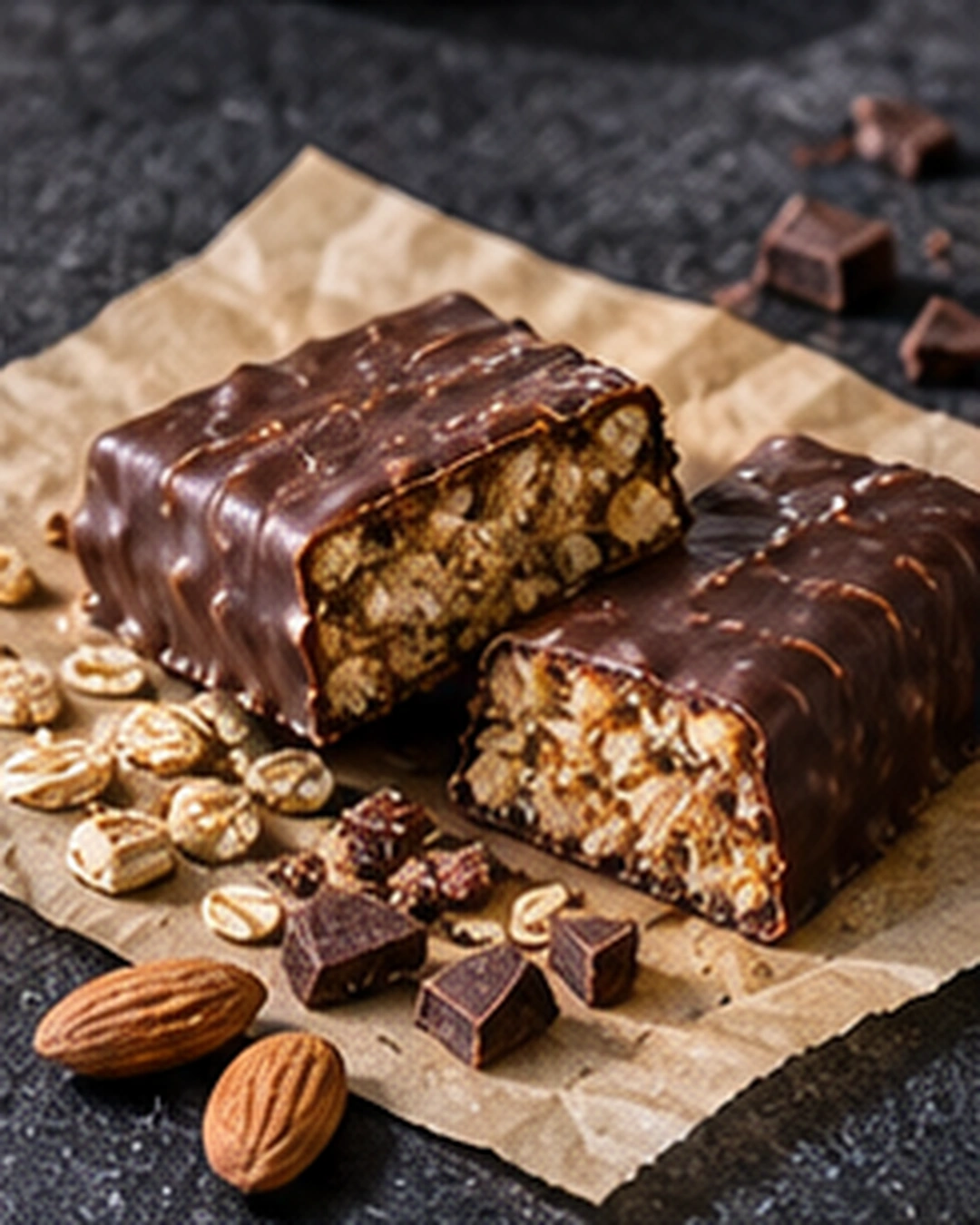
A protein bar is a snack made by mixing protein powder with ingredients like syrup and oil into a dough and setting it in a bar shape, with a lot of protein added.
What is a protein bar?
The bar snack at convenience stores and gyms
Next to the checkout counter or on the gym shelf, you see bar snacks called 'protein bars'. This post explains what protein bars are made of and how, what is in them besides protein, and what is easy to get wrong from the name alone.
In short
A bar snack packed with protein
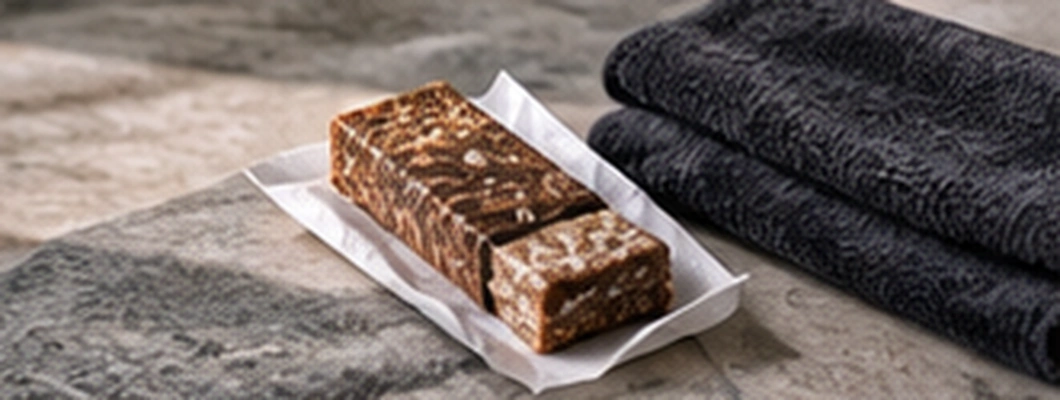
A protein bar is a snack made by mixing protein powder with ingredients like syrup and oil into a dough, then setting it in a bar shape. As the name says, its key feature is a lot of added protein.
How it is made
Powder and syrup kneaded into a bar
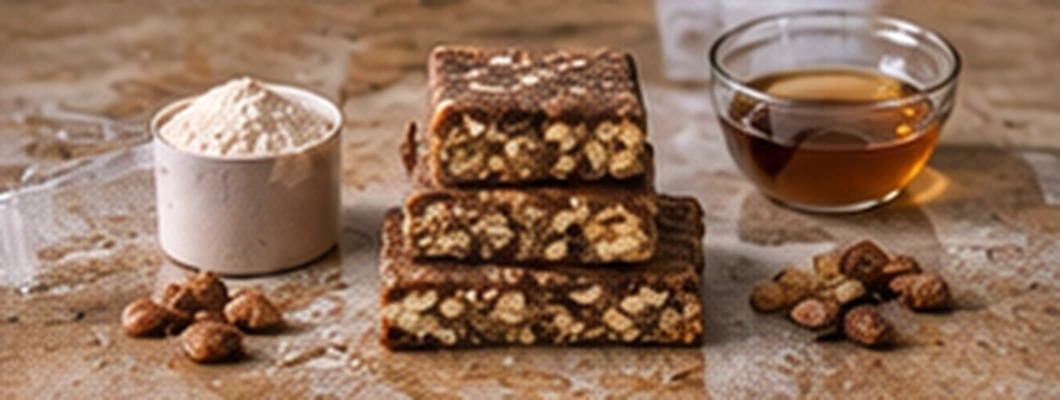
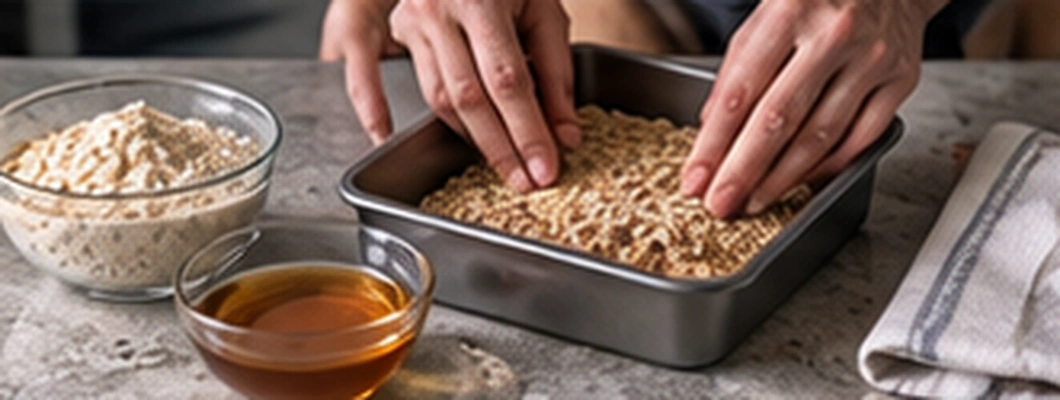
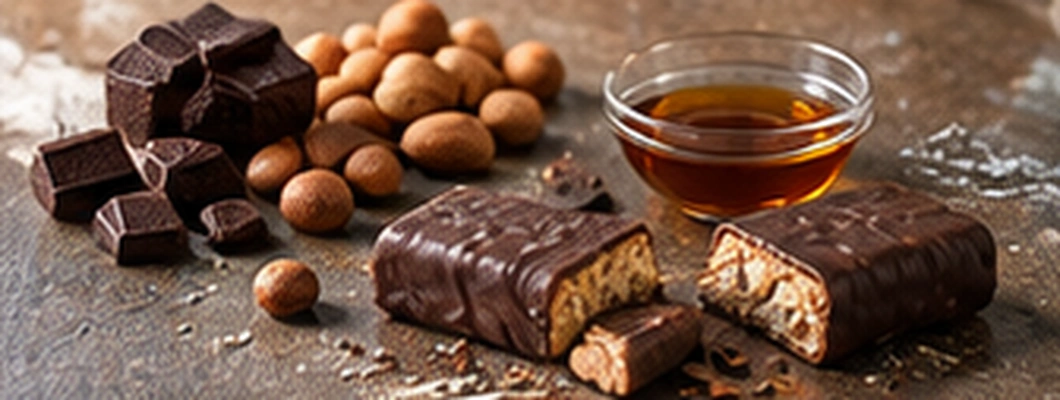
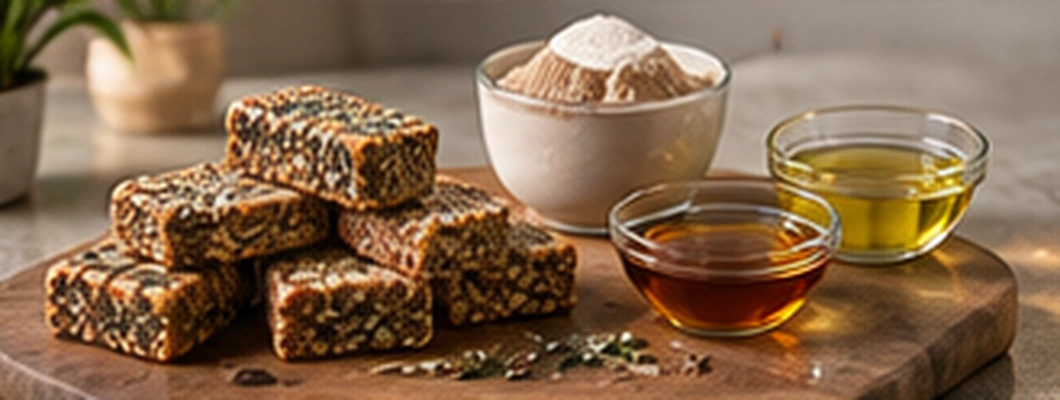
Protein powder is mixed with syrup and oil into a dough, which is pressed into molds or pushed out by a machine in a long strip and cut into bars. The syrup works like glue, coating the powder particles and holding them together in one piece. Some bars are coated in chocolate or have nuts or cookie pieces added.
Where the protein comes from
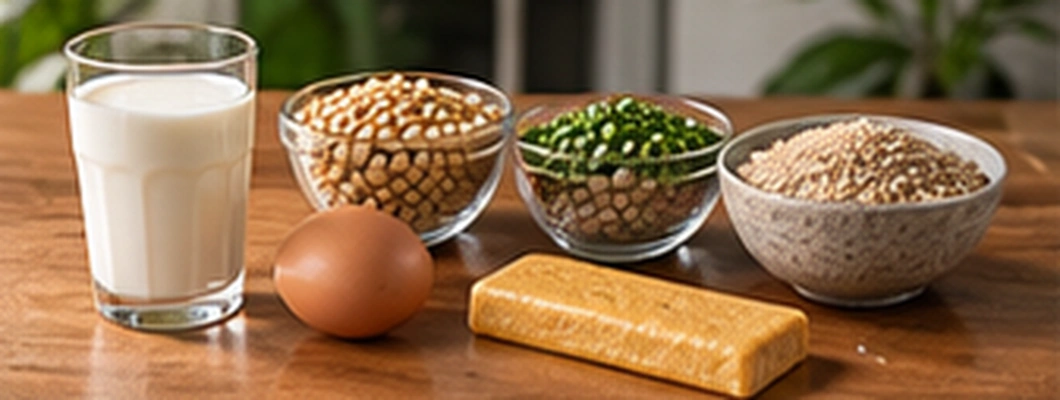
Milk, soy, pea, rice, egg, collagen
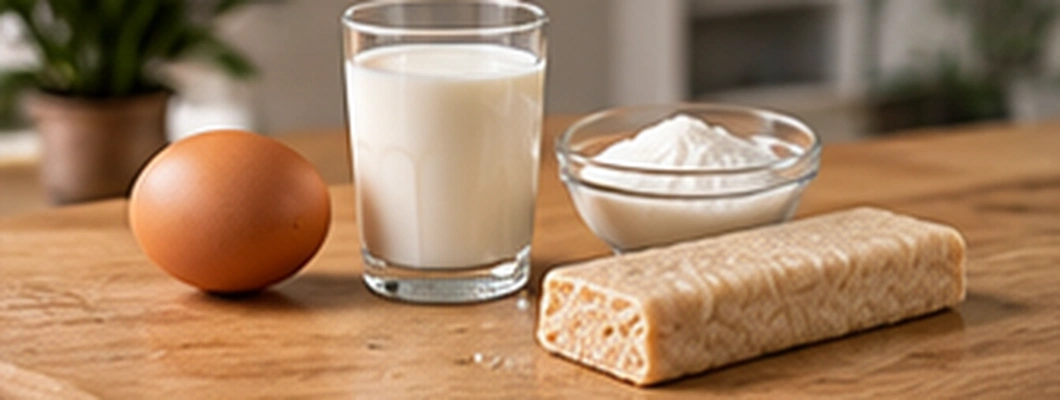
The protein powder in bars is either milk protein or plant protein from soy, pea or rice. Some bars also add egg white or collagen, the protein that makes up skin and tendons. Many bars mix several proteins in one.
What else is inside
Ingredients for taste and chew
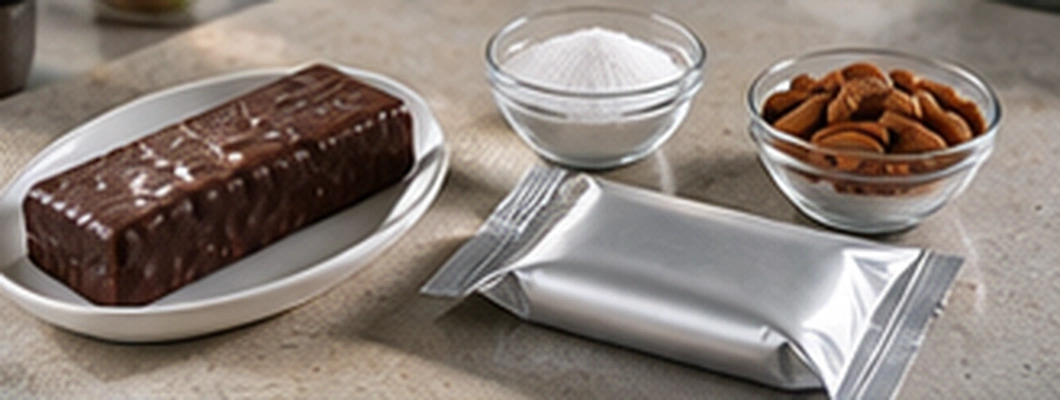
Protein bars also contain chocolate, sugar and flavorings for taste, and nuts or cookie pieces for chew. Some products add vitamins, minerals or fiber. So even among protein bars, the amount of calories, sugar and fat differs from product to product.
Sugar alcohols
Sweeteners used instead of sugar
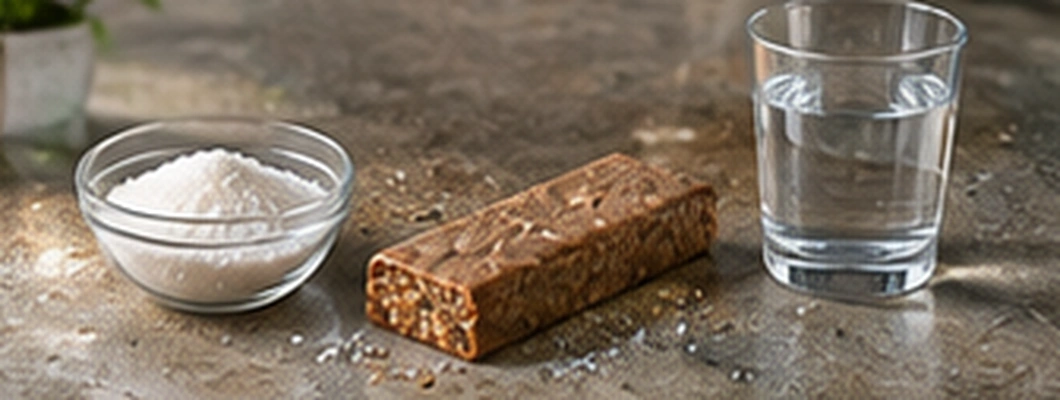
You often see 'sugar alcohols' on protein bar labels. Sugar alcohols, like sorbitol and xylitol, taste sweet but enter the body slowly and have about half the calories of sugar. Eating a lot of sugar alcohols like sorbitol causes gas, stomach pain or diarrhea.
The 'high protein' label
In Europe, 20% or more of calories from protein
The bigger the share of a food's calories that comes from protein, the more protein-rich the food is. Europe allows the 'high protein' label only on foods that get 20% or more of their calories from protein. When protein bar products with English labels were collected and checked, about eight in ten passed this rule.
Why bars get hard
Over time, proteins clump together
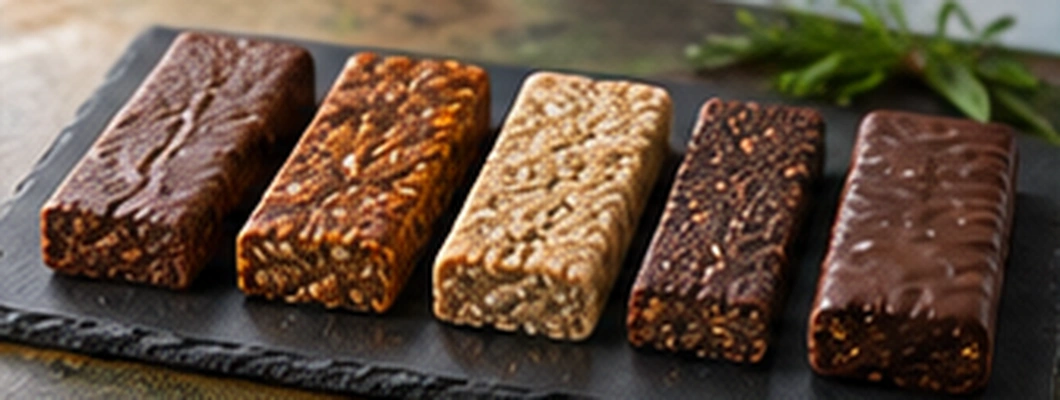
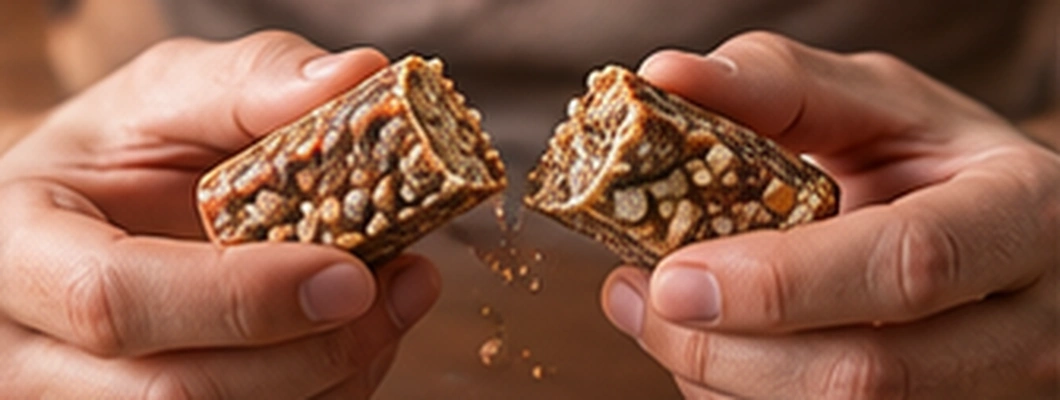
Protein bars get harder the longer they sit. During storage, moisture is lost, and protein separates from sugar or reacts with it, so proteins clump into lumps. That is why makers pick sugars or sugar alcohols that mix well with protein to keep bars softer.
Protein quality
Same number, different quality by ingredient
Protein is a chain of small pieces called 'amino acids', and the ones the body cannot make and must get from food are called 'essential amino acids'. Collagen is low in essential amino acids and lacks one of them completely. So when a bar with added collagen was tested, its protein quality was low even though the protein number on the label was high.
Common myth
Does 'protein' in the name mean a healthy snack?
No. When people saw a bar with 'protein' in its name, they believed it had more fiber and iron too, and that it was healthier overall. But the name only tells you it has a lot of protein. To know how much sugar, fat and sugar alcohol it has, you need to read the label.
Summary
A bar snack set with lots of protein
A protein bar is a bar snack made by mixing protein powder with syrup and oil and setting it, with a lot of protein added. 'Protein' in the name only means it has a lot of protein, not that it is a healthy snack. Related terms: sugar alcohols, essential amino acids, collagen.
The more you know, the more you grow.PHYSIQUE NEWS