
In one line
VO2max (maximal oxygen uptake) is the most oxygen the body can take in and use during all-out exercise, and it shows the size of your aerobic fitness.
What is VO2max (maximal oxygen uptake)?
The 'aerobic fitness' number on smartwatches
If you use a smartwatch or running app, you will see a number called 'VO2max'. It is the best-known number for aerobic fitness, the ability to keep running and keep going. Here is what VO2max is and how it is measured, step by step.

In one line
The most oxygen the body uses in 1 minute
VO2max is the largest amount of oxygen the body can take in and use in 1 minute during all-out exercise. O2 means oxygen and max means 'maximum'. Its full name is maximal oxygen uptake.

Why oxygen?
Long-lasting energy is made with oxygen
Muscles run on 'ATP', an energy substance often called a 'charged battery'. When you move lightly for a long time, most of that ATP is made by burning 'glucose' (the sugar carbohydrates become after digestion) and fat with oxygen. That is why VO2max, the most oxygen used in 1 minute, sets the 'ceiling' for lasting a long time.

Oxygen's path
From lungs to blood, through the heart, to muscle
Oxygen you breathe in is loaded into the blood in the lungs. The heart pumps this blood to muscles all over the body, and the muscles take oxygen out of the blood and use it. VO2max is the most oxygen this whole path can move and use in 1 minute.

What sets it
How much blood the heart pumps in 1 minute
What matters most for VO2max is the power to deliver oxygen to muscle, and at its core is how much blood the heart pumps out in 1 minute. That amount is the blood pumped per beat multiplied by the number of beats per minute (heart rate). Top endurance athletes have big hearts that pump a lot of blood with each beat.

Units
mL of oxygen per kg of body weight per 1 minute
The value is usually given as mL of oxygen used per 1 kg of body weight per 1 minute. For example, a person weighing 70 kg with a value of 40 uses about 2.8 L of oxygen per minute. It is also sometimes given as the total amount used per minute (L), without dividing by body weight.

How it is measured
Exercising harder and harder while breath is analyzed
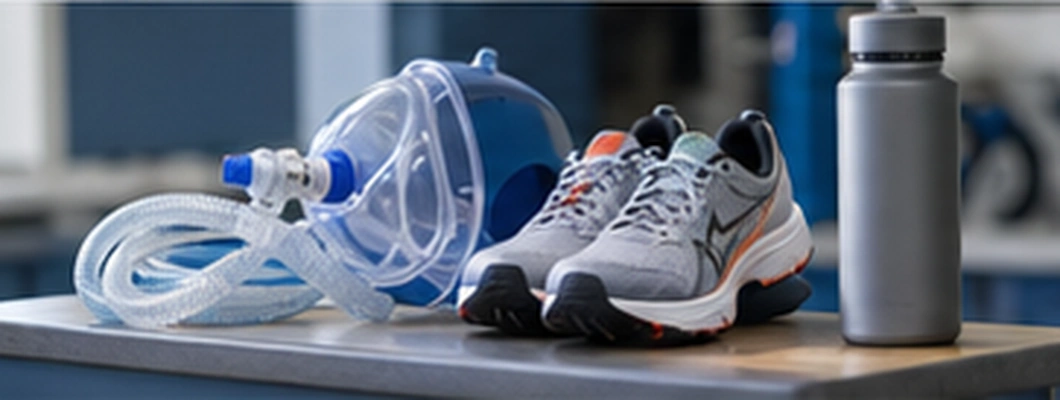
An accurate VO2max is measured in a lab. You run on a treadmill or ride an indoor bike, raising the intensity bit by bit until you cannot go on, while a face mask collects your breath so the oxygen used can be calculated. When oxygen use stops rising even as intensity goes up, that is seen as the surest sign that VO2max was reached.

With training
Regular aerobic exercise raises it
VO2max changes with exercise. When healthy adults did regular aerobic exercise, their VO2max rose about 12% more than in people who did not exercise. This rise comes mainly from the heart pumping more blood in 1 minute.

Link to health
Low aerobic fitness came with higher risk of death
Aerobic fitness, shown by VO2max, also tells you about health. Following healthy people for years, those with low fitness had about 1.7 times the risk of dying early compared with those with high fitness. The risk of heart disease was also higher in the low-fitness group.

Common misconception
Is your smartwatch VO2max actually measured?
No. The watch does not measure oxygen directly; it estimates VO2max by calculation from information such as heart rate. For watches that use data from exercise, the average across many people was close to lab measurements, but for an individual the value was up to about 10 higher or lower. Watches that use only resting data came out high even on average.

Summary
The most oxygen the body uses in 1 minute
VO2max is the most oxygen the body uses in 1 minute during all-out exercise, and it shows the size of your aerobic fitness. A smartwatch VO2max is not a lab measurement but an estimate made by calculation. Related terms: heart rate training zones, lactate threshold, ATP.
The more you know, the more you grow.PHYSIQUE NEWS