In one line
Carbohydrates are nutrients built from small units called sugars: one or two units make a simple carbohydrate, and long chains make a complex carbohydrate.
What are carbohydrates (simple and complex)?
What makes one 'simple' and another 'complex'?
In diet talk you often hear 'simple carbs' and 'complex carbs'. Rice, bread, fruit and table sugar are all carbohydrates, so what makes one simple and another complex?

In a word
A nutrient made of one or more sugar units
Carbohydrates are nutrients built from small units called sugars. If there are only one or two units, it is a simple carbohydrate; if many units are joined in a long chain, it is a complex carbohydrate. They are one of the main nutrients that give the body energy.
The smallest unit
Single sugars like glucose
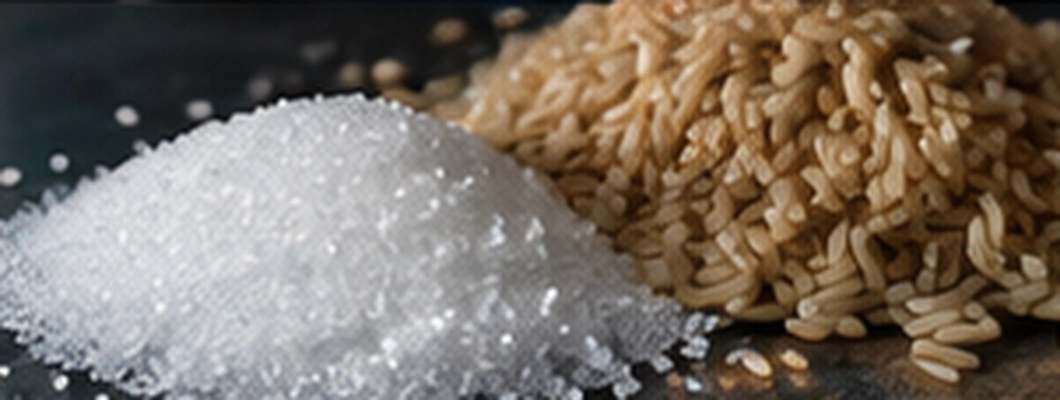
The smallest piece of a carbohydrate is a single sugar unit, called a monosaccharide. The best known is glucose, the main fuel used by the body's cells. Fructose, found in fruit, is also a single sugar.

Simple carbohydrates
One sugar unit, or two joined together
A simple carbohydrate is one sugar unit or two units joined together, usually just called 'sugars'. Table sugar is one glucose joined to one fructose. Lactose, the sugar in milk, is also two units joined together.

Complex carbohydrates
Starch: sugar units in a long chain
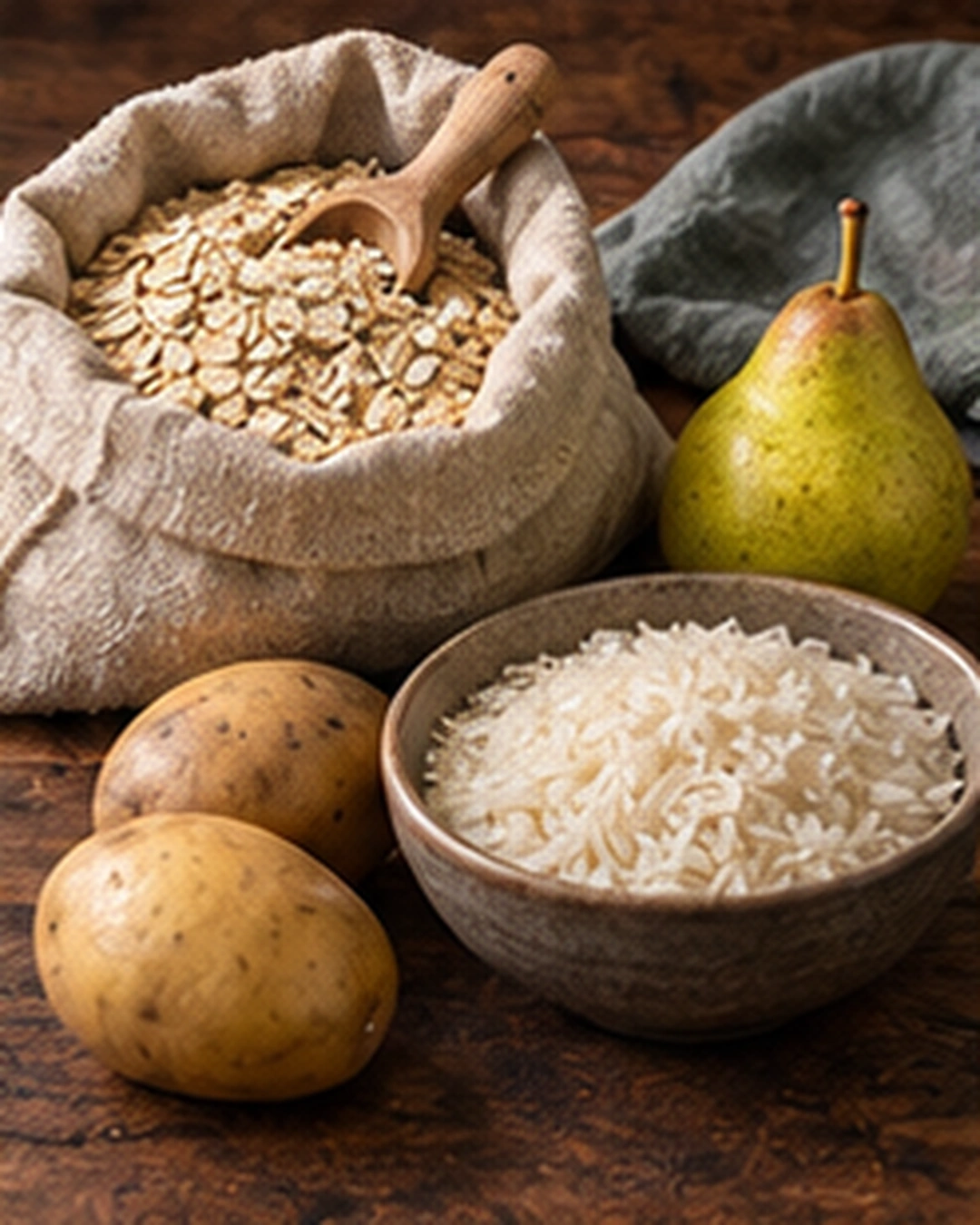
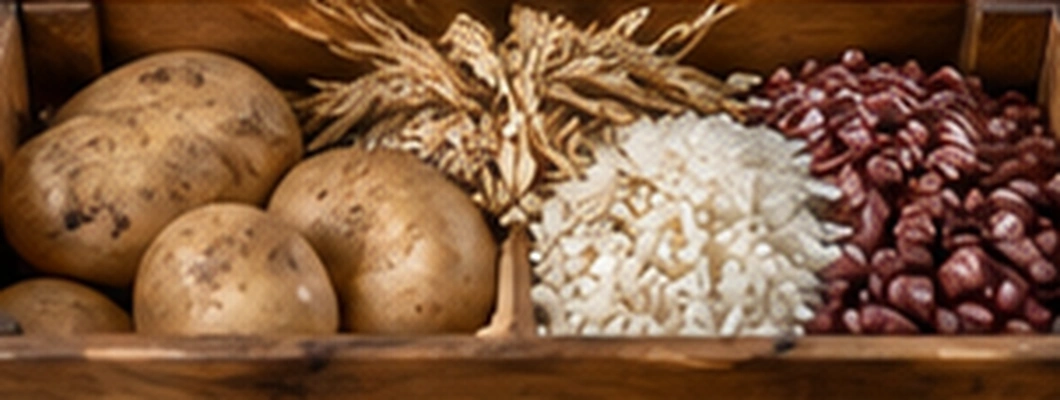
A complex carbohydrate is a chain of ten or more sugar units, and sometimes thousands. The main example is starch, the form in which plants store glucose in their seeds and roots. That is why rice, wheat, potatoes and beans are rich in it.
Another complex carbohydrate
Fiber, which people cannot digest
Fiber is also a long chain of sugar units, so it is a complex carbohydrate too. But its units are linked in a different way from starch, and people cannot digest it. So it does not become glucose and moves on through the gut.

What it does in the body
It is broken down into glucose for energy
When you digest sugars and starch, most of it is broken down into glucose. Glucose dissolves in the blood, travels around the body and becomes energy for the cells. The glucose in your blood is called blood sugar.

The body's own store
Glycogen in the liver and muscles
The body stores glucose in the liver and muscles as glycogen. Glycogen is glucose joined in long, branching chains; it looks like starch and is sometimes called 'animal starch'. When blood sugar drops, glycogen is broken back down into glucose.

Common myth / Do all complex carbs raise blood sugar slowly?
Starches differ in speed
No. Starch is a complex carbohydrate, but some starches are digested quickly and raise blood sugar fast. In a study that compared foods with the same amount of carbohydrate, potato raised blood sugar about as much as pure glucose did, while rice, corn and bread raised it less. How fast a food raises blood sugar is measured separately for each food, as its GI (glycemic index).

Summary
Names based on the number of sugar units
Carbohydrates are nutrients made of sugar units: one or two units make a simple carbohydrate, long chains make a complex one. Not every complex carbohydrate raises blood sugar slowly. Related terms: GI (glycemic index), glycogen, fiber.
The more you know, the more you grow.PHYSIQUE NEWS