
In one line
A concentric contraction is a muscle making force while it shortens; an eccentric contraction is a muscle making force while an outside load lengthens it.
What are eccentric and concentric contractions?
The words behind 'concentric up, eccentric down'
In workout guides you may see the words 'concentric', 'eccentric', or 'lengthening contraction'. They are names for the different ways a muscle works when you lift a weight and when you lower it. This post explains what the two words mean and how the muscle works differently in each.

In short
Shortening while making force is concentric; lengthening is eccentric
A concentric contraction is when a muscle makes force while getting shorter. An eccentric contraction is when a muscle makes force but still gets longer. Scientists also call them 'shortening' and 'lengthening' contractions.

First, what a muscle contraction is
A muscle making force after a nerve signal
A muscle makes force when it gets a signal from a nerve. This act of making force is called a 'contraction'. Depending on the load it meets, a working muscle may get shorter, keep the same length, or get longer.
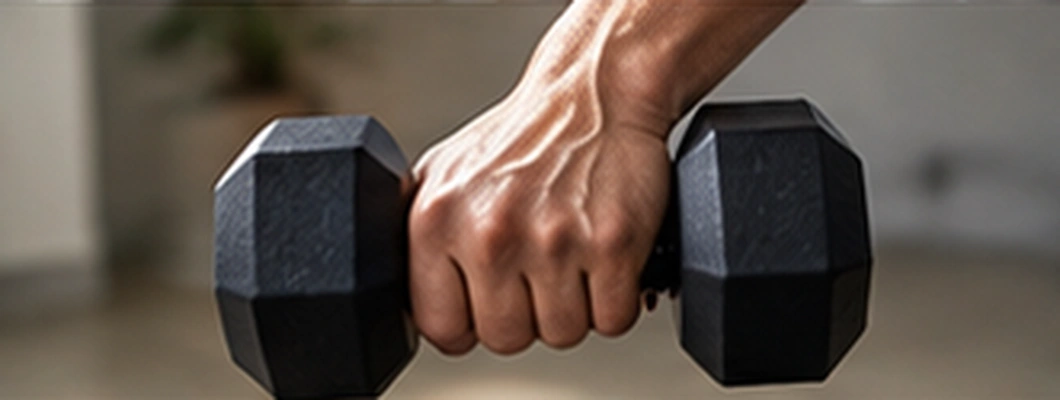
Concentric contraction
Example: the biceps when you lift a dumbbell
When a muscle makes more force than the weight, the muscle shortens and the weight goes up. When you lift a dumbbell, the biceps on the front of the arm shortens and the elbow bends. That is a concentric contraction. This is the kind of contraction that starts a movement.

Eccentric contraction
Example: the biceps when you slowly lower a dumbbell
When the weight is greater than the force the muscle makes, the muscle gets longer even while it is working. When you slowly lower a dumbbell, the biceps keeps working as it lengthens. That is an eccentric contraction, which is why it is also called a lengthening contraction.

A contraction that keeps its length
A third way: holding without moving
A muscle can also make force without changing length. This happens when the weight and the muscle's force are matched and nothing moves. Your jaw muscles work this way when you clench your teeth hard. Together with concentric and eccentric contractions, this makes three ways a muscle works.

Eccentric contractions in daily life
Your thighs are the brakes going downstairs
Eccentric contractions act as brakes that slow or stop a movement. When you go down stairs or a slope, the quadriceps on the front of the thigh lengthen while working, so your body does not drop with a thump.

What is special about eccentric contractions
More force, less energy
At the same speed, a muscle makes more force in an eccentric contraction than in a concentric one. At the same time, it uses much less energy and oxygen to make the same force. That is why eccentric exercise is also used in rehabilitation, as a way to put high force on muscles with little energy.

After unfamiliar eccentric exercise
Stiff, sore muscles the next day
After eccentric exercise you are not used to, the muscle feels stiff and sore the next day. It starts with damage to tiny structures inside the muscle while it lengthens under high force. This late-arriving soreness is DOMS (delayed onset muscle soreness). After you do the same exercise once, the next session causes much less damage.

Common misconception
Does 'contraction' mean the muscle always shortens?
No. A Korean dictionary defines contraction as 'shrinking', so it is easy to think a contracting muscle always gets shorter. But a muscle contraction means the muscle is making force, and its length can shorten or lengthen depending on the load. The English word 'contraction' causes the same confusion, and muscle scientists have worked to correct its meaning.

Summary
Shortening while making force is concentric; lengthening is eccentric
A concentric contraction is a muscle making force while shortening, and an eccentric contraction is a muscle making force while lengthening. A muscle is still working while it lengthens as you lower a weight. Related terms: tempo, DOMS (delayed onset muscle soreness), muscle failure.

The more you know, the more you grow.PHYSIQUE NEWS