In one line
MCT oil is an oil made only of medium-length fatty acid chains, a fat the body quickly uses for energy.
What is MCT oil?
An oil you hear about in low-carb diet talk
You often hear the name 'MCT oil' when people talk about low-carb diets or weight loss. This post explains what MCT means, how it differs from other oils, how the body uses it, and what to watch out for.

In one line
An oil made only of medium-length fat chains
MCT is short for 'medium-chain triglycerides'. MCT oil is made by picking out only the medium-length fat chains from oils such as coconut oil. Unlike common oils, it is used quickly by the body for energy.
What fat looks like
One backbone, three chains
Most fat in food takes a shape called a 'triglyceride'. Three 'fatty acid' chains are attached to one small backbone called glycerol. A fatty acid is a chain that makes up fat, built from carbon atoms linked in a row.

Sorted by chain length
6 to 12 carbons means 'medium-chain'
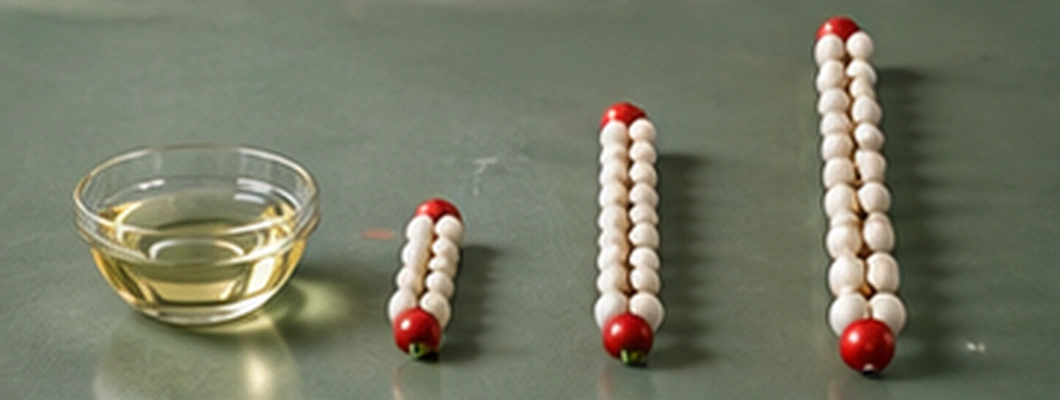
Fatty acids are sorted by how many carbons are linked in the chain. A chain of 6 to 12 carbons is 'medium-chain', and a triglyceride made of these is an MCT. Ones with longer fatty acids are called 'long-chain triglycerides' (LCTs).
How it is made
Mostly 8- and 10-carbon chains
MCT oil is made by splitting the fatty acids off coconut oil or oil-palm kernel oil, keeping only the medium chains, and joining them back up. Most MCT oil on the market is made of 8-carbon (caprylic acid) and 10-carbon (capric acid) chains, with almost no 12-carbon ones.
A different route in
A shortcut straight to the liver
Nutrients passing from the gut into the blood is called 'absorption'. Long-chain fats are packed back into big bundles after absorption and take a detour through the 'lymph vessels', a separate set of channels for body fluid. Most medium-chain fatty acids instead ride the blood vessel that runs straight from the gut to the liver (the portal vein).

Burned fast in the liver
Some becomes 'ketones'
Medium-chain fatty acids that reach the liver are quickly used for energy. Some of them are turned into 'ketones'. Ketones are a fuel the liver makes from fat, and they travel in the blood to muscle, the heart and the brain to be used.

Uses in hospitals
Poor fat absorption and epilepsy diets
Since the 1950s, MCT has been used to supply energy to people who cannot absorb fat well. It is also used in therapeutic 'ketogenic diets', which keep carbohydrate very low so the body makes ketones, for 'epilepsy', a brain disorder with repeated seizures, when medicines do not work well. Because MCT makes more ketones than ordinary fat, this version allows a bit more carbohydrate and protein than a ketogenic diet using only ordinary fat.

Body weight studies
Swapping it in for other oils led to slightly more loss
When studies that replaced long-chain oils in the diet with MCT were pooled, the MCT side lost about 0.5 kg more body weight on average. The difference was small. MCT is still an oil and high in calories, so this result applies to swapping oils.

Taking a lot
Diarrhea, stomach pain, nausea
The side effects reported most often after taking MCT are gut symptoms such as diarrhea, stomach pain, discomfort and nausea. They were usually mild, but they became more common and stronger with larger amounts, and quite a few people left studies because of them. Diarrhea, vomiting and bloating were also reported when MCT was used in ketogenic diets.

A common myth
Is coconut oil the same as MCT oil?
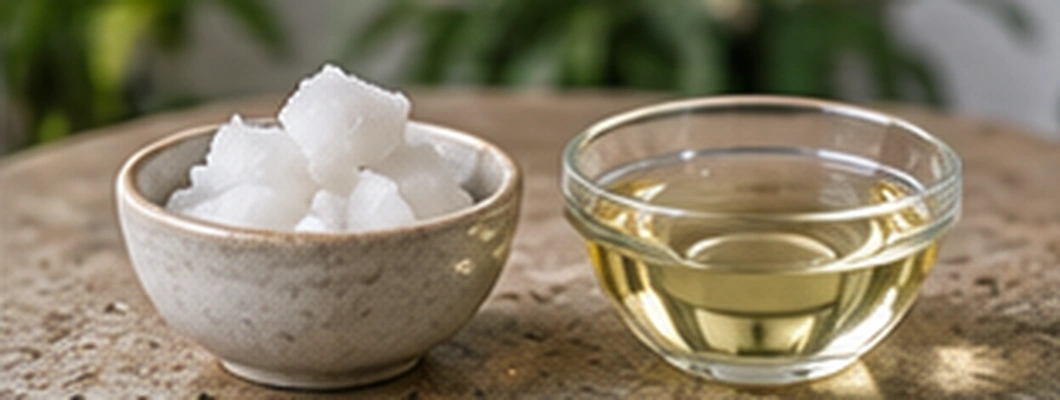
No. About half of the fatty acids in coconut oil are 12-carbon 'lauric acid', which MCT oil hardly has, and the main parts of MCT oil appear in coconut oil only in small amounts. By carbon count lauric acid is medium-chain, but in the body it behaves partly like a medium-chain and partly like a long-chain fatty acid. So results from pure MCT cannot be carried over directly to coconut oil.
Summary
A medium-chain fat used quickly for energy
MCT oil is an oil made only of medium-length fatty acids; it goes straight to the liver, is quickly used for energy, and partly turns into ketones. Coconut oil has a different fatty acid makeup and is not the same oil as MCT oil. Words worth knowing too: triglycerides, fatty acids, ketones.
The more you know, the more you grow.PHYSIQUE NEWS