
In one line
A lunge is an exercise where you take a big step forward, bend both knees to lower your body, then rise again, working the thigh and buttock muscles together.
What is a lunge?
The exercise where you split your legs and sink down
On leg day at the gym, the lunge is one of the exercises you see most, along with the squat. People do it with body weight alone, with a dumbbell in each hand, or with a barbell on the shoulders. This post explains what the lunge looks like and which muscles it uses.
In one line
Step forward, sink down, stand back up
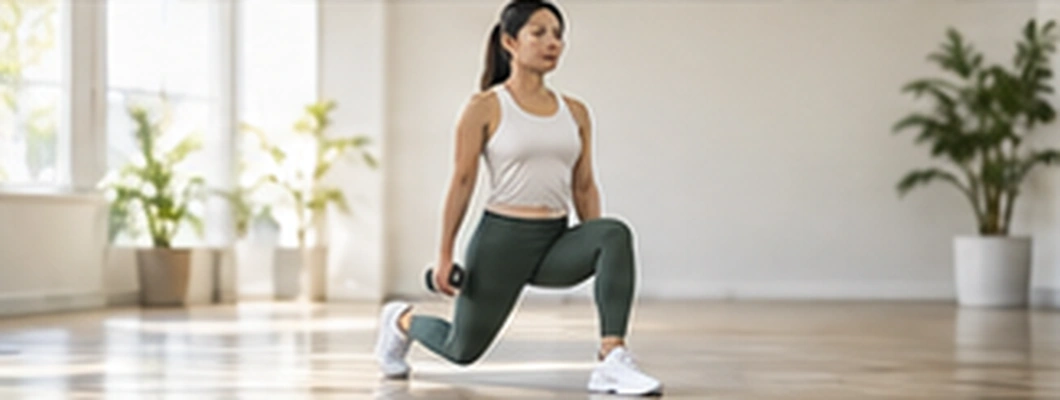
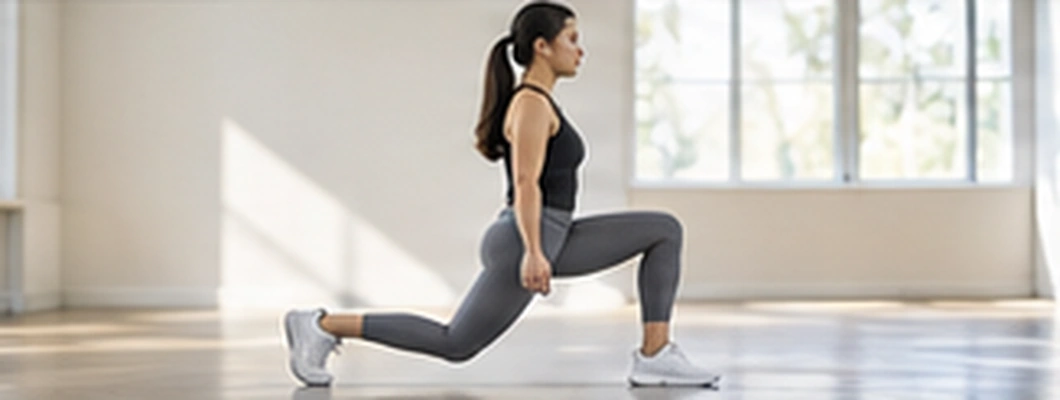
A lunge is an exercise where you take a big step forward, bend both knees to lower your body, then rise again. Usually you go down until the back knee almost touches the floor, then push off the front foot to return to where you started. The Korean dictionary describes it as sitting down and standing up again and again with the legs about 1 meter apart, front to back.

Several joints at once
Hip, knee and ankle bend together
A joint is where two bones meet so the body can bend and straighten. When you lower into a lunge, the hip joint (where the leg meets the trunk), the knee and the ankle all bend together, and they straighten together as you rise. That is why the lunge is a 'compound exercise', one where several joints move at once.
How we measure muscle work
The muscle's electrical signal, EMG
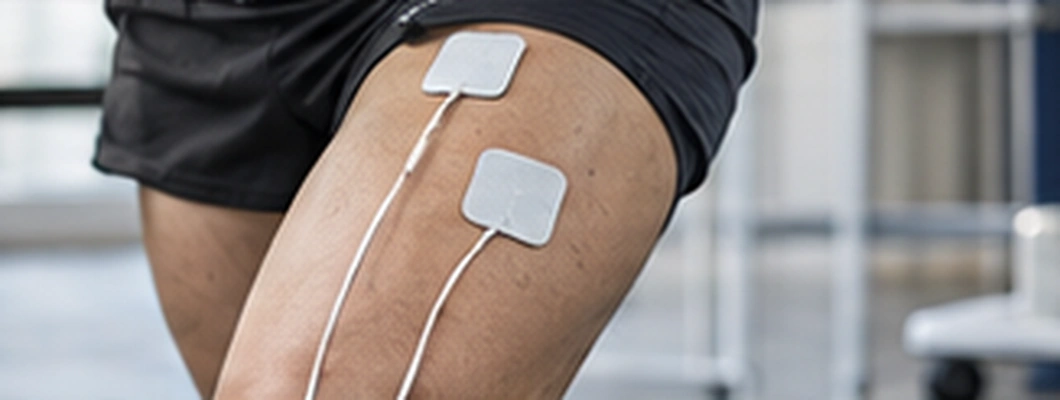
Muscles give off a very small electrical signal when they work. A record of this signal, taken with sensors on the skin, is called electromyography (EMG). Studies compare the size of this signal to see which muscle worked how hard.
The muscle that works most
The front of the front thigh: the quadriceps
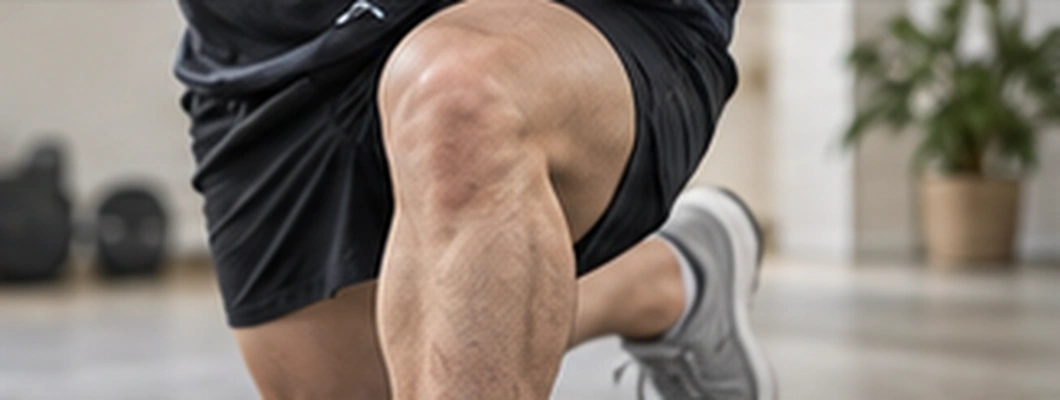
The quadriceps is the large muscle on the front of the thigh, and it straightens the knee. When EMG was measured on the front leg during a forward lunge holding weights, the quadriceps worked hardest. Straightening the bent front knee to push the body back up is mostly this muscle's job.
Muscles that help
The gluteus maximus
The gluteus maximus, the biggest buttock muscle, worked the most after the front thigh muscles. The gluteus medius, a deeper buttock layer that moves the leg out to the side, the muscles at the back of the thigh (hamstrings), the calf and the inner thigh worked less than that. One movement uses several lower-body muscles together.

Kinds of lunges
In place, or walking forward
You can keep both feet planted and move up and down in place, or step forward one stride at a time in a 'walking lunge'. In EMG studies, lunges where you step forward and back, or walk forward, made the gluteus maximus work harder than lunges done in place.

A common misconception
Long step for the glutes, short step for the thighs?
People often say a long step works the buttocks and a short step works the front of the thigh. But in forward lunges where you step out and come back, a longer step made not only the buttocks but also the front and back thigh muscles work harder while lowering the body. The front thigh worked harder with a short step only when the feet stayed planted and you moved up and down in place.

Summary
Step, sink, and use the thighs and buttocks
A lunge is an exercise where you take a big step forward, bend both knees to lower your body, then rise again; the front thigh muscle works hardest and the buttock muscles work with it. In lunges where you step out and come back, a longer step did not give the front thigh a rest. Related terms: squat, compound exercise, EMG.

The more you know, the more you grow.PHYSIQUE NEWS