
In one line
Calcium is the most plentiful mineral in the body; it makes bones and teeth hard and helps muscles, nerves and the heart work.
What is calcium?
The mineral in milk ads and on supplement bottles
You often see the word 'calcium' in milk ads and on supplement bottles. Is calcium only for bones? This post covers where calcium is in the body, what it does, and how food and supplements supply it.

In one line
The mineral that makes bones and teeth hard
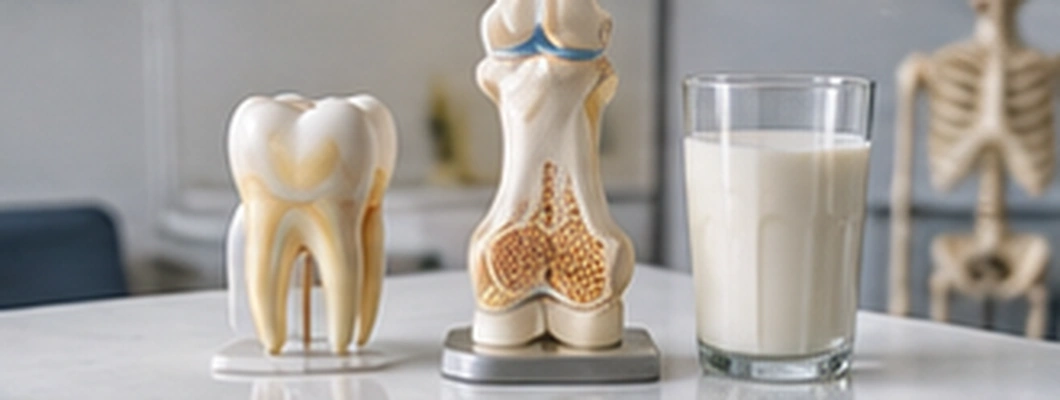
Minerals are elements the body needs, like calcium, iron and magnesium. Calcium is the most plentiful mineral in the body, and it makes bones and teeth hard. It is also used to keep muscles, nerves and the heart working properly.
Where it is
99% in bones and teeth, 1% in blood
About 99% of the calcium in your body is in your bones and teeth. Only about 1% is in your blood. That is why a blood calcium test does not tell you how much calcium is in your bones.

What blood calcium does
Muscles, nerves, heart and blood clotting
The calcium in blood is small in amount but has many jobs. It is used when muscles squeeze, when nerves send signals, and to keep a steady heartbeat. Calcium is also needed for blood to clot and stop bleeding at a wound.

Bones are a calcium bank
When blood runs low, the body draws from bone
The body cannot make calcium, so it only comes in through what you eat. When blood has extra calcium, the body puts it into bone; when blood runs low, it takes calcium out of bone and sends it to the blood. So when calcium stays low for a long time, bones become thin and weak, a disease called 'osteoporosis'.

Vitamin D and absorption
It helps the gut take in calcium
When digested nutrients pass from the gut into the blood, that is called 'absorption'. Calcium needs vitamin D to be absorbed. That is why milk in the US has vitamin D added.

Where to find it
About 300 mg in a glass of milk
Milk, yogurt and cheese are the best food sources of calcium. A glass of milk (240 mL) has about 300 mg. Soy milk and tofu made with added calcium, and canned sardines or salmon eaten with their soft bones, are also rich in calcium.

How much per day
Adults 1,000 to 1,200 mg
Under US standards, the daily recommended amount for adults is 1,000 to 1,200 mg. It rises toward 1,200 mg with age. Getting it from milk alone would take a little over three glasses.

Two kinds of supplements
Calcium carbonate and calcium citrate
Calcium supplements are mostly calcium carbonate or calcium citrate. Calcium carbonate is absorbed well when taken with a meal; calcium citrate is absorbed well even on an empty stomach. Either way, calcium is absorbed best at 500 mg or less at a time.

Too much
Daily upper limit 2,000 to 2,500 mg
The daily upper limit for adults, counting food and supplements together, is 2,000 to 2,500 mg. Taking large amounts for a long time raises the risk of kidney stones in some people. Supplements can also cause gas, bloating and constipation.

A common misconception
Does eating calcium cause kidney stones?
Not calcium from food. Men whose calcium kidney stones kept coming back were split into two diets: the group eating normal calcium with less salt and meat had about half as many people with repeat stones as the low-calcium group. However, women past menopause who took calcium pills with vitamin D for 7 years had about 17% more kidney stones.

Summary
The mineral that builds bone and moves the body
Calcium is the most plentiful mineral in the body; it makes bones and teeth hard and helps muscles, nerves and the heart work. Calcium from food did not add kidney stones, but in a trial of long-term calcium pills, stones rose a little. Related terms: vitamin D, absorption, osteoporosis.

The more you know, the more you grow.PHYSIQUE NEWS