In one line
Bulking up means eating more on purpose and doing hard strength training to build muscle and body size.
What is bulking up?
Why people eat a lot on purpose, knowing they will gain fat
At the gym you hear 'I'm eating a lot because I'm bulking up.' It means eating a lot on purpose, knowing it will add some fat. Why do people do this, and how much more do they eat?
In one line
Eating more and training hard to get bigger
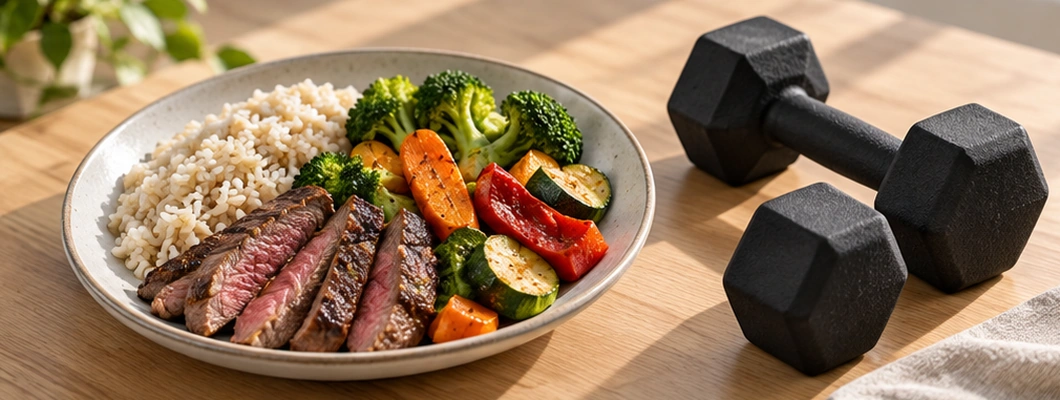
Bulking up means eating more and doing hard strength training to build muscle and body size. It comes from the English 'bulk up', meaning 'to make your body bigger and heavier, especially by gaining muscle'.

Background
Maintenance calories and a calorie surplus
If the calories you eat equal the calories your body uses, your weight stays the same. That amount is called 'maintenance calories'. Eating more than that, so energy is left over, is called a 'calorie surplus', and bulking up creates this surplus on purpose.

Why eat more on purpose
Building muscle also takes energy
Building new muscle takes energy. So creating a calorie surplus while strength training helps the leftover energy go toward adding muscle. Strength training gives the signal to grow muscle, and the surplus backs it up.

How much more
About 10-20% above maintenance
For someone whose weight stays the same at 2,500 kcal a day, that means eating about 250-500 kcal more per day. Researchers advise the low end of this range for people who have trained for years and already carry a lot of muscle.

After bulking comes cutting
The added fat is lost in the next phase
When a calorie surplus raises your weight, fat rises along with muscle. So bulking is followed by a 'cutting' phase, when people eat less to lose the added fat. Switching back and forth between the two is called a 'bulk and cut cycle'.

Links to mental health
Those who had done the cycle had bigger eating problems
In one survey of people in their late teens and twenties, those who had done a bulk and cut cycle had a stronger drive to build muscle than those who had not. They also had more severe symptoms of eating disorders, illnesses in which eating behavior goes wrong. This shows the two went together; it did not show which one causes the other.

Common myth / Does eating more always add more muscle?
What the extra food added was fat
During a weight-gain phase with strength training, athletes who followed a meal plan were compared with athletes who ate as they liked. The meal-plan group ate about 600 kcal more a day. The bigger eaters gained more weight, but their non-fat weight such as muscle did not differ, and they gained about five times more fat.

Summary
A surplus feeds muscle, but too much becomes fat
Bulking up means creating a calorie surplus and strength training to build muscle and body size. Eating more does not mean more muscle; a large surplus mainly adds more fat. Related terms: lean mass-up, cutting, calorie surplus.

The more you know, the more you grow.PHYSIQUE NEWS