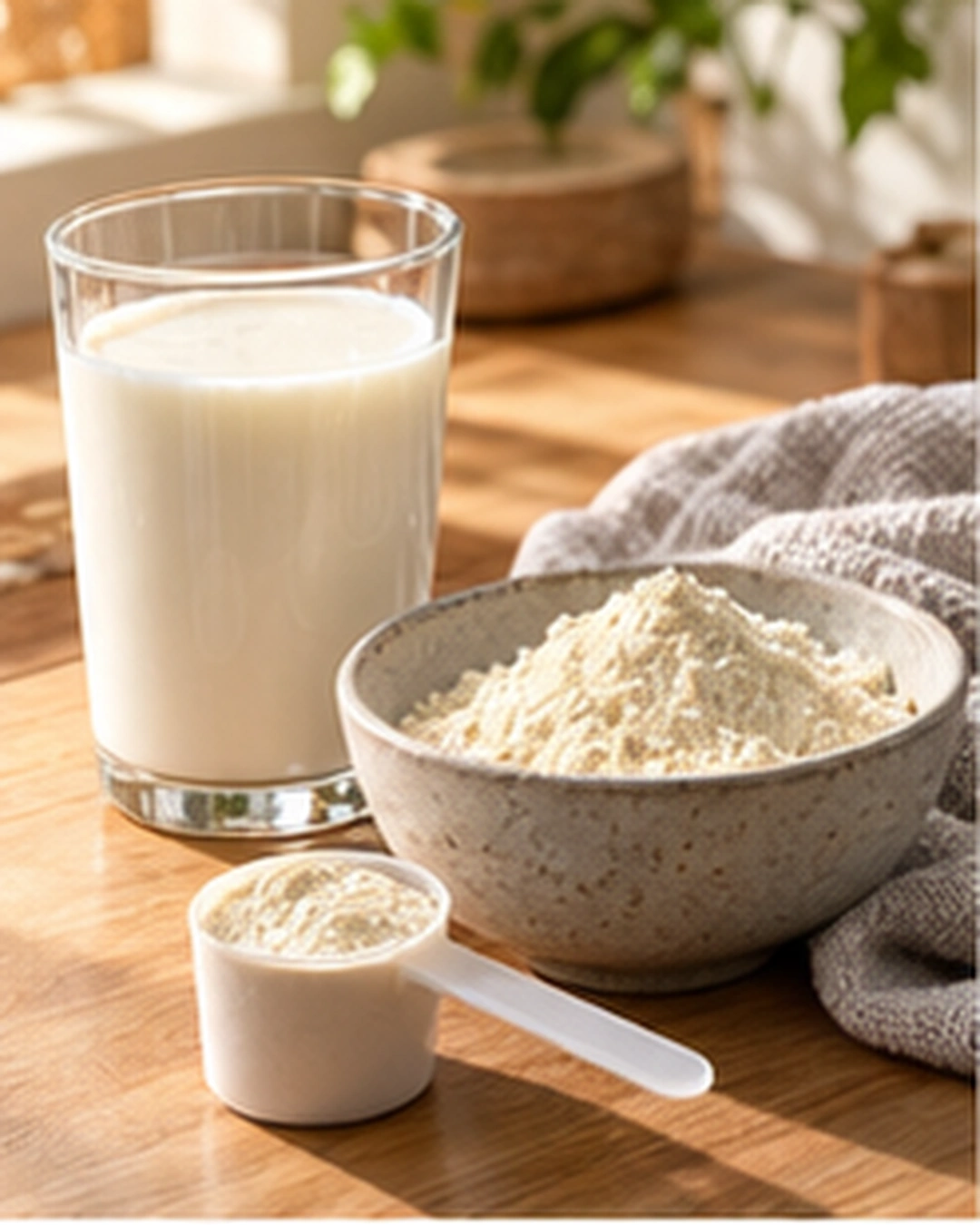
In one line
Whey protein is milk protein collected from the liquid left after making cheese, and WPC, WPI and WPH are names for how much it was filtered and whether it was cut into small pieces in advance.
What are whey protein WPC, WPI and WPH?
The three labels on a protein powder tub
Tubs of protein powder at the gym often carry labels like WPC, WPI or WPH. All three are made from the same ingredient that comes from milk. Here is what sets them apart, step by step, starting from milk.

In one line
The protein collected from the liquid left after making cheese
When milk is made into cheese, it splits into solid lumps and a liquid. That liquid is called whey, and the powder made by collecting and drying just the protein from it is whey protein. WPC, WPI and WPH are names based on how much the powder was filtered and whether it was cut into small pieces in advance.

First, what is protein?
A chain of tiny beads called amino acids
A protein is hundreds to thousands of tiny beads called amino acids joined in a long chain. When you digest protein, it is broken into amino acids, and the body joins those amino acids again to build its own proteins. Building new protein this way is called synthesis.

Two kinds of protein in milk
About 8 g of every 10 g is casein
Milk holds two groups of protein that behave differently. One is casein, the protein that clumps together and becomes the lumps of cheese. Of every 10 g of milk protein, about 8 g is casein and the remaining about 2 g is whey protein, the subject of this post.
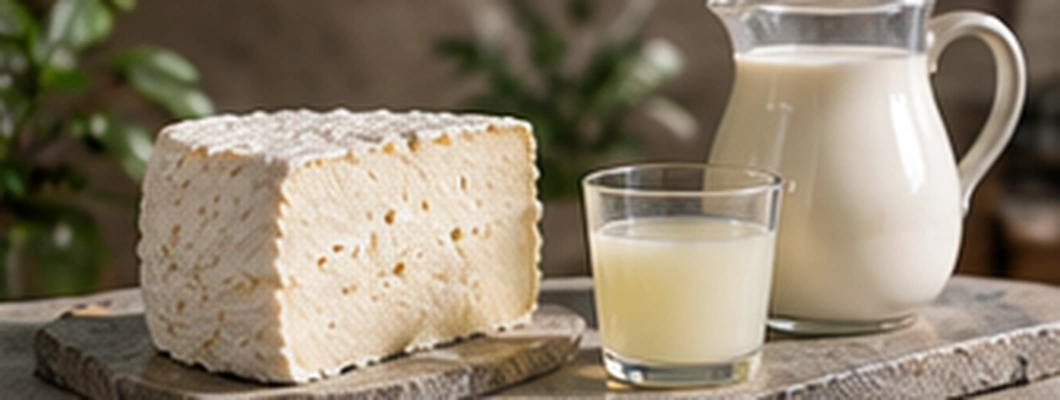
Then what is whey?
The liquid that pools on top of yogurt
When cheese is made, casein sets into lumps and a liquid is left behind. That liquid is whey. The liquid that pools on top of yogurt is whey too. The sour substance (acid) made by the bacteria in yogurt sets the casein, while the whey proteins do not set and seep out with the liquid.
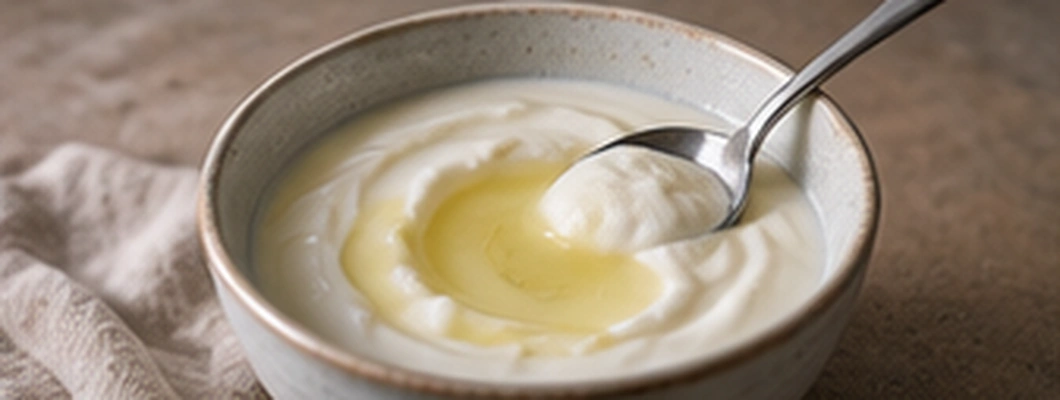
Whey holds more than protein
So it is filtered through a membrane
Besides protein, whey holds a lot of lactose. Lactose is a kind of sugar found in milk, and it tastes mildly sweet. When whey is passed through a membrane with very tiny holes, the large proteins stay on the membrane while the small lactose and water pass through.
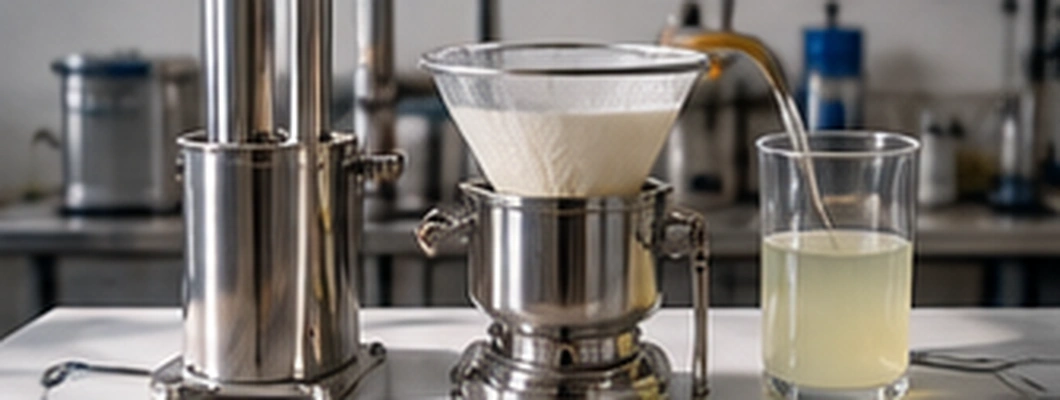
WPC: whey protein concentrate
Sports powders are usually 70-80% protein
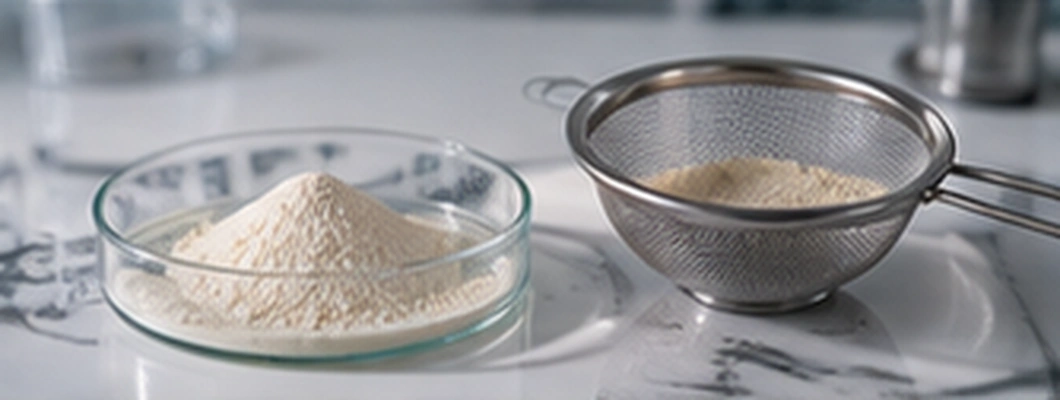
WPC stands for whey protein concentrate. Concentrate means other parts were removed so the wanted part is gathered more densely. WPC covers a wide range, from low to high protein, and sports powders usually use the 70-80% protein kind. The rest still holds a little lactose and fat.

WPI: whey protein isolate
Filtered further to 90% protein or more
WPI stands for whey protein isolate. It is filtered once more than WPC, so 90% or more of the powder's weight is protein. Almost all the lactose and fat are removed, leaving only a tiny amount. So for the same scoop, WPI has a bit more protein and far less lactose.
WPH: whey protein hydrolysate
Whey cut into small pieces in advance with enzymes
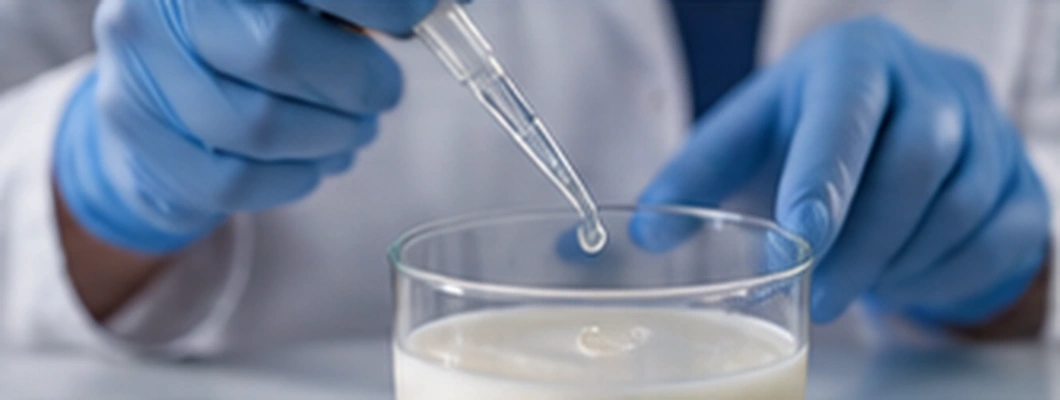
Enzymes are proteins that cause a specific chemical change in the body. Breaking the food you eat into small pieces is also the work of enzymes. WPH is whey protein whose long chains were cut in advance into short pieces with such enzymes, and cutting a chain like this is called hydrolysis.
What it does in the body
Whey is absorbed fast, and muscle protein synthesis was faster too
Absorption means nutrients you eat passing from the gut into the blood. Whey is absorbed faster than casein, so blood amino acids rose quickly and high. Muscle protein synthesis after that was also about twice as fast with whey as with casein. The whey used in that test was pre-cut WPH.

A common misconception
Does faster-absorbed WPH build more muscle?
It is true that pre-cut short pieces are absorbed faster. But WPH and uncut whey showed no difference in how much they raised muscle protein synthesis. When people took them while training for several weeks, WPH and WPC also showed no difference in strength gains.

Summary
All three are whey; filtering and cutting are what differ
Whey protein is the protein collected from the liquid left after making cheese, and WPC, WPI and WPH are names for how much it was filtered and whether it was cut in advance. Even WPH, pre-cut and absorbed faster, showed no difference from uncut whey in muscle protein synthesis. Related terms: casein, EAA (essential amino acids), BCAA

The more you know, the more you grow.PHYSIQUE NEWS