In one line
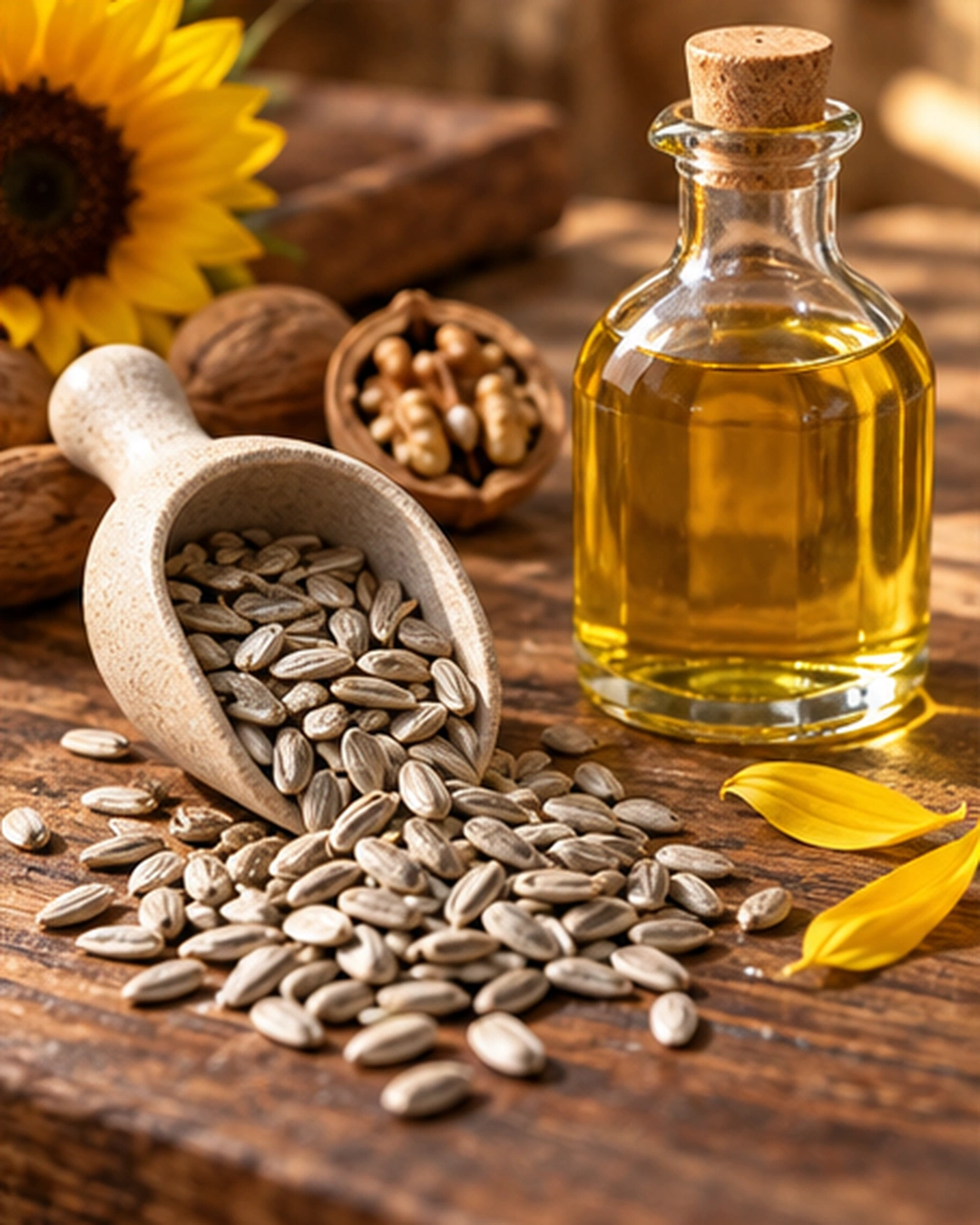
Omega-6 is a family of fatty acids the body cannot make from scratch and must get from food; most of it is linoleic acid, found mainly in vegetable oils.
What is omega-6?
The name heard alongside omega-3
Talk about omega-3 supplements often brings up the name 'omega-6' too. You may also hear that 'eating a lot of omega-6 causes inflammation'. What kind of fat is omega-6, and what does it do in the body?
In one line
A family of fatty acids you must eat
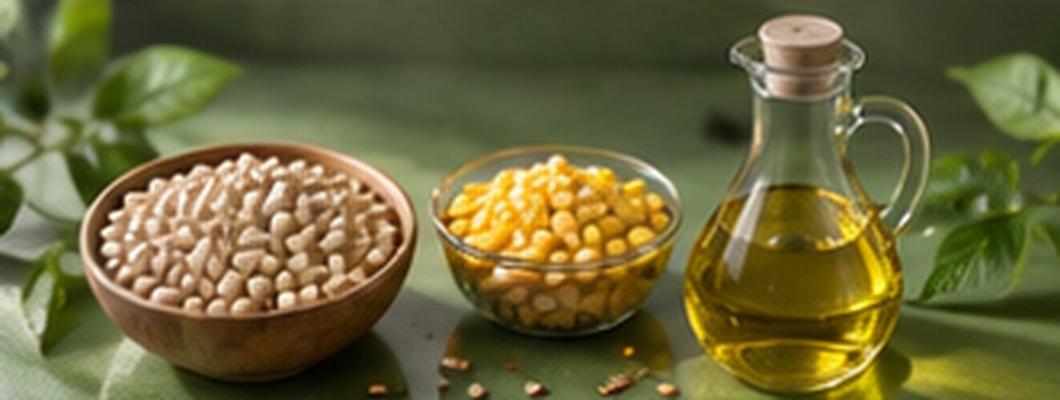
Omega-6 is a family of fatty acids the body needs but cannot make from scratch, so it must come from food. Together with omega-3 it belongs to the 'essential fatty acids'. It is plentiful in vegetable oils such as soybean oil and corn oil.
Background: fatty acids
The long chains that make up fat
Look very closely at a drop of oil and it is made of units with three long chains attached to a small backbone. Each of these chains is called a 'fatty acid'. The chain is a line of carbon atoms, and at some places two carbons are joined twice, which is called a 'double bond'.
Why 'omega-6'?
The sixth carbon from the end
The last carbon at the end of a fatty acid chain is called 'omega'. If the first double bond is at the sixth carbon counting from that end, it is omega-6; if it is at the third, it is omega-3. Omega-6 fatty acids have two or more double bonds, so they are 'polyunsaturated fats'.

The main omega-6
Linoleic acid is the one eaten most
Most omega-6 eaten in food is 'linoleic acid'. Linoleic acid is an essential fatty acid that people must eat. The body uses linoleic acid as the raw material to make other omega-6 fatty acids.
Where is it found?
Vegetable oils, nuts and seeds
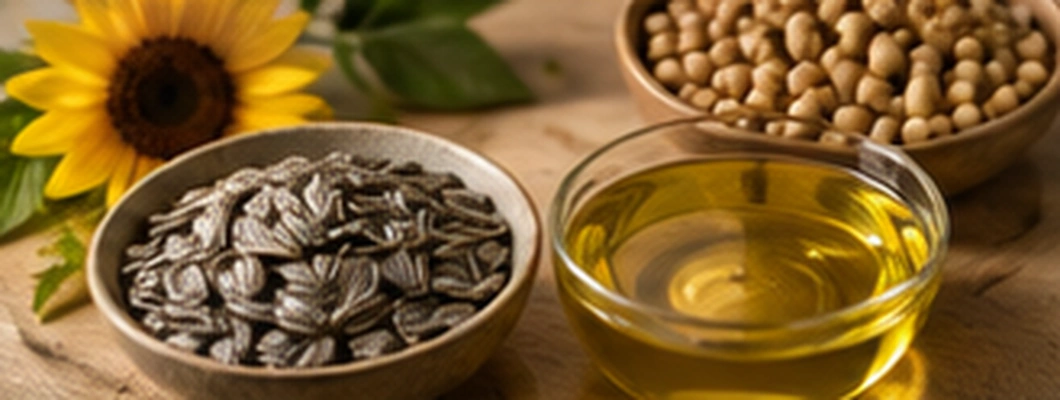
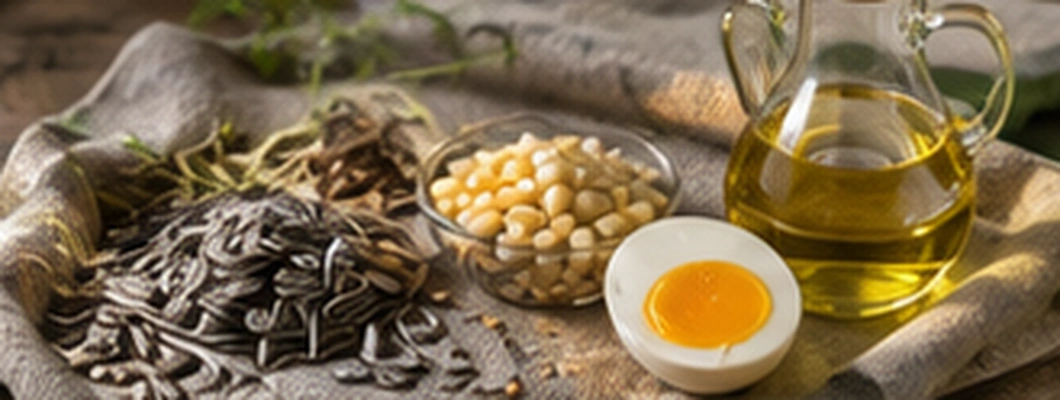
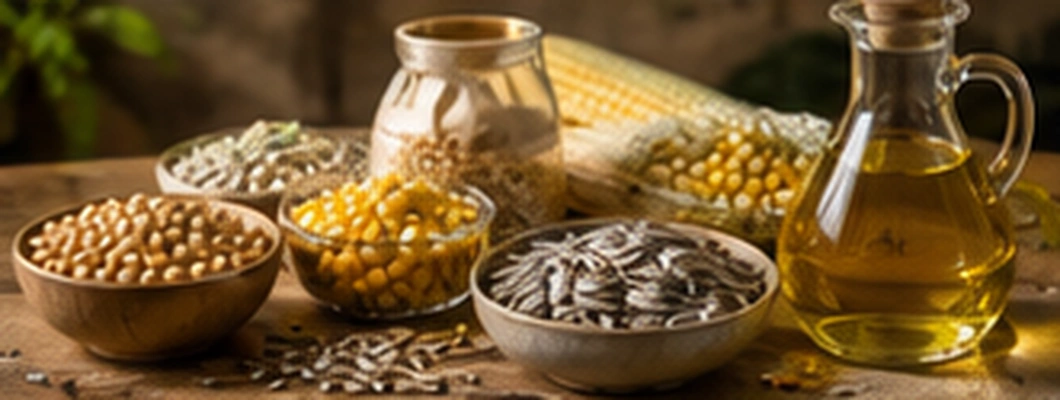
Linoleic acid is plentiful in vegetable oils such as soybean, corn and safflower oil. Seeds and nuts such as sunflower seeds and pine nuts also have a lot, and meat, chicken and eggs have a little. So small amounts are found in most everyday foods.
Job in the body 1: cell membranes
Material for the film around cells
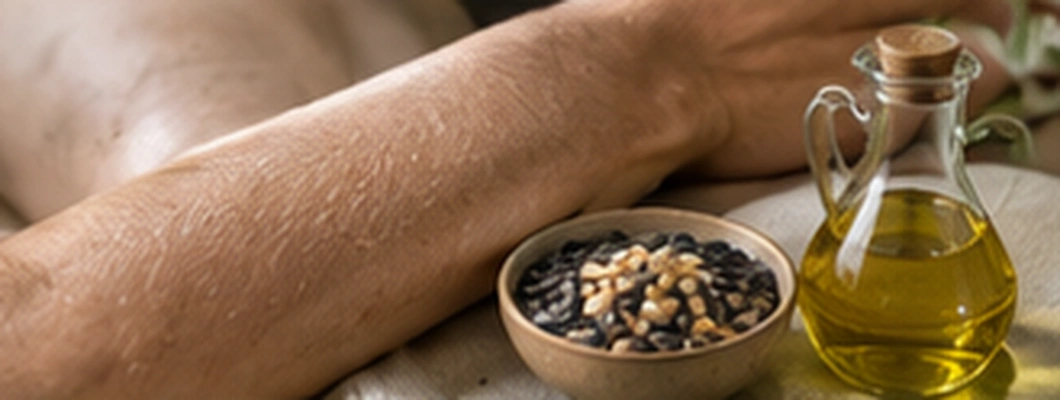
Omega-6 and omega-3 are building materials of the thin film that surrounds each cell. When essential fatty acids are badly lacking, skin becomes dry and scaly and wounds heal slowly. When only omega-3 was lacking, these skin signs did not appear.
Job in the body 2: arachidonic acid
Raw material for the body's signals
The body makes an omega-6 called 'arachidonic acid' from linoleic acid. Arachidonic acid is the raw material for substances that send signals inside the body. Some of those signals trigger 'inflammation', the swelling and redness around an injury, and some calm it down.
Official intake
11-17g a day for adults
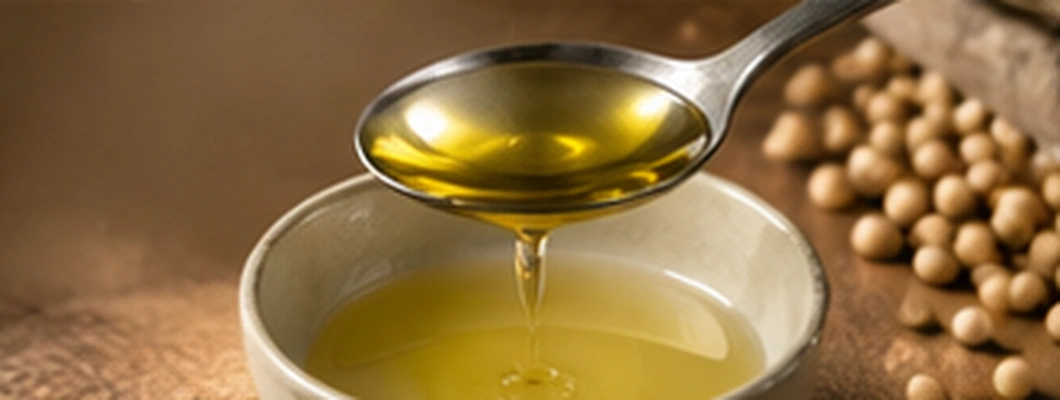
US nutrition standards set an adequate daily intake of linoleic acid for adults at 11-17g. The exact figure within this range depends on sex and age. One tablespoon of soybean oil has about 7g of linoleic acid.
A common mistake
Is omega-6 a fat that causes inflammation?
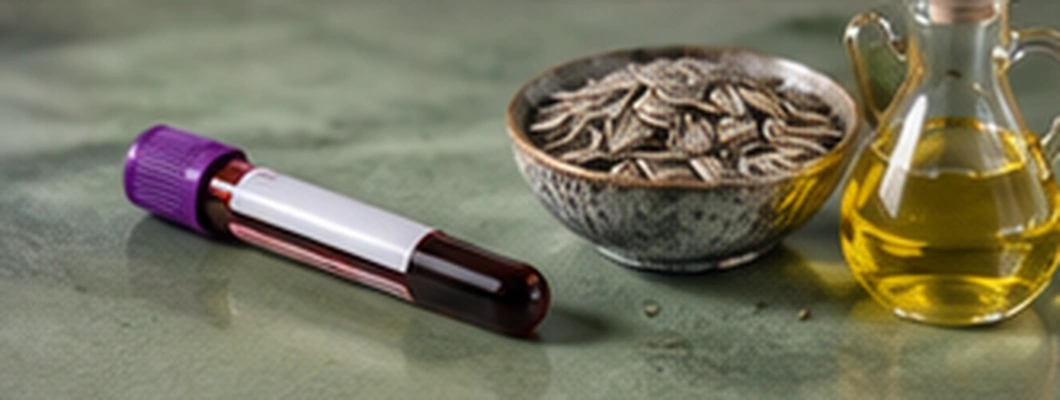
The idea comes from linoleic acid being the raw material for arachidonic acid. But in trials where healthy adults ate more linoleic acid, 'inflammation markers', substances in the blood that rise when there is inflammation, did not go up, and arachidonic acid in the blood did not increase either. Only in trials that raised linoleic acid very sharply did one inflammation marker tend to rise.
Summary
A fatty acid you must eat, mostly linoleic acid
Omega-6 is a family of fatty acids the body cannot make from scratch and must eat; most of it is linoleic acid, plentiful in vegetable oils. In trials where healthy adults ate more linoleic acid, blood inflammation markers did not rise, and only one tended to rise when intake was raised very sharply. Related terms: omega-3 (EPA and DHA), essential fatty acids, fats (saturated, unsaturated, trans).
The more you know, the more you grow.PHYSIQUE NEWS