In one line
Vitamin D is a vitamin that helps the gut take in calcium to protect the bones, and the skin makes it when exposed to sunlight.
What is vitamin D?
The vitamin called the 'sunshine vitamin'
You often see 'vitamin D' on supplement bottles and blood test results. It is also called the 'sunshine vitamin' because the body makes it when you are in the sun. This post explains what vitamin D is, how the body makes it, and what it does.

In one line
A vitamin that helps the body take in calcium
Vitamin D is a vitamin that helps the body take in calcium, which builds bones, from food. And the skin makes it when exposed to sunlight.

What a vitamin is
Substances the body needs to work properly
Vitamins are substances that cells need to work properly and the body needs to grow. People need 13 essential vitamins. Among them, vitamins A, D, E and K dissolve in fat, so they are stored in the liver and body fat.

Calcium and absorption
Moving calcium from the gut into the blood
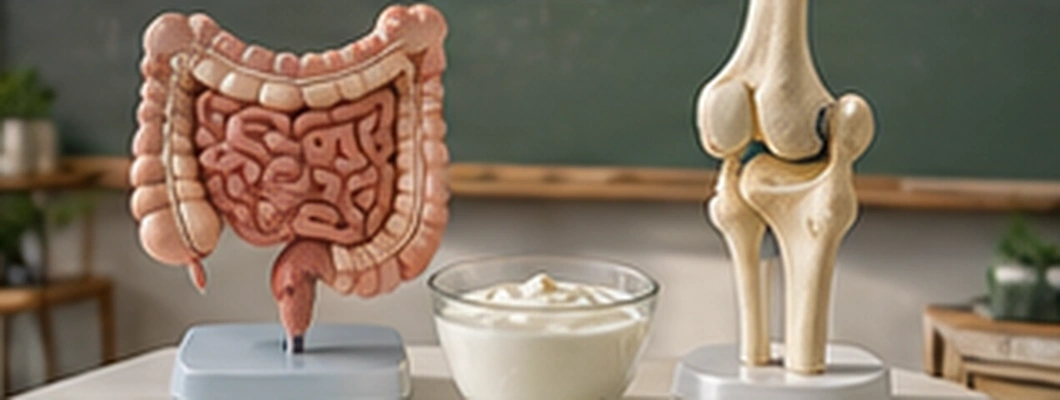
Calcium is a mineral that makes bones hard. 'Absorption' means digested nutrients passing from the gut into the blood. Vitamin D helps the gut absorb calcium, and when vitamin D is low, less calcium is absorbed and bones weaken.
Made from sunlight
It forms when skin gets ultraviolet light
The skin holds a starting material for vitamin D, and ultraviolet light in sunshine turns it into vitamin D. Most people get at least some of the vitamin D they need this way. Cloudy days, shade, darker skin and places with weak sunshine mean less is made.

D2 and D3
Two forms of vitamin D
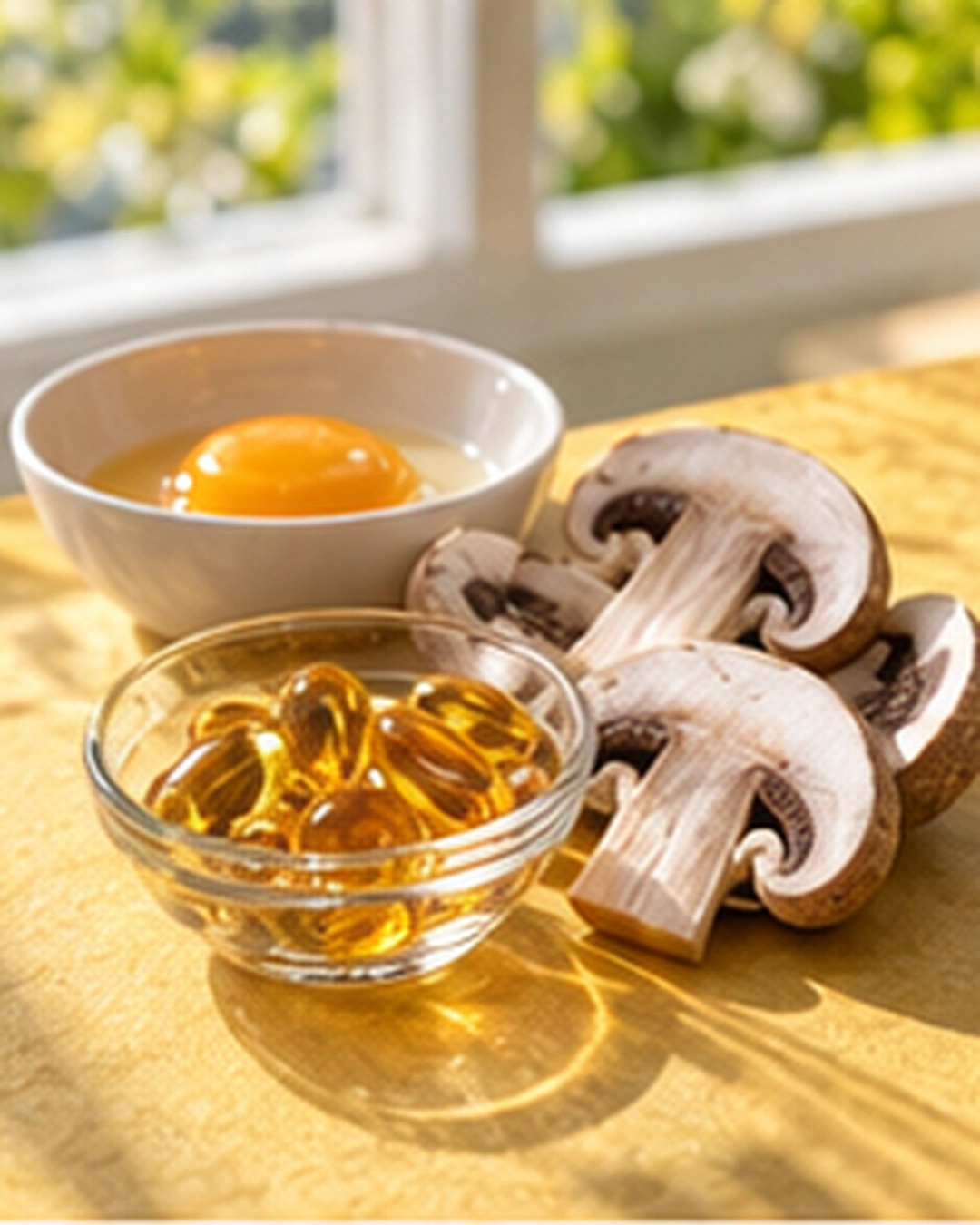
The vitamin D that skin makes from sunlight is D3. D2 forms when a starting material in fungi such as mushrooms gets ultraviolet light. So mushrooms exposed to ultraviolet light have more vitamin D, and supplements use both D2 and D3.

It does not work right away
Changed twice, in the liver and kidneys
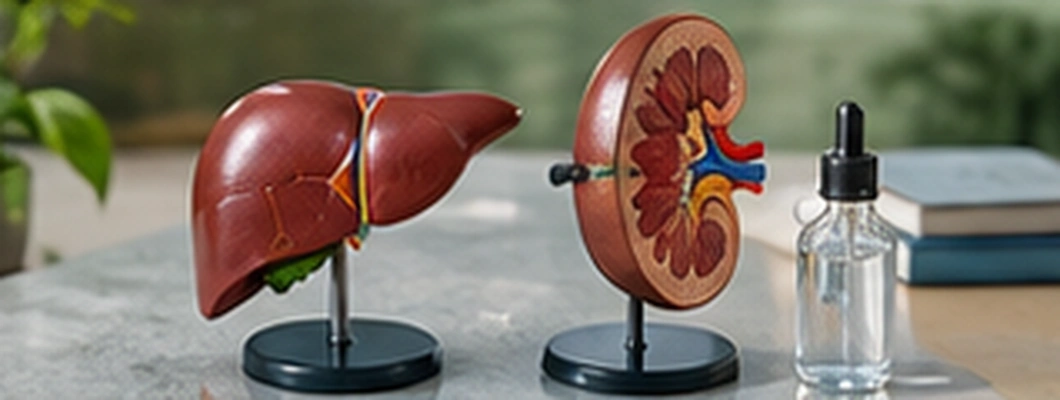
Vitamin D that is made or eaten cannot work as it is. It must be changed once in the liver and again in the kidneys to become the working form (the active form). The active form works like a 'hormone'. A hormone is a substance made in one part of the body that travels in the blood and carries signals to other parts.
What a blood test measures
'25(OH)D', changed once in the liver
A vitamin D blood test usually measures '25(OH)D', the form changed once in the liver. This is because it is the most accurate way to see whether the body has enough vitamin D. The active form made in the kidneys is not usually measured to check whether you have enough.

Which foods have it
Few foods have it naturally
Few foods naturally contain vitamin D. Fatty fish such as salmon, mackerel and tuna have the most, and egg yolks, beef liver and cheese have small amounts. That is why in the US vitamin D is added to foods such as milk and cereal.

How much, and too much
Recommended amount and safe upper limit
For most adults the recommended amount is 600 IU a day. IU is a unit used on vitamin labels, and 600 IU equals 15 micrograms. The safe upper limit is 4,000 IU a day, and too much almost always comes from taking a lot of supplements. Too much makes blood calcium rise too high, which damages the kidneys or forms kidney stones.
A common misconception
Does sunscreen stop vitamin D from forming?
No. Under artificial ultraviolet light in the lab, sunscreen strongly blocked vitamin D from forming. But in real life, there was no difference in vitamin D levels between people who used sunscreen every day for years and people who used it now and then. However, the sunscreens in these studies had a medium protection factor (about 15).

Summary
The sunshine vitamin that brings in calcium
Vitamin D helps the gut absorb calcium to protect the bones, and the skin makes it when exposed to sunlight. People who used a medium-protection sunscreen every day in daily life had no difference in vitamin D levels from people who used it now and then. Related words: calcium, ultraviolet light, 25(OH)D.

The more you know, the more you grow.PHYSIQUE NEWS