
In one line
Peak week is the last week before a bodybuilding contest, when competitors change what they eat and how they train so that their body looks its best on stage day.
What is peak week?
When competitors say 'this is peak week'
Competitors getting ready for a bodybuilding contest give the last week before the contest its own name: 'peak week'. In this week they change the diet and training they have followed for months. Here is what they change and why.

In one line
Fine-tuning in the last week before a contest
Peak week is the last week before a contest, when competitors change what they eat and how they train so that their body looks its best on stage day. The Korean term is simply the English 'peak week' written in Korean letters.

What the name means
A 'peak' is the highest point
In the dictionary, a peak is the time when something reaches its highest or best point. Researchers also say competitors 'peak' their body for contest day, meaning they bring it to its best state. Peak week is that final week.

How it differs from the months before
Fat loss is meant to be done before it
Contest preparation usually takes months of losing body fat while keeping muscle. Researchers see fat loss as something to finish before peak week, and the last week as time for fine-tuning how the body looks.

Goal 1: full muscles
Filling the muscles' energy store
The body stores part of the carbohydrate we eat in the muscles and liver, and this stored form is called 'glycogen'. The first goal of peak week is to fill muscle glycogen so the muscles look full and bigger. So in this week competitors change how much carbohydrate they eat by a lot.

Goal 2: less water under the skin
Trying to look 'dry'
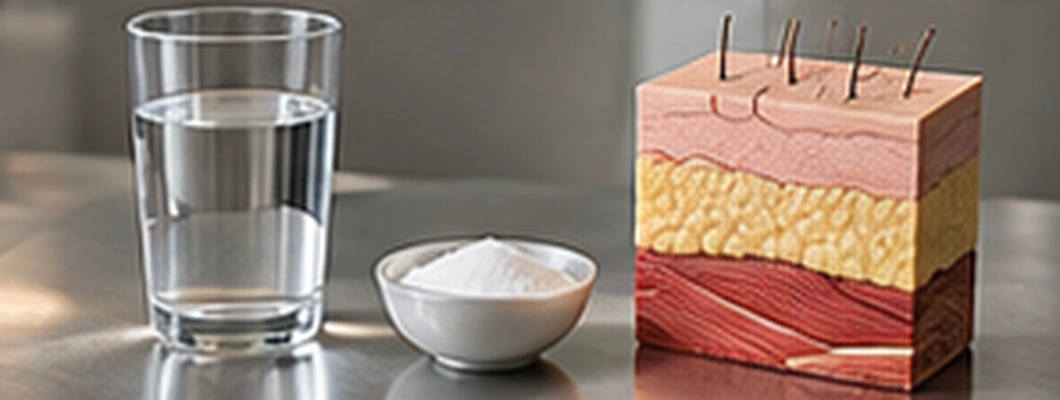
The second goal is to keep the water inside the muscles while reducing the water just under the skin. Competitors call this look, where the muscles stand out with no watery layer, 'dry'. So they also change how much water and salt they take in.
Goal 3: a flat stomach
Keeping the waist small
The third goal is to keep the stomach from bloating so the waist looks small. A smaller waist makes the shoulder-to-waist proportion look better.

What changes
Carbohydrate, water, salt and training
In surveys, the things competitors changed most in this week were carbohydrate, water and salt. They also changed their weight training, usually cutting the number of training days, the amount of work and the weights. How much carbohydrate they ate, and when, differed widely from one competitor to another.

How common is it?
More than nine in ten changed their diet
In a survey of competitors at British Natural Bodybuilding Federation contests, fewer than one in ten kept eating their usual diet in the last week before the contest. Everyone else changed something.

Risk
A case where water, salt and diuretics ended in the ER
A competitor who drank huge amounts of water, cut out salt and also took a 'diuretic' (a drug that makes you pass more urine to remove water) in the days before a contest became dizzy and cramped on stage and was taken to the emergency room. A competitor who died after using diuretics together with diet restriction has also been reported.

A common misunderstanding
If everyone does it, has it been proven to work?
No. Almost no studies have tested whether the usual peak week methods actually make competitors look better on stage. Even the method of eating lots of carbohydrate to fill the muscles was borrowed from research on endurance exercise such as long-distance running and cycling.

Summary
Fine-tuning in the last week before a contest
Peak week is the last week before a contest, when competitors change what they eat and how they train to make their body look its best on stage. Most competitors do it, but experiments have not yet shown that the common methods make them look better on stage. Related terms: carb loading, water cut, conditioning.

The more you know, the more you grow.PHYSIQUE NEWS