In one line
Potassium is a mineral, found mostly inside cells, that lets nerves send signals and keeps muscles and the heart working properly.
What is potassium?
The mineral you hear about with bananas and labels
You often hear 'bananas are high in potassium' and see 'potassium' on nutrition labels. This post explains what kind of mineral potassium is, what it does in the body, where it is found, and what happens when there is too little or too much.

In one line
The mineral that lets nerves, muscles and the heart work
Minerals are elements the body needs, such as calcium and iron. Potassium is a mineral needed for nerves to send signals, for muscles to contract, and for the heart to beat steadily. Its chemical symbol is K.

An electrolyte inside cells
Sodium outside, potassium inside
Potassium is one of the 'electrolytes', minerals that dissolve in body water and carry an electric charge. Most of the body's potassium sits inside cells, and only a little is in the blood. This is the opposite of sodium, which is mainly outside cells.

What it does
The basis of nerve signals and heartbeat
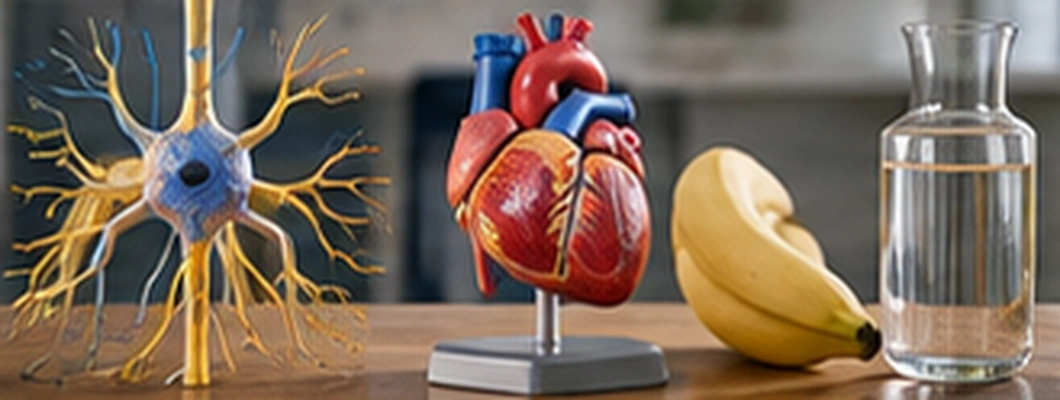
Nerve and muscle cells make electrical signals based on the difference in potassium inside and outside the cell. That is why even a small change in blood potassium strongly changes how nerves and muscles, especially the heart, work.
Who keeps the balance
The kidneys remove extra potassium
Potassium comes in through food. The kidneys send extra potassium out in urine to keep the body's amount steady. So when the kidneys do not work well, potassium builds up in the blood.

Where it is found
Vegetables and fruit, beans, milk
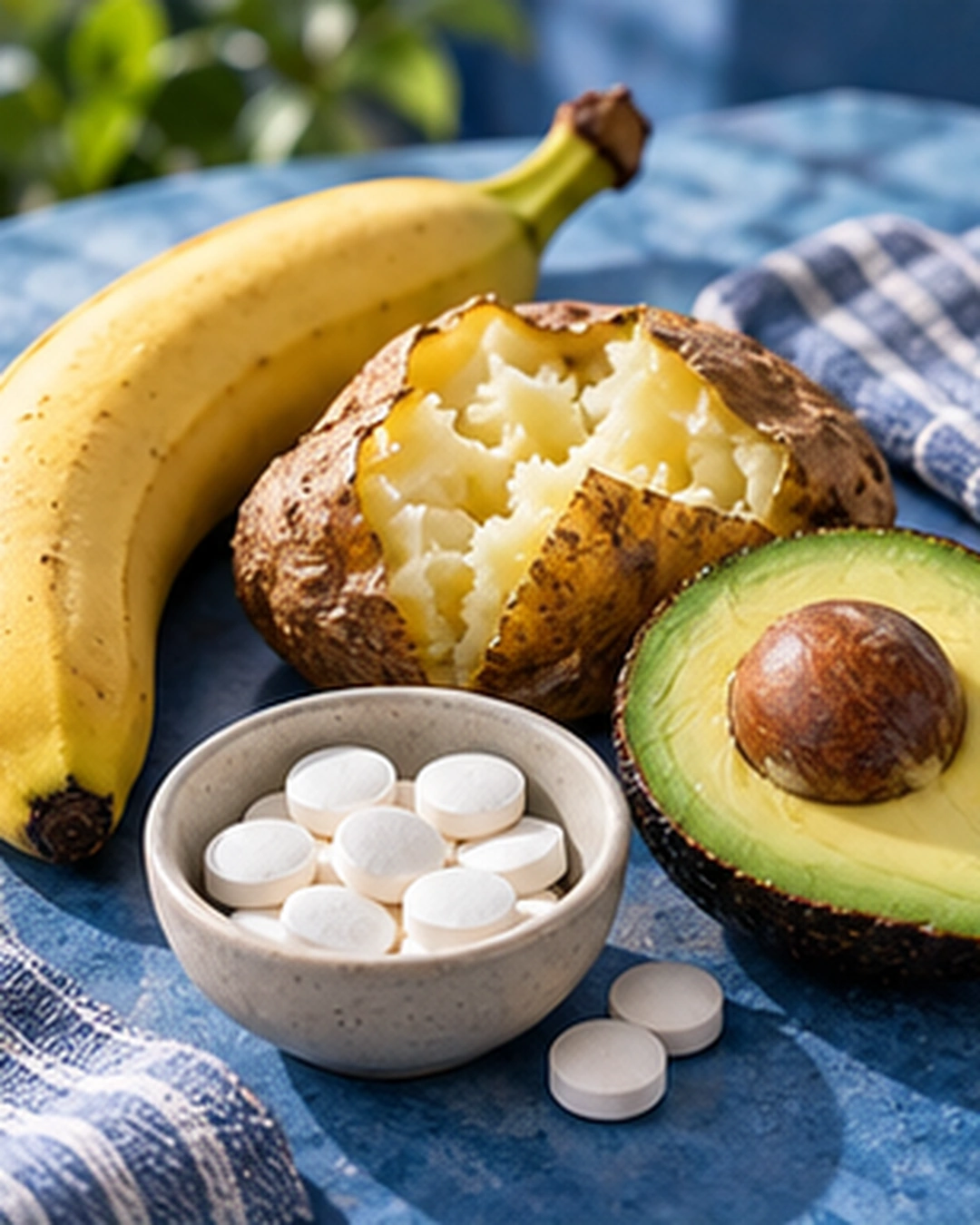
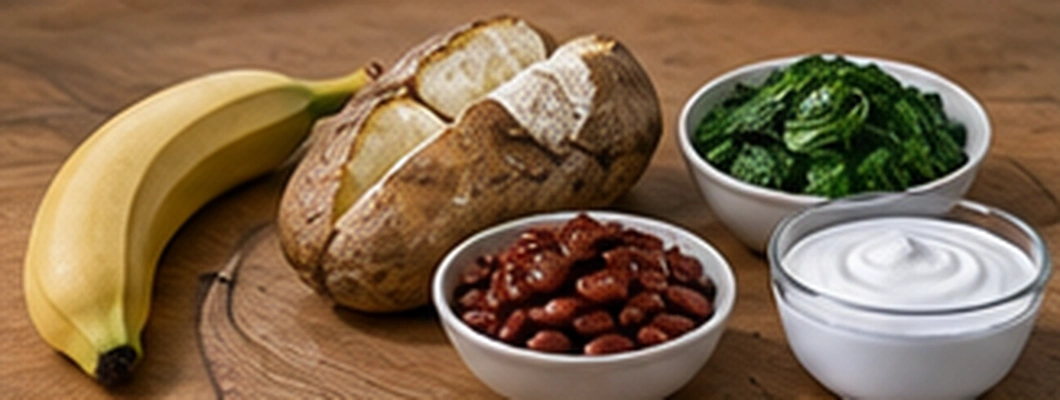
The richest sources of potassium are vegetables and fruit. It is plentiful in potatoes eaten with the skin, sweet potatoes, tomatoes, spinach, beans, bananas, kiwis, oranges, milk and yogurt. Meat and fish also contain some.

How much a day
US adult amounts: 3,400 mg for men, 2,600 mg for women
The US National Academies set the adult daily adequate intake at 3,400 mg for men and 2,600 mg for women. An adequate intake is the amount judged to be enough for most healthy people.

Potassium and blood pressure
It fell in people with high blood pressure
When trials that had people eat more potassium were pooled, blood pressure fell in people with high blood pressure and did not change in people with normal blood pressure. However, when people took very large extra amounts as supplements, the lowering effect weakened, and in people taking blood pressure drugs, such large amounts actually raised blood pressure.

Too little
Hypokalemia
A blood potassium level that is too low is called 'hypokalemia'. It happens with severe vomiting or diarrhea, or heavy use of water pills (drugs that make you urinate more) or laxatives. Muscles become weak or cramp, and in severe cases the heartbeat becomes irregular or stops.

Too much
Hyperkalemia
A blood potassium level that is too high is called 'hyperkalemia'. The most common cause is kidney disease; some blood pressure drugs, potassium supplements and salt substitutes containing potassium are also causes. It often comes without symptoms, then the pulse slows or the heart stops.

A common myth
Are bananas the food with the most potassium?
No. Bananas are a potassium-rich fruit, but in the US Dietary Guidelines table, 1 medium banana has about 450 mg, roughly half of 1 baked potato with skin (about 930 mg). A cup of cooked spinach, cooked white beans, or plain yogurt also has more than a banana.
Summary
The mineral inside cells that runs nerves, muscles and the heart
Potassium is a mineral, found mostly inside cells, that lets nerves send signals and keeps muscles and the heart working properly. Besides bananas, many foods such as potatoes, spinach, beans and yogurt contain as much or more. Related terms: electrolyte, sodium, hyperkalemia.

The more you know, the more you grow.PHYSIQUE NEWS