
Short answer
It helps, but only a little. Caffeine raised daily calorie burn by up to 150 kcal and made the body use slightly more fat, but one extra daily cup of unsweetened coffee meant only a 0.12 kg weight difference over 4 years.
Does caffeine help you lose weight?
'Caffeine → faster metabolism → less fat' — does this formula hold?
Many diet supplements contain caffeine. We checked step by step whether caffeine really raises the calories your body burns and the fat it uses, and whether that carries through to actual body weight.

Does it raise the calories you burn?
It does, by up to 150 kcal a day
A single 100 mg dose of caffeine raised resting calorie burn by 3-4% over 2 hours 30 minutes. Taking 100 mg every 2 hours for 12 hours (600 mg in total) raised daily calorie burn by 150 kcal. In people who had previously lost weight, it was 79 kcal.

Does it burn more fat too?
It does, but not in regular caffeine users
An analysis pooling 94 studies found caffeine slightly increased the amount of fat the body uses. Across 20 comparisons (228 people) where people exercised after eating, fat burning during exercise also rose. This effect came from people who did not usually consume caffeine; in regular users there was no difference.

How much is 150 kcal a day?
About 51 days to burn 1 kg of fat
150 kcal a day is about half a bowl of rice. Burning 1 kg of fat takes about 7,700 kcal, so even with an extra 150 kcal burned every day, it would take 51 days. And that figure came from 600 mg of caffeine split over 12 hours.

Did body weight actually drop?
It did, but one cup of coffee meant 0.12 kg over 4 years
An analysis pooling 13 trials with 606 people found those taking caffeine lost more weight and fat, and more caffeine meant more loss. In 3 long-running US studies of adults, each extra daily cup of unsweetened coffee meant 0.12 kg less weight gain over 4 years. Decaf coffee also showed 0.12 kg.

Does it curb appetite?
At a low dose, people ate 10% less at that one meal
50 people drank caffeine and ate a breakfast buffet 30 minutes later. At a dose of 70 mg for a 70 kg (154 lb) person, they ate about 10% less; at 3 times that, 210 mg, there was no difference. After leaving the lab, how much they ate that day and how hungry they felt did not differ.

Adding sugar wiped out the effect
One teaspoon of sugar meant 0.09 kg over 4 years
In the same long-running studies, each added teaspoon of sugar in coffee meant 0.09 kg more weight gain over 4 years. That cancels most of the 0.12 kg one cup of coffee saved. Adding cream or non-dairy creamer was not linked to weight change.
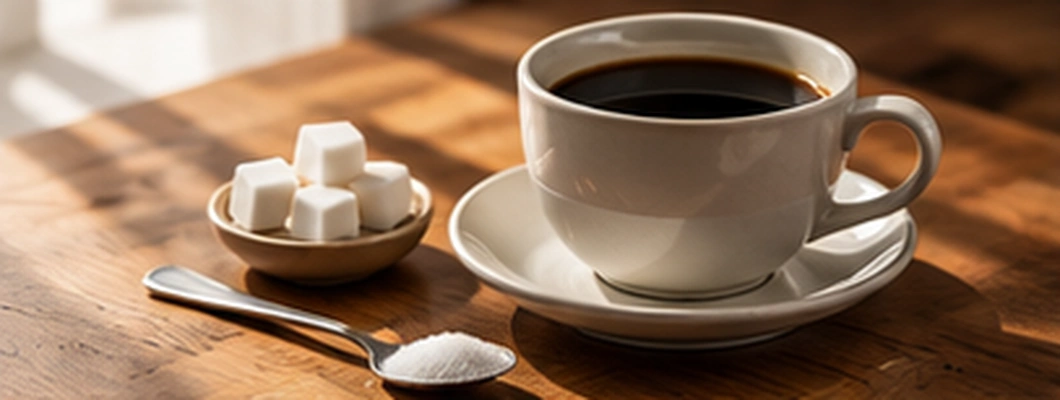
Summary: caffeine helps, but only a little
Up to 150 kcal a day, 0.12 kg over 4 years
Caffeine raised calorie burn and made the body use slightly more fat. But the 150 kcal from 600 mg a day would take 51 days to burn 1 kg of fat, and one extra cup of coffee meant a 0.12 kg difference over 4 years. Eating and exercise do the work of fat loss; caffeine only gives a small push.

A better body starts with a better question.PHYSIQUE NEWS