
Short answer
Low energy, more than the body-fat number. When calories eaten fall short of calories burned in training, the brain signal that drives the cycle was disrupted within 5 days even at normal body fat, and 63% of 27 people who dieted for 4 months had irregular periods.
Why do periods stop during contest prep?
'Body fat too low' — does this formula hold?
When periods stop late in contest prep, the usual explanation is that body fat got too low. We checked step by step whether it is the body-fat number or the gap between what you eat and what you burn.

How common is it?
Twice as common in the dieting group
Of 27 people who dieted for 4 months, 63% had irregular periods. Among 23 who kept their weight stable over the same time, it was 30%. In a survey of 104 people, 61 (59%) had gone 3 months or more without a period.

What happens inside the body?
The hormone that drives the cycle fell
While 27 people cut 35-50% of their body fat, the hormone that drives the cycle (estradiol) fell, along with leptin and thyroid hormone, which signal the body's energy status. In 36 people who dieted for about 23 weeks, the 14 not on the pill also saw estradiol drop.

Not fat, but 'low energy'
The cycle signal was disrupted in 5 days
29 people exercised while their food was controlled for 5 days. When the energy left after subtracting exercise calories dropped below a set line (1,440 kcal a day for 48 kg of fat-free body weight), the pulses of the brain signal that drives the cycle slowed. This happened in 5 days in bodies with normal body fat.

The bigger the gap, the more often it stopped
Problems rose past a 470 kcal daily shortfall
34 people ate less and exercised for 3 menstrual cycles. Cycle problems rose in groups that were 22% or more short (about 470 kcal a day), and even after accounting for weight lost, the size of the calorie gap predicted best. Below the line above, the risk rose by 50%.
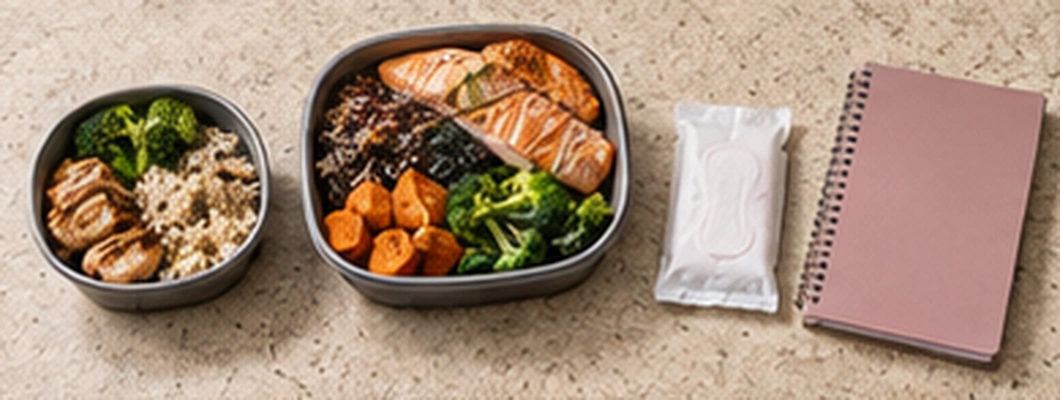
Periods didn't come back right after the show
For 1 person, 71 weeks after the show
After the diet, 3-4 months of eating more and doing less cardio brought estradiol back to normal. Still, 7 of 25 (28%) had no period (14% in the weight-stable group). In 1 case, weight and body composition recovered in 20 weeks, but the period returned 71 weeks after the show.

The pill hides it
Hormone levels held, but the low-energy signals were the same
Of 36 people who dieted for about 23 weeks, the 11 on a combined pill kept estradiol steady, because the pill supplies the hormone from outside. But leptin, thyroid hormone and a growth-related hormone (IGF-1) fell by a similar amount whether or not they took the pill.

Bottom line: low energy stops the period
The gap between eating and burning, not the body-fat number
The cycle signal was disrupted after 5 days of low energy even with normal body fat, and the bigger the calorie gap, the more frequent the problems. In 1 case, periods turned irregular in the first month of the diet. The yardstick for protecting the cycle is eating enough for your training, not a body-fat number.

A better body starts with a better question.PHYSIQUE NEWS