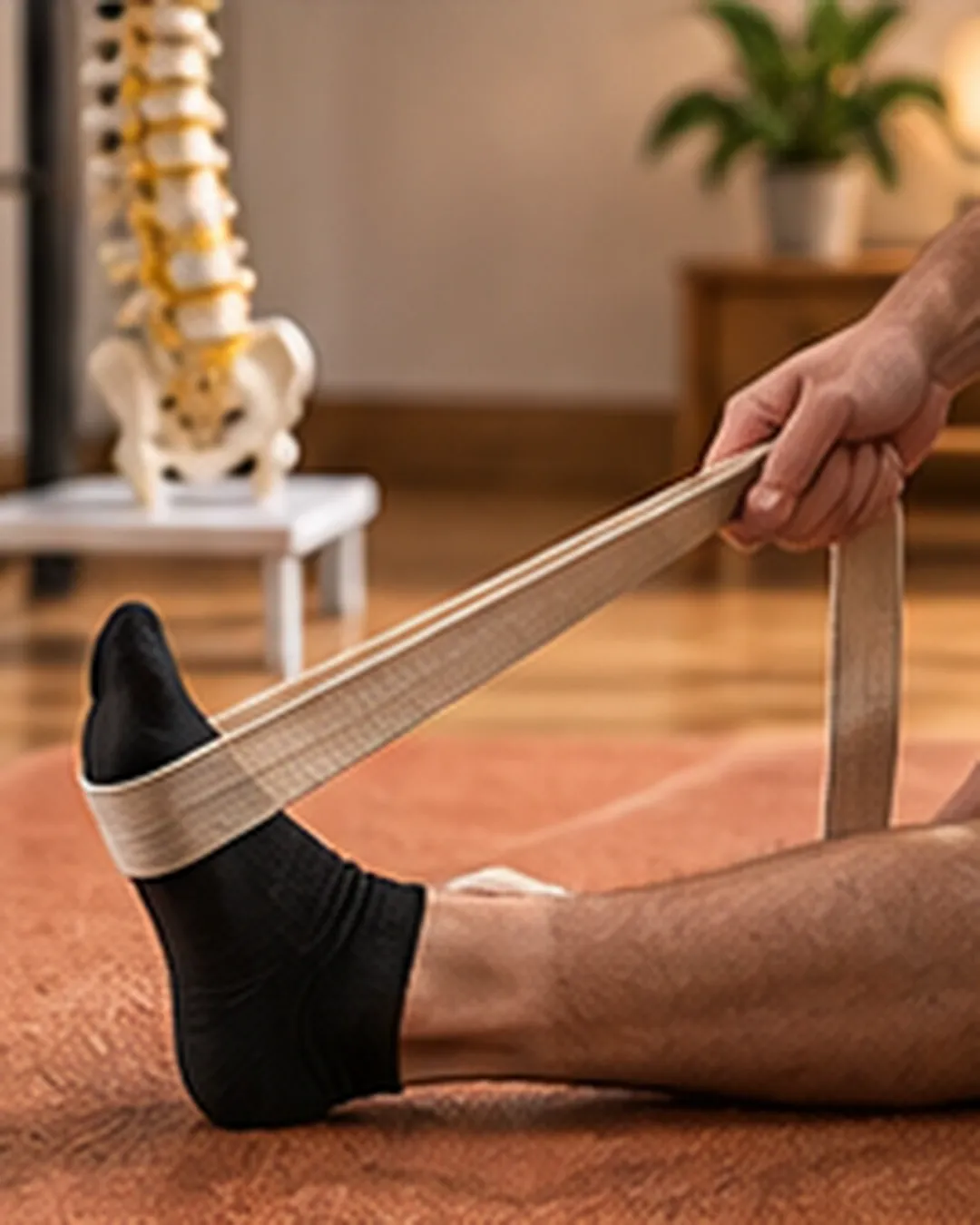
Short answer
The formula did not hold. The link between tightness and back pain came from just one study of 377 people, and tightness was not linked to how the lower back moved. Stretching was the only type of exercise that did not reduce back pain.
Do tight hamstrings cause low back pain?
'Tight hamstrings → pulled pelvis → back pain' — does this formula hold?
A common claim is that short, tight muscles at the back of the thigh (the hamstrings) pull on the pelvis and make the lower back hurt. So people with back pain often start by stretching their hamstrings. We checked the formula one step at a time.
Are people with back pain tighter?
A little tighter, yes
An analysis that pooled 17 studies found that people with back pain could not raise a straight leg as high while lying down. A study comparing 24 people also found tighter hamstrings in those who had had back pain.

Does tightness lead to back pain later?
Only one study found a link
An analysis that pooled 3 studies (1,771 people) followed for 1 year or more found that tighter people developed more back pain. Almost all of that result came from one study of 377 people. The other two studies, which measured the straight-leg raise, found no difference in risk.

How big was it in that one study?
4% higher risk for every degree tighter
Following 377 people without back pain for 1 year, every 1 degree less knee straightening meant a 4% higher risk of back pain (about 1.5 times for 10 degrees). In the same study, growing a lot in height that year meant 3.09 times the risk, and smoking 2.20 times.
Does tightness really pull the pelvis and move the back?
Tightness was not linked to back movement
Researchers filmed 24 people in 3D as they bent forward and stood back up. Those who had had back pain used their lower back earlier and faster when rising. But how tight their hamstrings were was not linked to any measure of back or hip movement.

Does stretching still ease back pain?
The only exercise type that did not reduce pain
An analysis that pooled 118 trials with 9,710 people found that most types of exercise reduced back pain. Only stretching showed no difference in pain compared with not exercising. The biggest pain reductions came from Pilates, mind-body exercise such as yoga, and core exercise.

The flip side: pain fell even when flexibility did not change
After 6 weeks, only the pain went down
26 people with back pain were split, and one group did balance work and hamstring strength training 3 times a week, 45 minutes each, for 6 weeks. The exercise group had less pain and gained back strength and endurance. Hamstring flexibility did not differ from the group that did not exercise.

Summary: flexibility was not the key to back pain
The formula breaks at the 'tightness → pelvis' link
People with back pain were a little tighter, but only one study of 377 people linked tightness to later pain, and tightness was not linked to back movement. Stretching did not reduce back pain; strength and core exercise did.

A better body starts with a better question.PHYSIQUE NEWS