Short answer
Yes. With the caffeine dose matched, coffee cut times by 4–5%, just like pure caffeine. The difference is that one cup of coffee can hold anywhere from 25 to 214 mg of caffeine.
Do coffee and caffeine pills work the same?
'Coffee is weaker than pills because of its other compounds' — does this hold?
Some people get their pre-workout caffeine from coffee, others from pills. A common claim is that other compounds in coffee block caffeine's effect. We checked whether the same amount gives the same result.
Same dose, same performance?
Coffee 4.7% faster, pure caffeine 4.9% faster
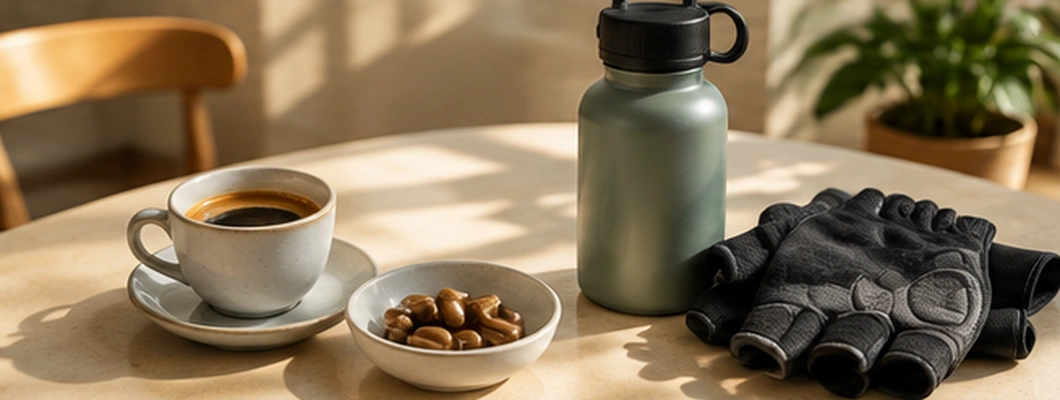
8 people took the same dose of caffeine (350 mg for a 70 kg (154 lb) person) as pure caffeine or as instant coffee 1 hour before a 45-minute cycling time trial. Compared with a fake drink, coffee made them 4.7% faster and pure caffeine 4.9% faster, with no difference between the two. Decaf coffee did nothing.
What about lifting?
On coffee days, they lifted more in the squat
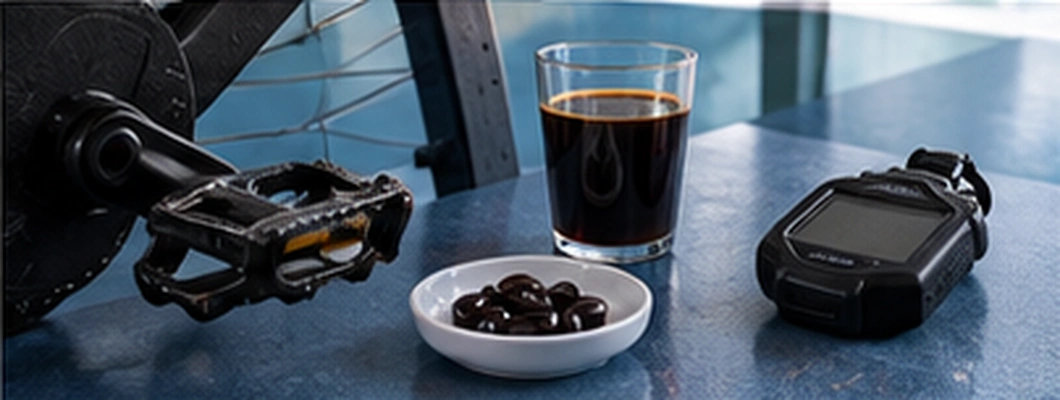
In a trial where 9 people did squats and bench presses to failure, total squat weight was higher on coffee days than with a fake pill. Decaf coffee plus added caffeine beat pure caffeine alone. Bench press showed no difference in any condition.
Does coffee block caffeine?
No — caffeine in coffee still extended endurance
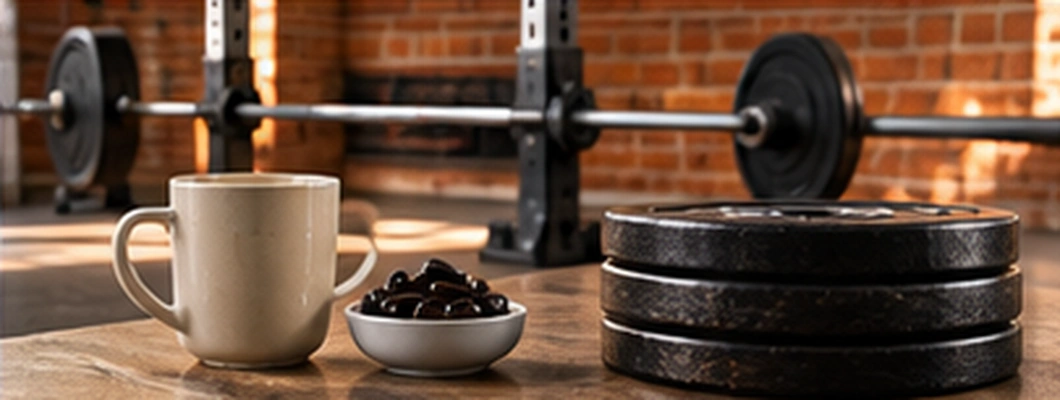
The only test where coffee fell short of pure caffeine was a 1998 'run until exhaustion' trial in 9 people. In a trial of 13 people, caffeine added to decaf coffee raised riding time to exhaustion from 21.7 to 29.0 minutes, no worse than caffeine in water (26.8 minutes).
The difference is absorption speed
Coffee peaked at 42 minutes, capsules at 67
When 13 people took 400 mg of caffeine as coffee, cola or capsules, caffeine in saliva peaked at 42 minutes with coffee and 67 minutes with capsules. Peak levels and how alert people felt showed no difference.
The real difference is the dose
One espresso ranged from 25 mg to 214 mg
Across 97 espressos bought from cafes, caffeine ranged from 25 to 214 mg per cup, 106 mg on average. The same coffee from the same shop varied from 259 to 564 mg over 6 days. Coffee pods held 51–162% of the amount the company listed.
How much is enough?
For a 70 kg person, 210–420 mg of caffeine
The International Society of Sports Nutrition suggests 2–4 cups of coffee 60 minutes before exercise, giving 210–420 mg of caffeine for a 70 kg person. At an average of 106 mg per espresso, that is 2–4 shots. Because cups vary so much, pills make the exact dose easier to hit.
Summary: same dose, same effect
The difference is how exactly you hit the dose
With matched caffeine, coffee cut times by 4–5% just like pure caffeine, and coffee compounds did not block it. Coffee varies from 25 to 214 mg per cup, and capsules were absorbed about 25 minutes later. Pills work for an exact dose; coffee works if you like the taste and habit.
A better body starts with a better question.PHYSIQUE NEWS