Short answer
Repeated impact overloads the shinbone and the layer covering it. A past injury, higher body weight and an arch that collapses inward raised the risk, while neuromuscular training and arch-support insoles cut new cases.
What causes shin splints, the pain along the inner shin?
'Tight calf muscles cause the pain' — is that right?
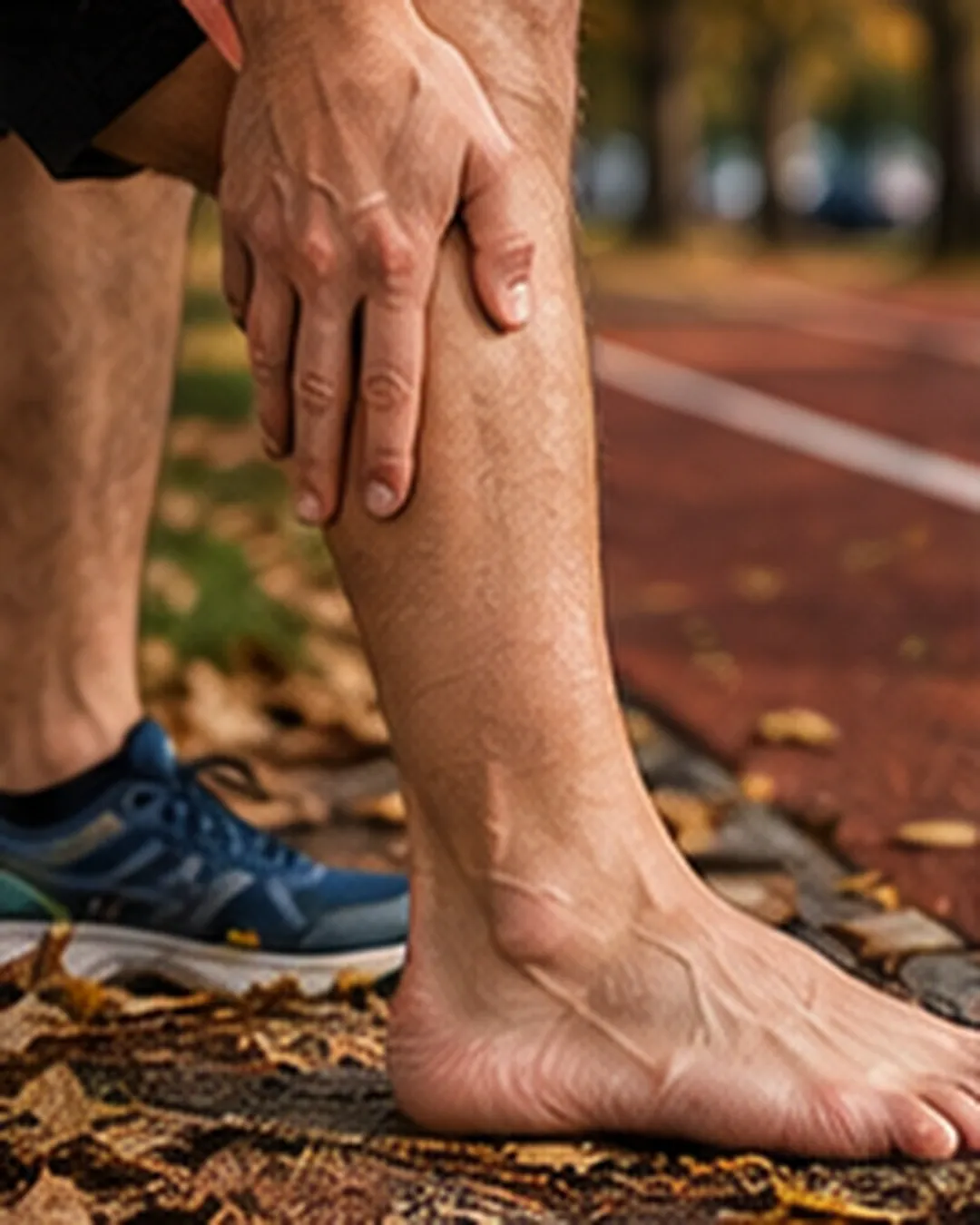
Shin splints are the throbbing pain along the inner edge of the shinbone that shows up after you start running or jumping. Many people blame tight calf muscles. We checked what actually gets hurt and who gets it most.
The most common injury in new runners
15% of 254 injured runners had shin splints
Researchers followed 933 people who had just started running. 254 got injured, and 38 of them (15%) had shin splints, the most common injury. The median time to recover was 72 days. 37 of the 38 (97.4%) recovered, and none needed surgery.
The problem was in the bone, not the muscle
Bone density at the painful spot was 11% lower
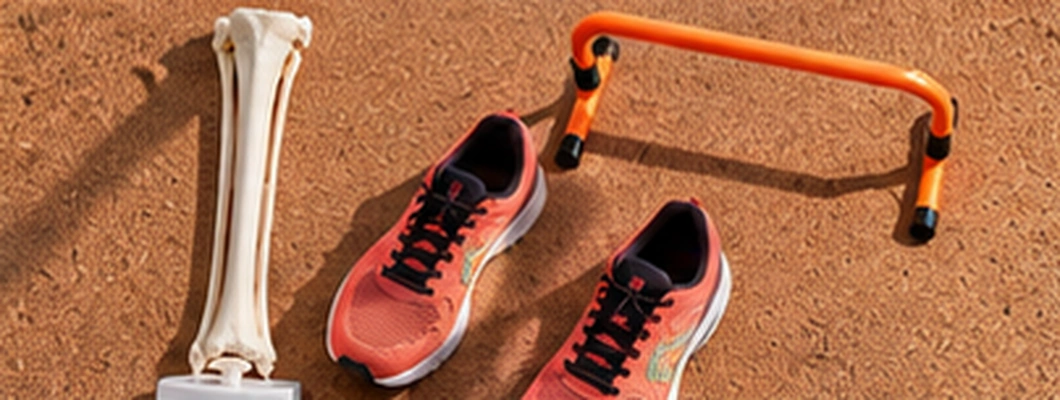
Shin splints are inflammation of the layer covering the shinbone, and most cases also involve tiny damage in the bone underneath. In 14 people with long-lasting shin splints, bone density at the painful spot was 11% lower than in non-exercisers; after recovery it rose 19% and the gap disappeared. 11 people who had pain for an average of 5 weeks showed no difference.
So who gets it?
A past injury meant 2.18 times the risk
An analysis that pooled 22 studies found that a previous running injury raised the risk 2.18 times, and women had 2.35 times the risk of men. People who weighed more, and people whose inner arch dropped more when the foot landed, also got it more often.
Foot shape mattered more than distance
Weekly running distance did not separate them
In the same analysis, weekly running distance was not a risk factor. A 2024 analysis of 21 studies pointed to the foot again: people whose feet rolled inward and flattened, and people whose arch height changed a lot while walking, got shin splints more often.
What helped prevent it
Neuromuscular training and arch-support insoles
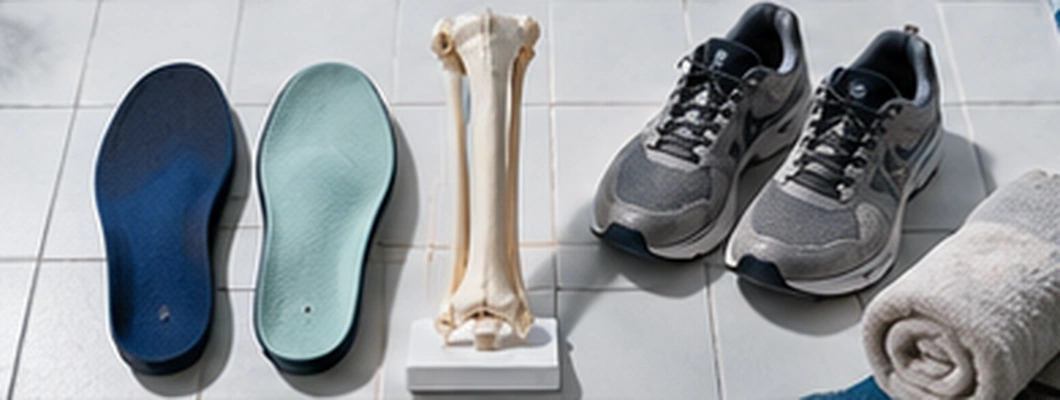
A 2025 analysis of 12 studies and 8,197 people found that neuromuscular training, which builds muscle and movement control (4 studies, 3,887 people), and insoles that support feet rolling inward (4 studies, 1,047 people) reduced shin splints. Shock-absorbing insoles (2 studies, 1,571 people) had no effect, and there was no evidence that stretching prevents it.
Bottom line: the bone couldn't keep up, not the muscle
Repeated impact hurt the bone and its covering
Shin splints are an injury where repeated impact overloads the shinbone and the layer covering it. A past injury, higher body weight and an arch that collapses inward raised the risk. Neuromuscular training and arch-support insoles reduced new cases; shock-absorbing insoles did not.
A better body starts with a better question.PHYSIQUE NEWS