Short answer
No. No research was found to back 2 liters (8 glasses) a day, and a study that measured 5,604 people found the water the body uses each day ranged from about 1 to 6 liters. That water also includes water from food and water the body makes. People who drank 1.2 liters or less a day had the same blood concentration as those who drank 2 to 4 liters.
Do you really need to drink 2 liters of water a day?
'8 glasses (2 L) a day → enough water': does this formula hold?
It is common to hear that you must drink 8 glasses, or 2 liters, of water a day. We checked where this number came from, how much water the body actually uses each day, and what changes in the body when people drink less.
Where did 2 liters come from?
No research was found to back 8 glasses a day
A 2002 review that traced the '8 glasses a day' advice found no scientific studies supporting it. Surveys of thousands of people's food and drink showed that healthy people did not drink that much. Randomized trials that changed water intake and compared health numbered only 18 through 2023.
How much water does the body actually use?
Men 4.3 L, women 3.4 L; 1 to 6 L between people
Researchers measured the water moving in and out of the bodies of 5,604 people from 23 countries over a day. At the peak, around age 30, men used 4.3 L and women 3.4 L. The low end was 1 to 1.5 L and the high end about 6 L. The researchers wrote that 8 glasses a day (about 2 L) has no objective evidence behind it.
You do not drink all of that water
About 10% is made by the body, and food also supplies water
In the same study, about 10% of the water the body used was made inside the body when food was burned, and water taken in through breath and skin was 2-3% each. The remaining roughly 85% came from drinks and food. Surveys found that 20-50% of this was water in food.

Body and surroundings change the water used
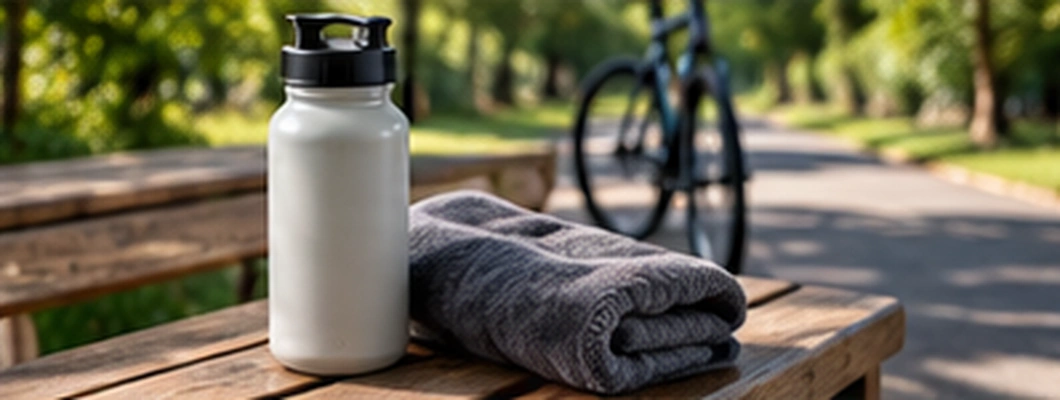
Bigger bodies, more movement and hotter weather meant more water
In the same study, people with more lean mass (muscle and everything except fat) and more physical activity used more water. Above 10 degrees, the hotter it was, the more water was used. The water the body used was not a fixed number; it followed body size, activity and weather.
What changes when people drink less?
Urine was more concentrated, but blood concentration was the same
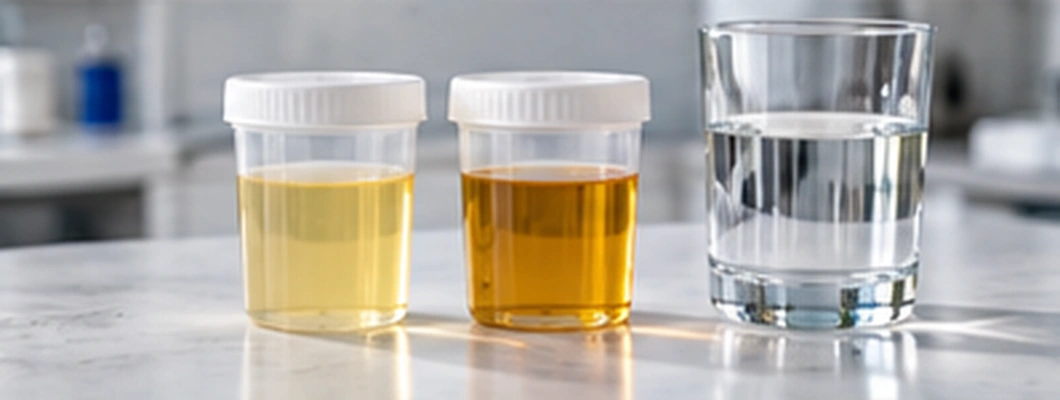
71 people were split into those drinking 1.2 L or less a day and those drinking 2 to 4 L. The low drinkers made less urine, 1.0 L versus 2.4 L a day, and it was more concentrated and darker. A water-saving hormone was higher, but blood concentration was the same in both groups.
When did drinking more make a difference?
140 people with frequent bladder infections: 1.7 versus 3.2 a year
140 women who had bladder infections more than 3 times a year and drank less than 1.5 L a day added 1.5 L of water a day for 12 months. They had 1.7 infections, fewer than the 3.2 in the group that drank as usual. Their urine rose by 1.4 L a day. Of 18 randomized trials that changed water intake, 10 showed a benefit, such as in weight loss or kidney stones.
Summary: an amount that fits your body, not a fixed 2 liters
The water the body uses runs from 1 to 6 L depending on body size, activity and weather
The 2-liter figure had no evidence behind it, the water the body uses ranged from about 1 to 6 L between people, and part of it came from food and the body itself. Drinking more on days of heavy sweating from exercise or heat is enough. The 140 people with frequent bladder infections had fewer infections after drinking 1.5 L more a day.
A better body starts with a better question.PHYSIQUE NEWS