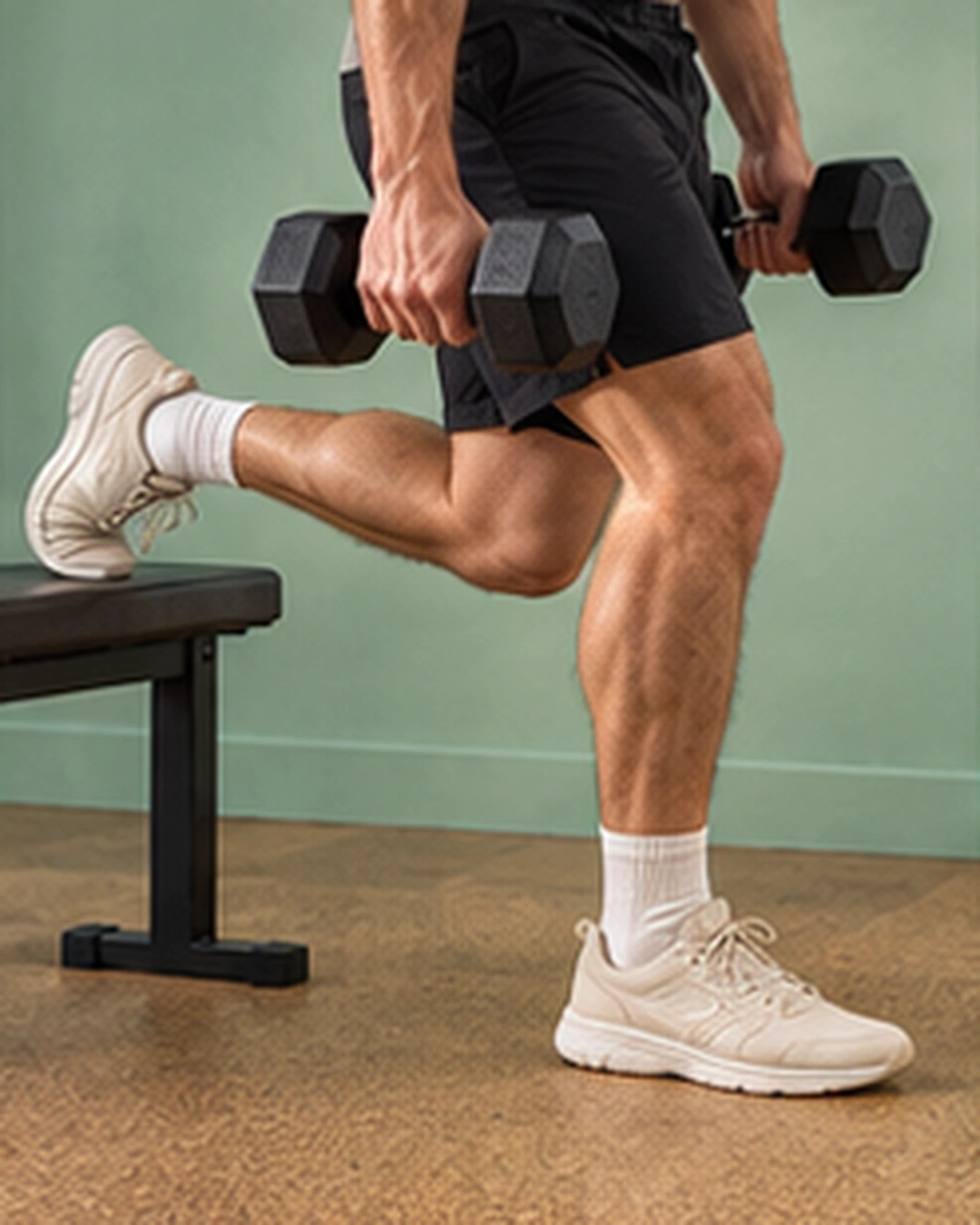
Short answer
Strength differences shrank. Even with 12 weeks of two-leg training, the weaker leg gained more, and adding one-leg training cut the left-right strength gap from 13.19% to 7.60%. No result showed training shrinking a muscle size gap. Healthy people also had left-right muscle volume differences within 6% on average.
Can training shrink a left-right strength gap?
'Train the weak side more → both sides match': is it true?
In the mirror, one arm or leg can look thicker than the other. We checked how common left-right differences are, whether training shrinks them and whether they need fixing at all.
Left and right always differ a little
Thigh muscle volume differed by within 6% on average
When the thigh muscles of 21 people were measured by MRI, the left-right volume difference averaged within 6%. Muscle by muscle, about 1 in 4 (26%) differed by more than 10%. Differences this size were common in healthy people.

The side you use more gets bigger
Tennis grew one side, soccer grew both
MRI of a deep hip muscle (iliopsoas) showed that in 8 people who play tennis, the side opposite the racket hand was 13% bigger. In 15 soccer players, who use both feet, there was no left-right difference. Left-right differences followed how the body was used.

Training both sides together, the weaker side gained more
After 12 weeks, the sides moved closer
When 111 people did strength training with both legs for 12 weeks, those who started with a left-right difference gained more strength in the weaker leg, and the sides moved closer. When 10 people trained both arms with the same weight for 6 weeks, muscle thickness rose 10% and 11%, with no difference.
One side at a time nearly halved the gap
Front-thigh strength gap 13.19% → 7.60%
30 people were split, and the group that added one-leg strength and jump training 3 times a week for 6 weeks cut the front-thigh strength gap from 13.19% to 7.60% and the back-thigh gap from 16.65% to 7.83%. In a study of 22 people, only one-leg training reduced the left-right gap; two-leg training did not.
But the stronger side often switches
The stronger leg often changed
When 28 people did one-leg jump and push tests twice, the size of the gap stayed similar but which side was stronger often switched. When 18 people were tested through a season, the size of the gap barely changed while the stronger side changed from test to test.
Does a left-right gap hurt performance?
It had no link with jumping
In an analysis that pooled 11 studies, the left-right gap measured by one-leg jumps had no link with two-leg jump results. Links with changing direction and sprinting were weak. The left-right gap explained only about 6% of the difference in change-of-direction results.
Summary: training shrank strength gaps
Small gaps are common and their direction changes
Even training both sides together, the weaker side gained more, and adding one-side training nearly halved the strength gap. Healthy people also had left-right muscle volume differences within 6% on average. No result showed training shrinking a muscle size gap. If the strength gap is large, adding one-arm and one-leg exercises is the way.
A better body starts with a better question.PHYSIQUE NEWS