Short answer
Yes. Training a muscle that is still sore did not add damage or slow recovery, and light work even brought strength back faster. Strength is down for a while, though, so going light on that muscle is enough.
Is it okay to work out while you're still sore?
'It hurts → the muscle is damaged → training again damages it more' — is that right?
When your muscles ache the day after a workout, a common rule is to rest until it is fully gone. The idea is that training a sore muscle makes the damage worse. We checked this formula step by step against the research.
Does training a sore muscle damage it more?
The damage did not get worse
12 people did an arm workout that causes heavy soreness, then repeated the same workout 3 days and 6 days later. Even training twice more before the muscle had recovered, damage markers did not get worse and recovery did not slow down.
Moving lightly eased the pain
Soreness dropped about 40% right after
14 people bent and straightened a sore arm 600 times with almost no effort, 1-4 days after the hard workout. Right after, soreness and tenderness to touch each dropped about 40%. The relief was temporary, and recovery speed was the same as the other arm that did nothing.
The real issue is strength
You are weaker while you are sore
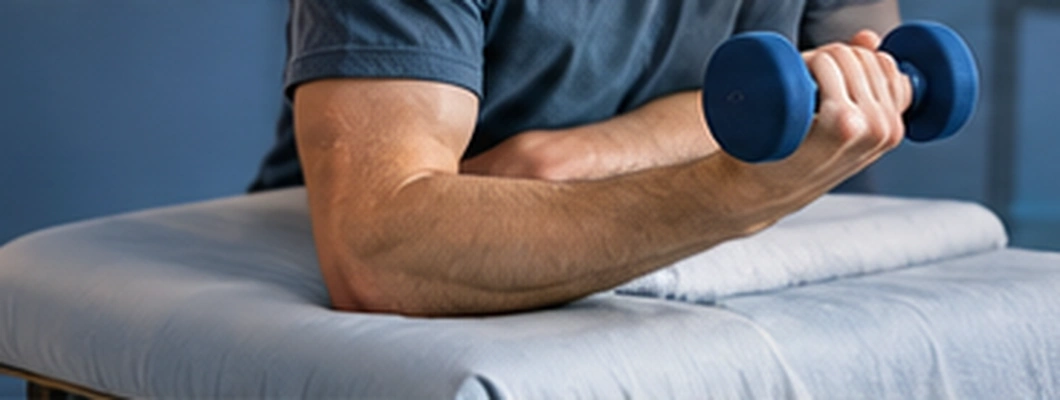
8 people did 20 minutes of maximal lowering (resisting the weight on the way down) with their arm muscles. Strength fell about 50%, and 2 weeks later it was back to only 80%. When they repeated the workout a second and third time, 2 weeks apart, strength came back faster each time.
Light training sped up strength recovery
Strength was back within a day
25 people did 8 sets of 10 bench press reps. The 11 who did a light bench session 6 hours and 30 hours later had their strength and power back by the next day. The 14 who just rested were still down the next day. Soreness itself was the same in both groups.
Muscle growth came after the damage faded
During heavy soreness, the work went to repair first
In a study of 10 people training their legs for 10 weeks with muscle samples taken, muscle-building activity was high in week 1, when damage was greatest, but it was not linked to growth. From week 3, as damage faded, that activity was strongly linked to growth. There is no reason to chase heavy soreness.
Bottom line: you can train while sore
Go light on the sore muscle, go heavy on other muscles
Training a still-sore muscle did not add damage, and light work brought strength back faster. Strength is down, though, so for 1-2 days after heavy soreness you can train that muscle lighter and shorter, or train other muscles that are less sore.
A better body starts with a better question.PHYSIQUE NEWS