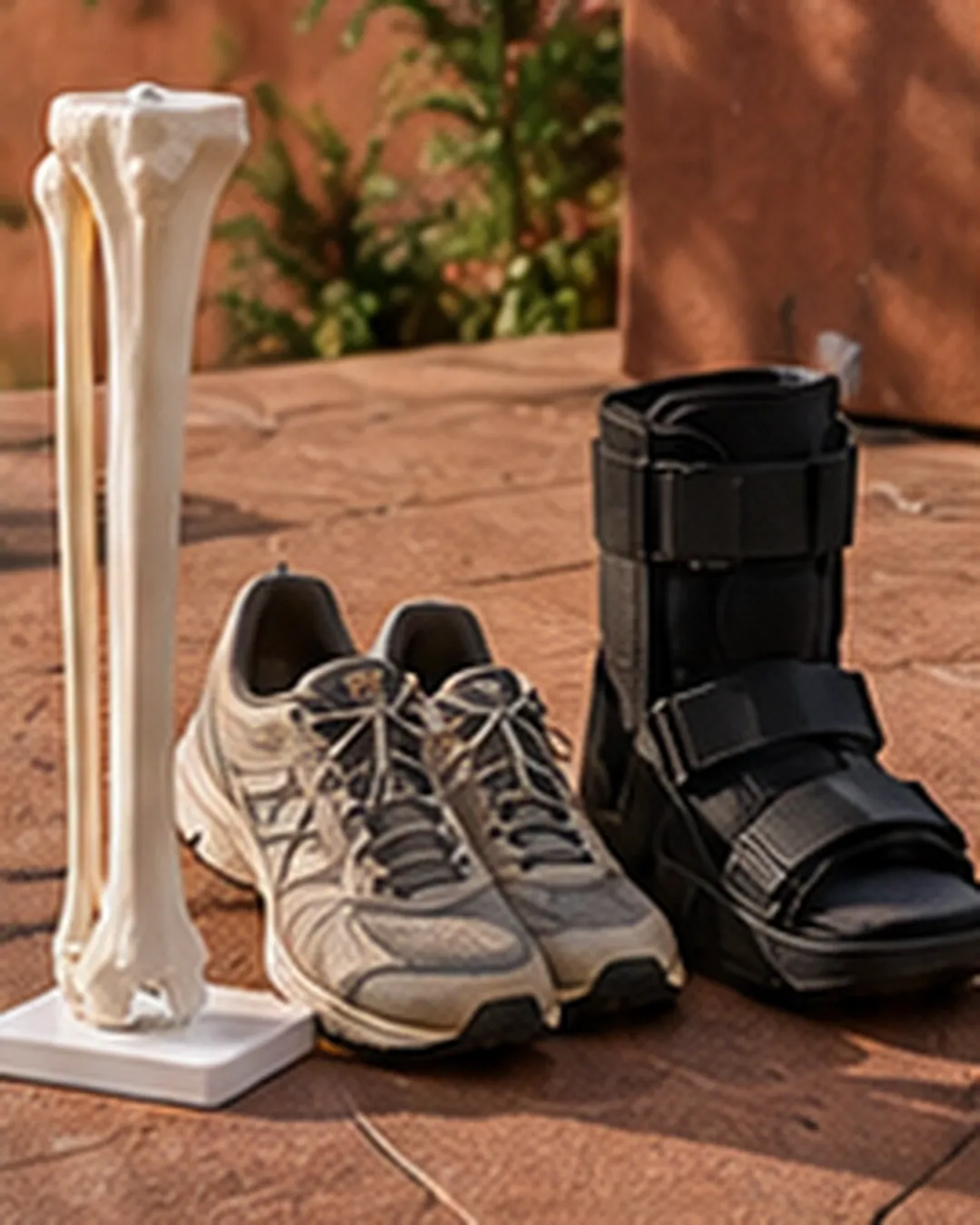
Short answer
Because repeated impact piles up faster than bone can repair itself. A past stress fracture made the risk 4.99 times higher, and the risk climbed when lots of training met too little food.
Why do stress fractures happen?
'Not one injury, but damage that builds up' — is that right?
A stress fracture is a crack in a bone, often the shin or the top of the foot, without any fall or blow. We checked, step by step, why they happen and who gets them.

Bone wears with use and repairs with rest
When wear outpaces repair, it cracks
Every movement causes tiny damage to bone, and the body keeps repairing it. With too much repeated impact, the cells that break bone down outrun the cells that build it, and the bone weakens. In US Army basic training, 19 men and 80 women per 1,000 had a stress fracture.

The clearest warning sign: a past fracture
Those who had one before had 4.99 times the risk
An analysis that pooled studies on runners found two clear risk factors. People with a past stress fracture had 4.99 times the risk, and women had 2.31 times the risk of men.

So what raises the risk?
Heavy training plus eating too little stacked up
Of 259 women followed over time, 10.8% had a bone stress injury. Among those exercising 12 or more hours a week it was 14.7%, but when a sport that rewards being lean and restricted eating were added, it jumped to 46.2%.

Men were no different
Each risk point raised the risk by 37%
Of 156 men followed for an average of 1.9 years, 27% had a bone stress injury. Scoring low food intake, low body weight, weak bones and past injury, each 1-point rise in the score raised the risk by 37%.
Is it the impact of the foot hitting the ground?
Impact size showed no difference
Pooling 14 studies that compared runners with and without a shin stress fracture, the impact force when the foot lands did not differ between the two groups. Impact size alone could not tell who would get hurt.
Calcium and vitamin D helped
Stress fractures fell 20% over 8 weeks of training
When 5,201 women took 2,000 mg of calcium and 800 IU of vitamin D daily during 8 weeks of training, stress fractures fell from 6.6% to 5.3%, a 20% drop. An analysis of 15 studies with 4,183 people also found lower vitamin D levels in those with stress fractures.

Bottom line: stress fractures are built-up fatigue
Volume and fuel mattered more than impact
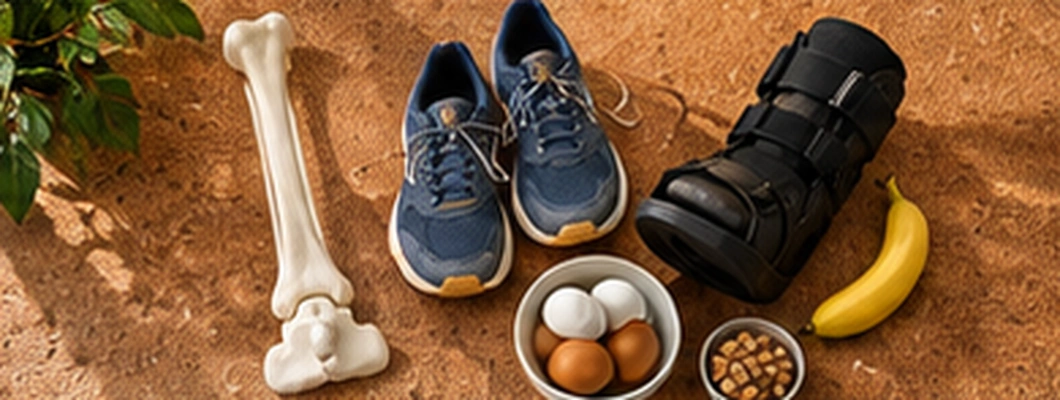
A stress fracture forms when repeated impact piles up faster than bone can repair. The risk rose with a past fracture, and with lots of training on too little food. Raising training volume gradually and eating enough for your training, including calcium and vitamin D, is the approach.
A better body starts with a better question.PHYSIQUE NEWS