
Short answer
Salt itself does not add fat. Cutting only salt at the same calories took off water, with no difference in fat loss. Still, people who ate more salt were heavier, and in an experiment salty food made people eat 11% more at a meal.
Does eating salty food make you gain fat?
'Salty food → higher weight the next day → fat gain' — does this formula hold?
When the scale goes up the day after ramen or stew, it feels like fat gain. People also say those who eat salty food are heavier. We checked step by step whether salt really adds fat.
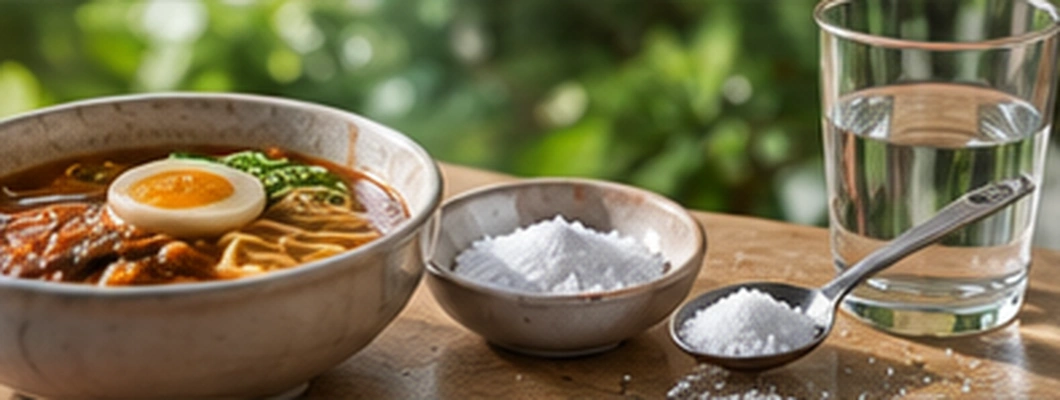
People who ate more salt really were heavier
Each extra 1 g of salt meant 26% higher odds of obesity
Measuring salt in the urine of 785 people in the UK, each extra 1 g a day meant 26% higher odds of obesity, even after accounting for calories eaten. A survey of 4,680 people in 4 countries found 4-29% higher odds per 1 g. Pooling 18 surveys, waists were 4.75 cm larger.
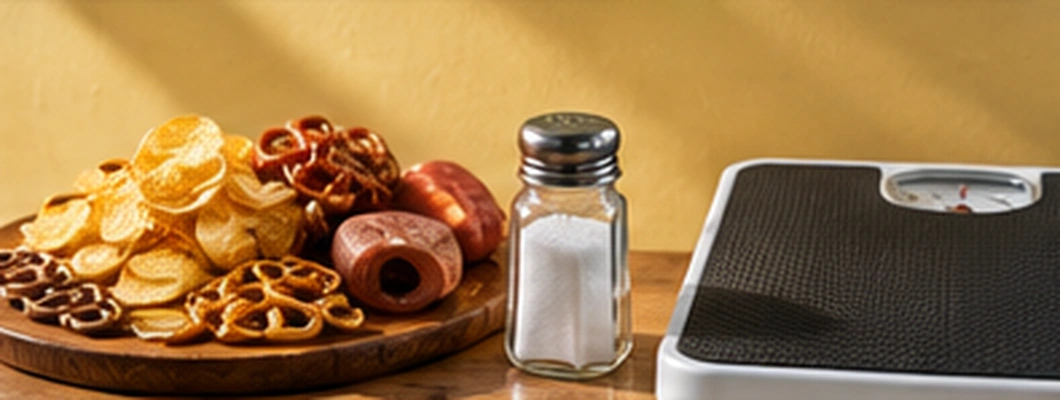
But the weight gained after salty meals
was body water, not fat
78 people ate a low-salt diet for 1 week and a high-salt diet for 1 week, going from about 2.9 g to 11.7 g of salt a day. In the salty week, water outside the blood vessels rose by 1.2 L on average. 1.2 L is about 1.2 kg.
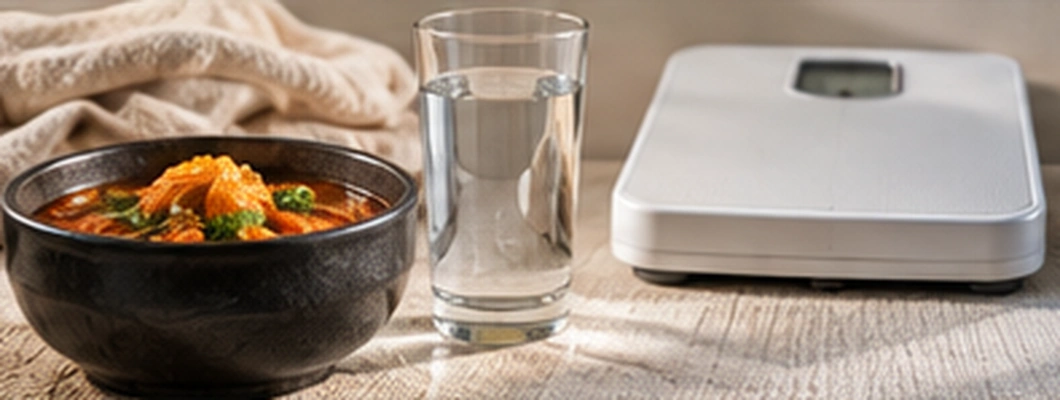
Cutting only salt at the same calories
meant more weight loss, but no difference in fat
84 people ate boxed meals of about 1,300 kcal a day for 2 months. Only one group ate low-salt meals (1,720 mg vs 3,500 mg of sodium). The low-salt group lost more weight, 6.3% vs 5.0%, but the gap was body water (1.8 L vs 0.4 L). Fat loss did not differ.
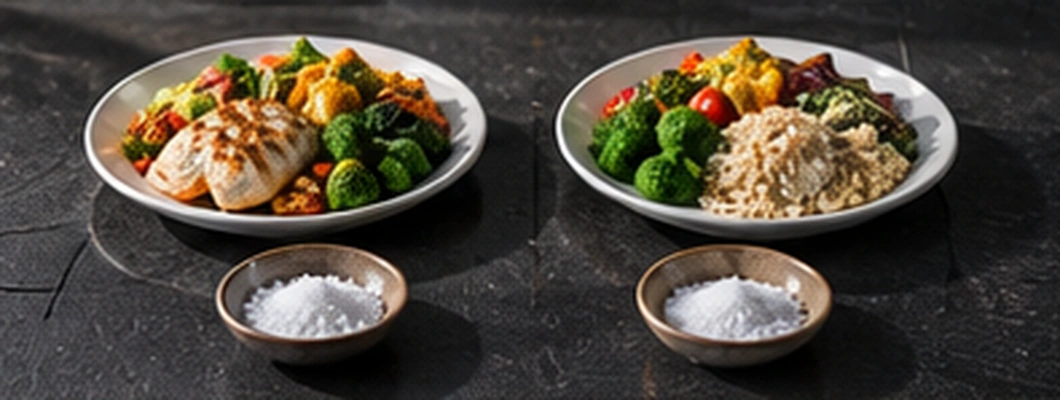
Over 4 years
fat did not drop in step with less salt
7,372 people were followed for 4 years. Those eating 11.2 g or more a day had 1.88 kg more body fat than those eating under 8.4 g. Yet among people who cut more than 1 g a day, body fat changed by only 0.14 kg.
So why are salty eaters heavier?
Salty food made people eat 11% more at a meal
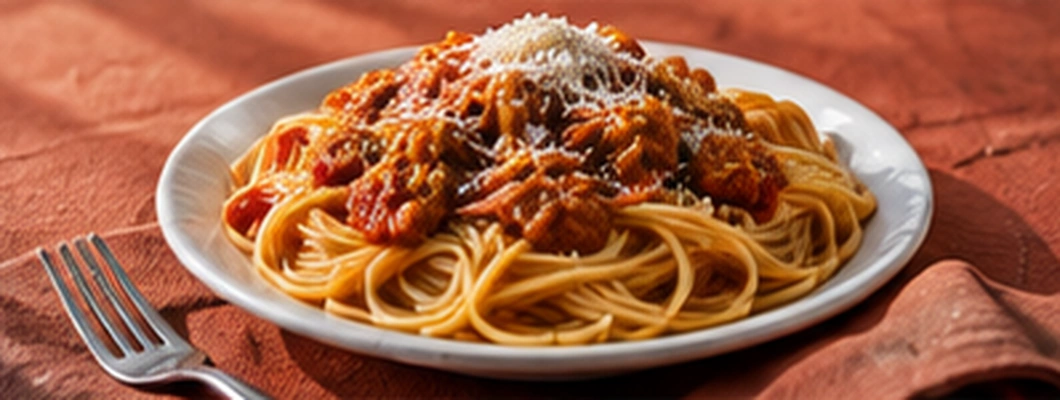
48 people were served the same pasta 4 times with only the salt changed (0.5% vs 0.06%). On salty days, the amount eaten and the calories rose by 11%. This held whether the sauce was high or low in fat. The path from salt to weight ran through eating more.
Bottom line: salt itself does not add fat
The next-day weight is water; the issue is eating more
At the same calories, cutting salt did not change fat loss; what came off was water. The roughly 1 kg gained the day after a salty meal can be read as water too. Salty food made people eat 11% more at a meal, and those calories are what turn into fat.
A better body starts with a better question.PHYSIQUE NEWS