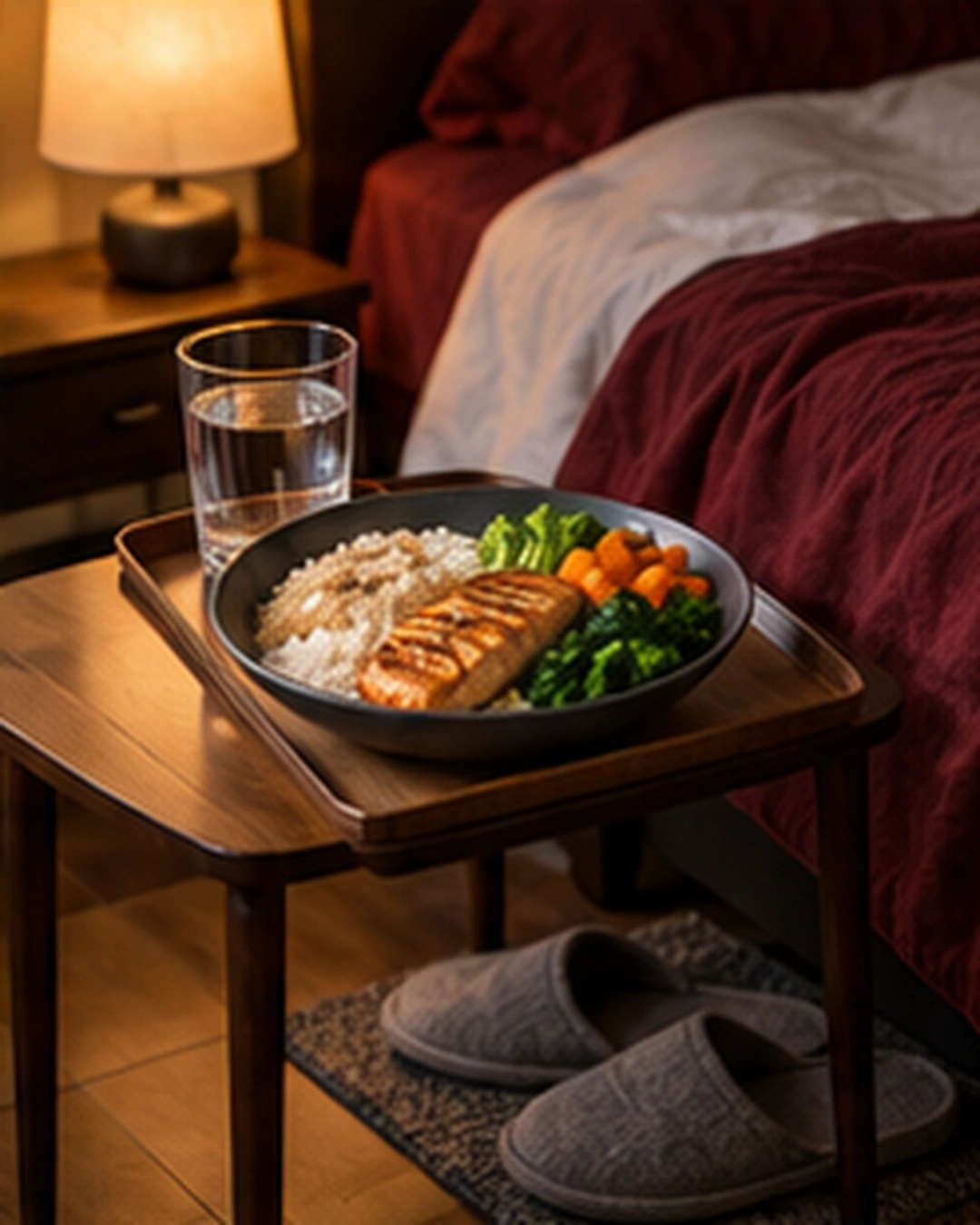
Short answer
No. Eating dinner 1 hour before bed, or 40 g of protein 30 minutes before bed, did not worsen sleep measured by brain waves and wrist devices. However, people who went to bed within 3 hours of dinner had a 7.45 times risk of acid reflux (heartburn) compared with those who waited 4 hours or more.
Does eating right before bed ruin your sleep?
'Eat, then sleep → still digesting → light sleep': is it true?
A common belief is that eating before bed keeps your stomach working all night and makes sleep lighter. People who train often worry about this when they add protein at night. We started with experiments that changed only meal timing and measured sleep directly.
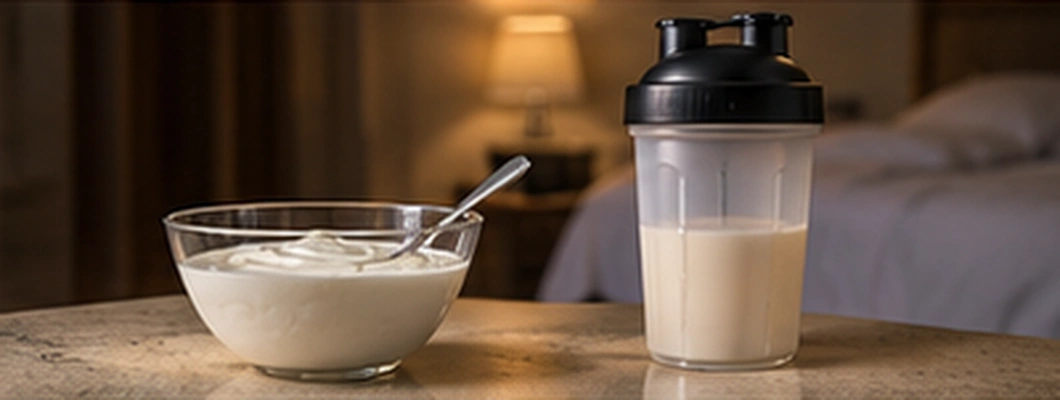
Dinner 1 hour before bed?
Sleep stages and sleep length did not change
20 people ate a dinner worth 35% of their daily calories once 5 hours before bed and once 1 hour before bed, and their sleep was measured with brain waves. Time to fall asleep, sleep efficiency, and the share of deep and light sleep showed no difference. On the late-dinner night, deep-sleep brain waves rose by 2.5% early in the night.
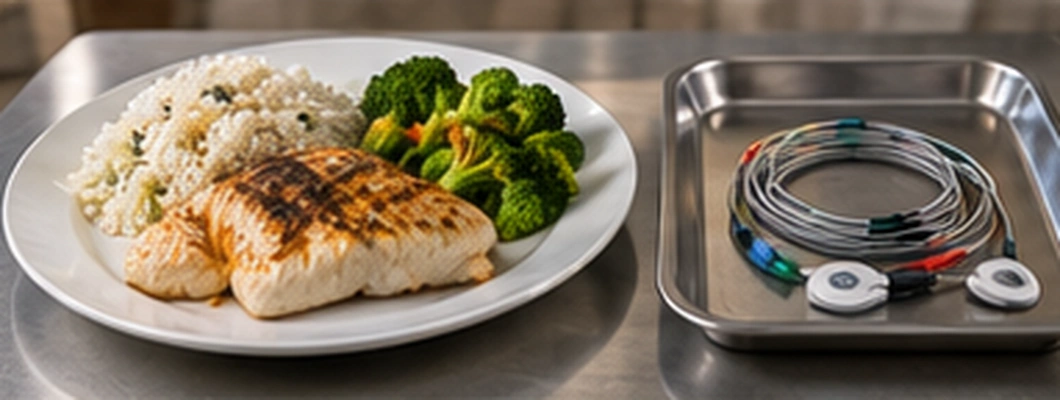
Protein right before bed?
Even 40 g did not worsen sleep
9 people, after evening training, took 40 g of whey protein, 40 g of casein, or a carbohydrate drink with the same calories 30 minutes before bed, on different nights. After whey they fell asleep in 9 minutes, after the carbohydrate drink in 19 minutes, and sleep efficiency was 96% vs 93%. Casein nights did not differ from the carbohydrate drink, and stomach discomfort showed no difference among the three.

Measured again with another drink
17 people, no difference in brain-wave sleep
17 people drank either a mix of carbohydrate and whey or a dummy drink 90 minutes before bed, and their sleep was measured with brain waves. Sleep amount and quality, and next-morning exercise results, showed no difference between drinks. None of the experiments checked here showed eating or drinking before bed wrecking sleep.

But surveys showed more night waking
Late eaters had a 1.43 times risk of waking
In a survey of 793 people, those who ate within 3 hours of bed had a 1.43 times risk of waking at night. Time to fall asleep and sleep length were not related. In daily diaries of 124,239 people, those who ate or drank within 1 hour of bed slept 25 to 35 minutes longer, but their risk of lying awake at night was also 2.03 to 2.64 times.

The gap between experiments and surveys: what was eaten
The surveys did not record amount or menu
Neither survey asked what or how much people ate last. In a study of 3,463 people, those with a longer gap between the last meal and bed also scored 0.85 points better on a 21-point sleep score. Late eating habits and poor sleep went together, but in experiments that changed only meal timing, sleep did not get worse.

Heartburn changes the story
Lying down within 3 hours of dinner: 7.45 times risk
Comparing 147 people with acid reflux and 294 people without symptoms, those who went to bed within 3 hours of dinner had a 7.45 times risk of reflux compared with those who waited 4 hours or more. The gap between eating and bed was tied to reflux, not to sleep quality.
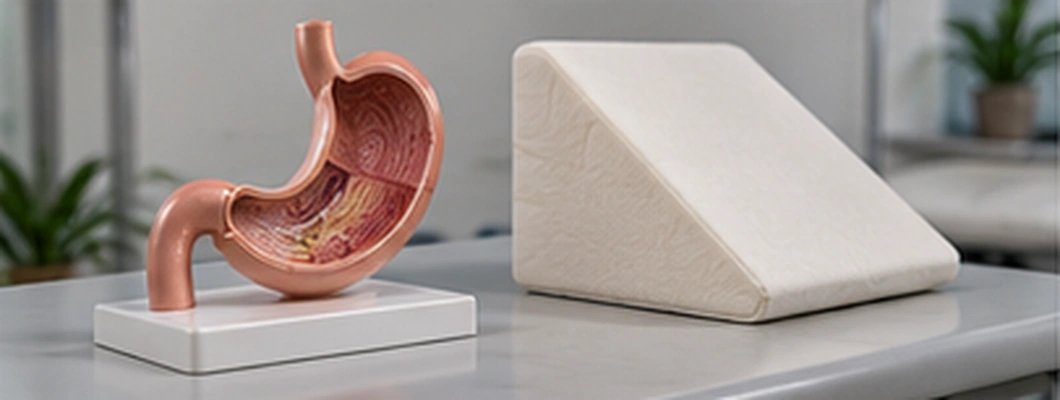
Summary: eating then sleeping did not wreck sleep
With heartburn, a 4-hour gap meant less reflux
On 2,000 kcal a day, a dinner of about 700 kcal eaten 1 hour before bed, or 40 g of protein 30 minutes before bed, did not worsen measured sleep. If you are hungry before bed, eating and then sleeping is fine. If your stomach burns when you lie down, leaving 4 hours or more between dinner and bed is the way to go.
A better body starts with a better question.PHYSIQUE NEWS