Short answer
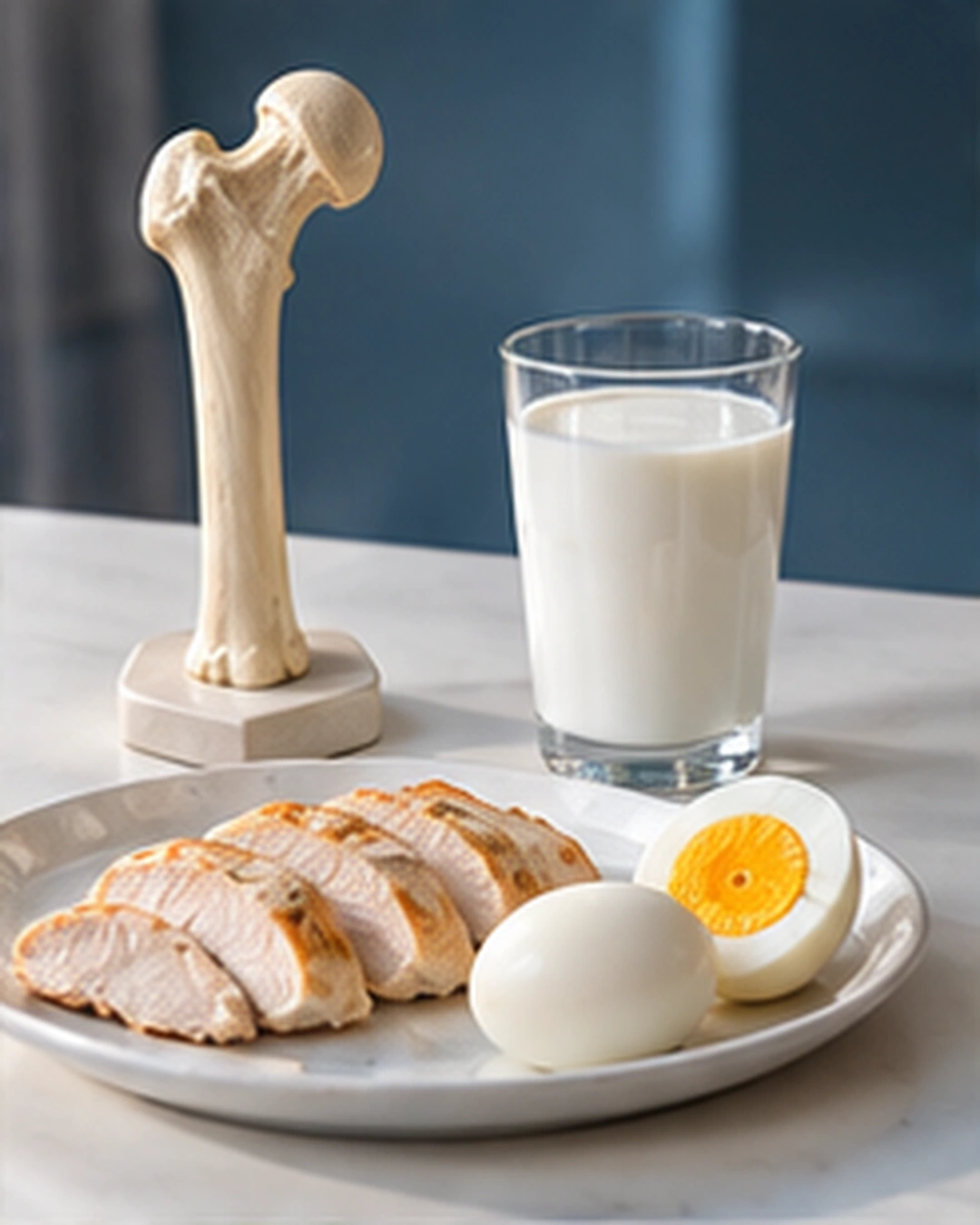
No. More protein raises the calcium lost in urine, but the calcium absorbed from the gut rises too, so the body's calcium did not drop. At 70 kg body weight, eating about 196 g a day for 6 months left bone density unchanged, and in an analysis of 780,000 people, those who ate more protein had a lower fracture risk.
Does eating a lot of protein weaken your bones?
'Protein up → urine calcium up → bone calcium down': is it true?
A common claim is that a lot of protein makes the body acidic, and calcium is pulled from bone to neutralize it and lost in urine. People who train eat a lot of protein, so this worries them more. We checked this chain one step at a time.

Urine calcium really does rise
But calcium absorbed from the gut rose too
13 people ate protein for 10 days each at about 70 g and 147 g a day, based on a 70 kg (154 lb) body weight. On the higher amount, urine calcium rose by about 47%. At the same time, the share of calcium absorbed from the gut rose from 18.5% to 26.2%, and the part of urine calcium coming from bone went down. The bone calcium balance did not change.

What about the whole body's calcium?
Urine calcium rose, but body calcium did not drop
An analysis pooled 5 studies that changed the amount and type of protein and precisely measured calcium coming in and going out. As the body shifted toward acidic, urine calcium rose, but this was not related to whole-body calcium balance. It was also not related to changes in a substance released when bone breaks down.
What if you train and eat a lot?
196 g a day for 6 months, bone density unchanged
24 people kept training for 6 months; half ate as usual and half ate more protein. For a 70 kg person, that is about 105 g vs 196 g a day. Whole-body and lower-spine bone density did not change in either group, and there was no difference between them.

What about people who ate more for years?
No harm, and the lower spine was 0.52% higher
An analysis of 16 trials and 20 follow-up studies found that those who ate more protein had 0.52% higher lower-spine bone density, with no difference at the hip or other sites. No harmful effect appeared. Another analysis of 127 papers also found no link between protein amount and the risk of osteoporosis-related fractures.
Fracture risk did not rise
100 g more a day: 43% lower fracture risk
An analysis that pooled 20 follow-up studies with 780,322 people found a 43% lower fracture risk for every 100 g more protein a day, and animal protein alone was not related. Among the studies checked here, the only result showing more fractures was a study that followed 85,900 people for 12 years, where those eating over 95 g a day had a 1.22 times risk of wrist fracture; hip fracture was not related in that study.
Summary: protein did not weaken bone
Absorption rose along with urine calcium
More protein raises urine calcium, but calcium absorbed from the gut rises too, so the body's calcium did not drop. At 70 kg, eating about 196 g a day for 6 months left bone density unchanged. Within this range, there was no bone-related reason to cut back when adding protein for muscle.

A better body starts with a better question.PHYSIQUE NEWS