
Short answer
It does not go first. With exercise, visceral fat dropped 6.1% even when weight stayed the same, but a group jogging 32 km a week lost visceral fat (6.9%) and belly fat under the skin (7.0%) at almost the same rate, and more fat came off from under the skin by amount.
Does exercise burn belly fat around your organs first?
'Exercise → organ fat goes first → belly shrinks from the inside' — is that right?
A common claim says that when you start exercising, the visceral fat packed around your organs goes first. We checked whether exercise cuts visceral fat, whether it does so even when your weight stays the same, and whether it really goes before the fat under your skin.
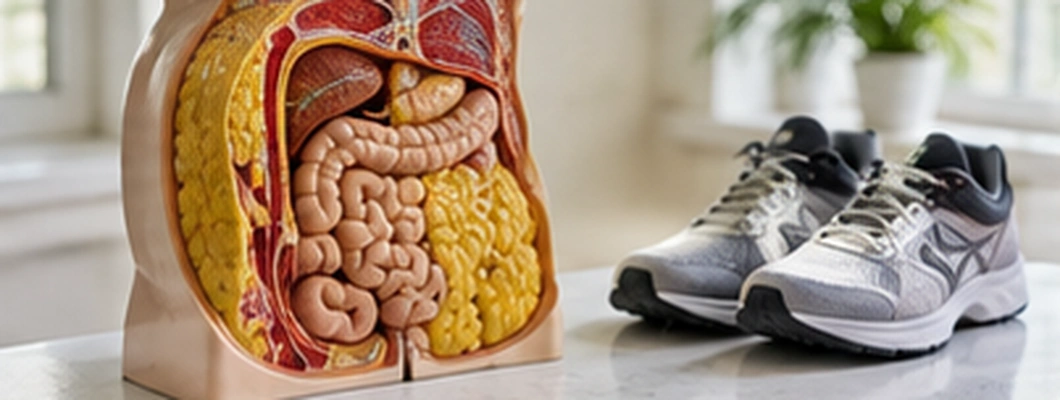
Exercise cut visceral fat
Cardio, weights and intervals all worked
An analysis comparing 84 trials with 4,836 people found that cardio of at least moderate intensity, weight training, the two combined, and interval training all reduced visceral fat. Vigorous cardio and intervals came out on top. In an analysis of 40 trials with 2,190 people, exercisers' waists shrank 3.15 cm more.
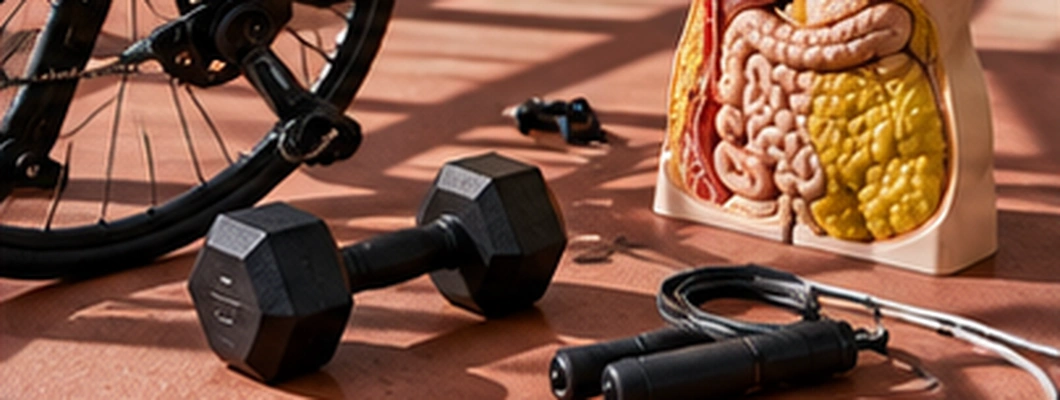
It dropped even when weight did not
Exercise 6.1%, dieting 1.1%
An analysis that pooled 117 studies with 4,815 people found that even without weight loss, exercise cut visceral fat by 6.1%, while dieting barely changed it (1.1%). In a trial that followed 52 people for 3 months, the exercise group whose weight did not change also lost belly fat and visceral fat.
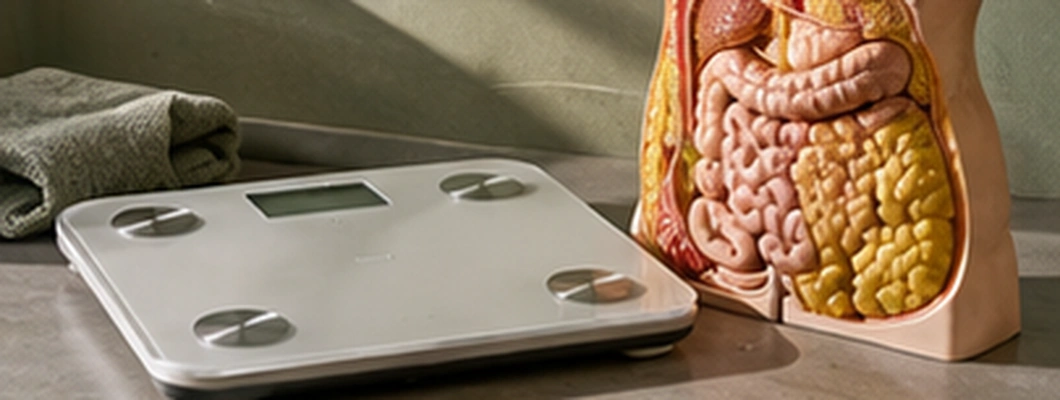
So does it go 'first'?
Exercise did not single out visceral fat
In 17 trials lasting over 6 months with 3,602 people, exercise did not single out visceral fat. In a 175-person trial, the group jogging 32 km a week lost visceral fat (6.9%) and belly fat under the skin (7.0%) at almost the same rate. By amount, more came off from under the skin, where people carry more fat to begin with.
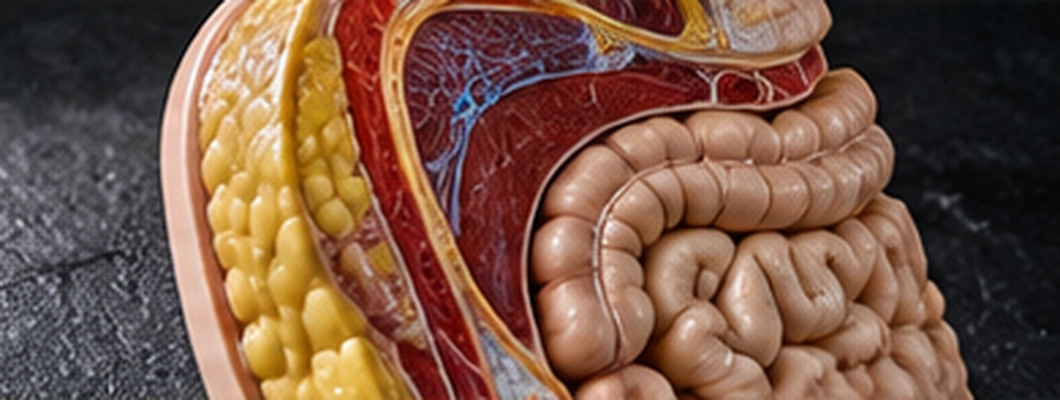
The scale under-reported visceral fat changes
With exercise, visceral fat dropped more than weight suggested
In the 117-study analysis, weight change explained 74% of the visceral fat change with dieting but only 45% with exercise. Dieting took off more weight, but exercise cut visceral fat even when less weight came off.

More movement meant bigger drops
6 months of inactivity added 8.6% visceral fat
In a trial of 175 people, the group that did not exercise gained 8.6% visceral fat over 6 months. A group that walked or jogged about 18 km a week did not gain any, and a group that jogged 32 km a week lost 6.9%. In the 40-trial analysis, every extra 1,000 kcal burned per week through exercise meant a bigger drop in visceral fat.
Weight training also cut visceral fat
Body fat percentage fell 1.46 points
An analysis of 54 trials found that people who did full-body weight training for 4 weeks or more lost 1.46 percentage points more body fat and 0.55 kg more fat mass than non-exercisers, and their visceral fat dropped too. Still, vigorous cardio and intervals cut visceral fat the most.
Bottom line: visceral fat does not go first
Still, fat inside the belly shrinks even when the scale stays put
With exercise, visceral fat dropped 6.1% even when weight did not change. But it did not come off ahead of other fat, and more fat was lost from under the skin by amount. Burning more each week meant bigger drops, so your waist size is a better check than the scale.

A better body starts with a better question.PHYSIQUE NEWS