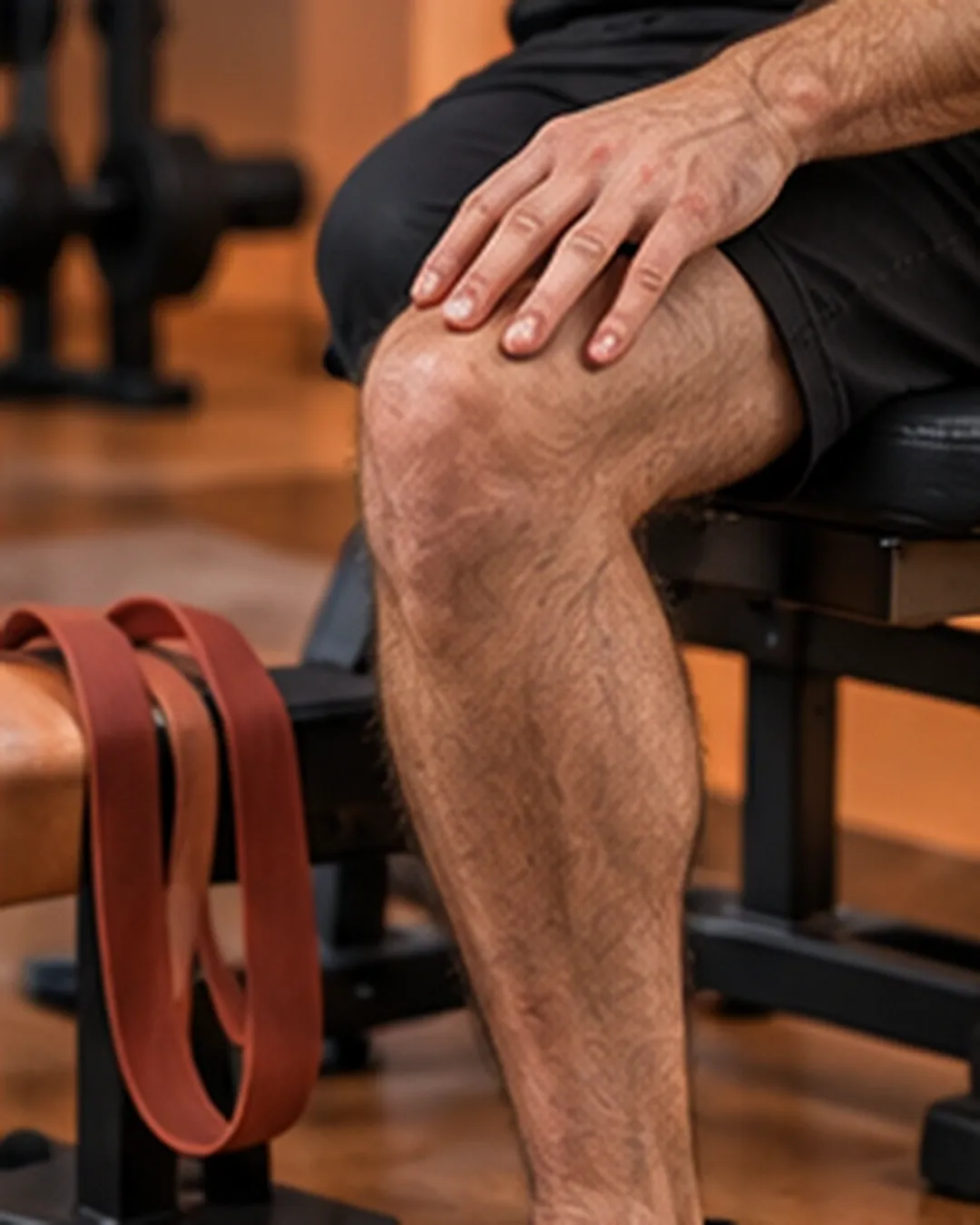
Short answer
Bearable pain did not make outcomes worse. Exercise that allowed pain up to 5 out of 10, settling before the next session, did no worse than pain-free exercise, and after hamstring strains it brought back 15% more strength.
Is it okay to exercise through pain?
'Stop when it hurts → no flare-up, faster healing' — does this formula hold?
A common rule is to stop the moment exercise hurts, so things do not get worse. We checked studies that compared exercise that allowed some pain with exercise kept completely pain-free.

Compared in long-lasting pain
385 people: exercising with pain did no worse
An analysis that pooled 7 trials (385 people) with muscle or joint pain lasting more than 3 months found the group allowed to feel pain during exercise had slightly less pain in the short term. Medium- and long-term pain and daily function showed no difference.

With 16 trials
The small edge disappeared, and neither side did worse
A 2025 analysis of 16 trials up to 2024 found no difference between pain-allowed and pain-free exercise in short-, medium- or long-term pain or daily function. Side effects, mood and quality of life were also similar.

What about a fresh muscle injury?
43 hamstring strains: no difference in days to return
43 people with a fresh hamstring strain did rehab either strictly pain-free or with pain allowed up to a set limit. Time to clearance to return to sport was 15 and 17 days — no difference — and 2 people in each group were reinjured within 6 months.
Strength actually came back more
The pain-allowed group was 15% stronger
In the same 43 people, the pain-allowed group regained 15% more knee-bending strength at return to sport and again 2 months later. Their hamstring muscle fibers also stayed 0.91 cm longer at 2 months.

The allowed pain had a limit
Around 5 out of 10, settling before the next session
The trials in the analysis allowed pain during exercise up to about 5 out of 10 (50 out of 100), on the condition that it settled after the set or session, or before the next session. What was allowed was bearable pain that faded quickly.

Pain during exercise shrank session by session
After 8 weeks, post-exercise pain was nearly gone
People with knee or hip pain lasting more than 3 months exercised 2 times a week for 8 weeks. The rise in pain right after each session got smaller every time and was almost gone by the final weeks. Their usual pain also fell from 3.6 to 2.6 out of 10.

Summary: bearable pain did not make outcomes worse
5 out of 10 or less, settling before the next session
In long-lasting muscle and joint pain and in hamstring strains, pain-allowed exercise did no worse than pain-free exercise, and after strains it brought back 15% more strength. The allowed pain was 5 out of 10 or less and settled before the next session. Pain in this range was not a stop signal.

A better body starts with a better question.PHYSIQUE NEWS